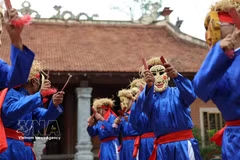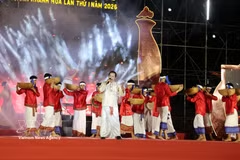
Hanoi (VNA) – Throughout the country’s history, overseas Vietnamese have received special attention from the Party and State. For Vietnamese people living far from home, the name Vietnam holds a profound and enduring significance. Wherever they are in the world, their cultural roots continue to be preserved and passed on.
Politburo Resolution No. 23-NQ/TW reiterates the goal of building overseas Vietnamese communities that preserve and promote national solidarity, cultural identity, humanistic values, history and the Vietnamese language among younger generations and those to come. Encouraging overseas Vietnamese to act as “ambassadors of Vietnam, its culture and people” will also help strengthen their standing, and reputation in host countries, while consolidating the great national unity bloc and enhancing Vietnam’s soft power.
Telling Vietnam’s cultural story through everyday experiences
Mai Hai Lam, an overseas Vietnamese in Poland and Chairman of the non-profit international association We Love Pho (AISBL), said Resolution No. 23 not only reaffirmed the strategic role of overseas Vietnamese but also introduced a new approach: turning their social and cultural networks abroad into part of the country’s national external relations infrastructure in the new era.
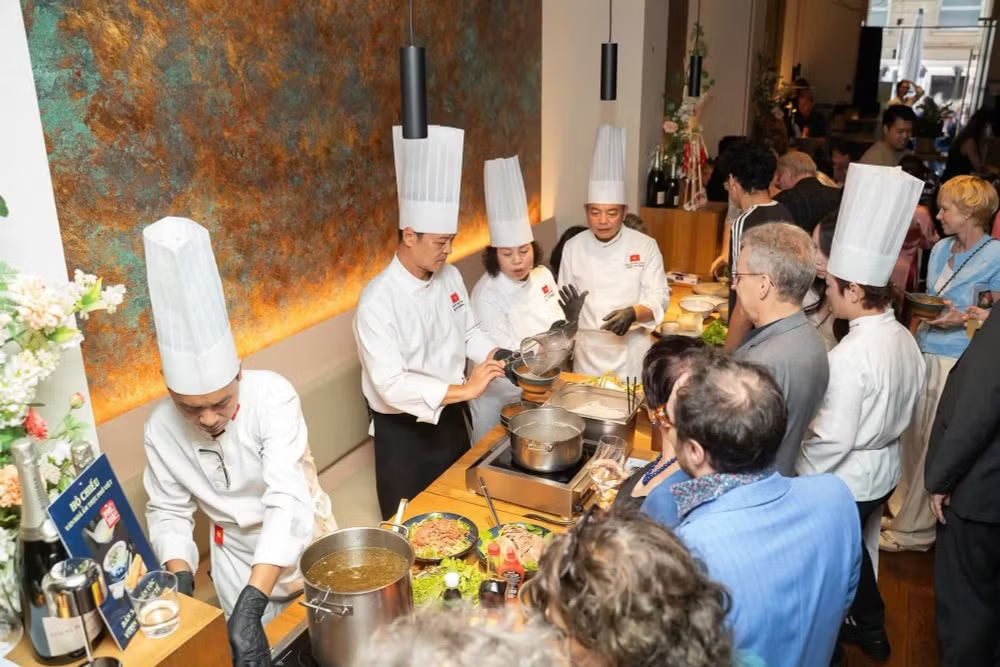
Across Europe, Vietnamese people are active in a wide range of fields, including business, science, healthcare, education, arts, services and community life. Thousands of restaurants, shops and small businesses are also bringing Vietnamese products, cuisine and stories into everyday life.
A Vietnamese restaurant may be where a European first discovers “pho”. A community festival may help a city better understand Vietnamese Lunar New Year traditions. A Vietnamese entrepreneur may open up a new trade relationship. A scientist may establish a new research partnership. A young person of Vietnamese heritage may introduce the Vietnamese language and culture to their peers.
Lam said such activities were often viewed as separate contributions. From the perspective of external relations, however, they could be seen as links in a social network connecting Vietnam with the world. This approach closely reflects the new thinking embodied in Resolution No. 23.
Preserving the national identity also requires sustained efforts to teach and learn Vietnamese overseas. Resolution No. 23 emphasises that Vietnamese is not merely a means of communication but also a source of national soft power. Every Vietnamese-language class abroad, every Vietnamese book preserved and every teacher who patiently passes the mother tongue on to younger generations helps nurture Vietnamese identity around the world.
Dr Nguyen Thi Lan, Chairwoman of the Association of Vietnamese People in Chongqing and Sichuan, China, said the association had opened free Vietnamese-language classes for children of overseas Vietnamese.
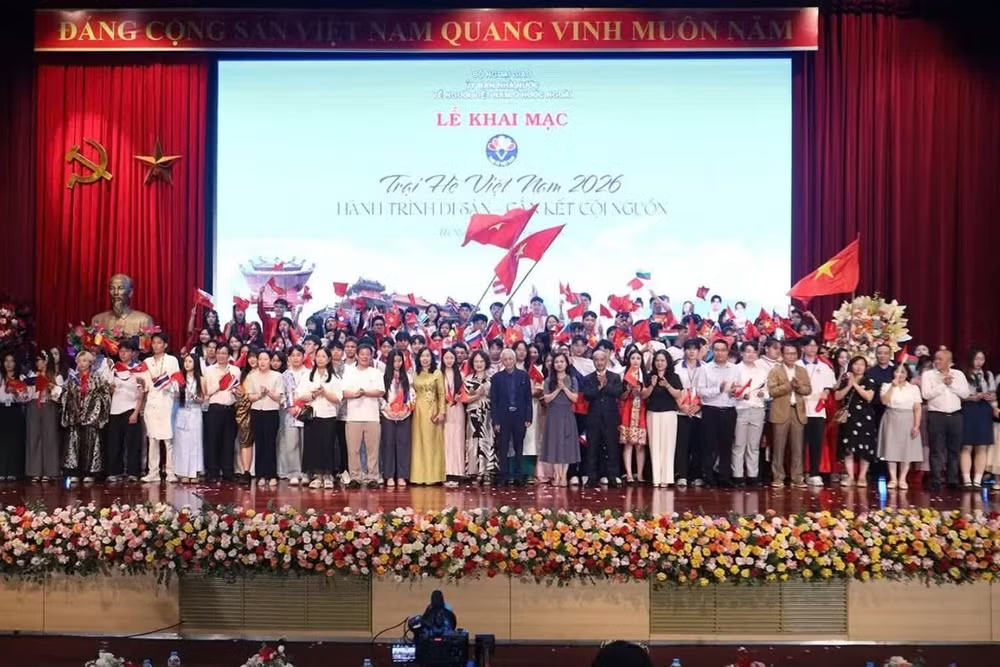
Through these classes, children learn not only their mother tongue but also more about the nation’s traditions, culture and history. This helps preserve Vietnam’s traditional cultural values and introduce the humanistic values reflected in the Vietnamese people’s thinking, spirit and character to international friends.
A distinctive source of soft power
Associate Professor and Dr Bui Hoai Son, a full-time member of the National Assembly’s Committee for Cultural and Social Affairs, expressed particular interest in Resolution No. 23’s goal of promoting overseas Vietnamese as “ambassadors of Vietnam, its culture and people”.
He described this as a distinctive source of soft power. No matter how much investment a national promotional campaign receives, it is difficult to replicate the impact of a Vietnamese person who lives decently, achieves success, acts responsibly and earns the respect of the host society. Through their own lives, every Vietnamese person abroad can tell a story about Vietnam.
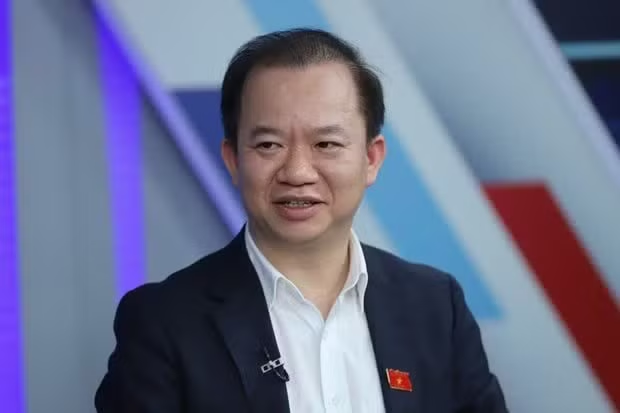
According to Son, overseas Vietnamese do more than introduce Vietnamese cuisine, “ao dai”, the language or traditional festivals. More importantly, they convey the qualities of the Vietnamese people, including compassion, a love of learning, adaptability, determination to improve their lives, attachment to their homeland and responsibility towards the community.
Having integrated deeply into their host societies, overseas Vietnamese enjoy an advantage that conventional promotional activities often struggle to achieve: they understand both cultures and can “translate” Vietnamese values into a language the world can understand and relate to. This, he said, is cultural diplomacy at its deepest level.
Speaking to VietnamPlus on the issue, Most Venerable Thich Bao Nghiem, from Hanoi’s delegation of National Assembly deputies, Vice President of the Executive Council, Head of the Central Committee for Dharma Propagation, and Head of the Executive Board of the Vietnam Buddhist Sangha, said Resolution No. 23 set clear goals to encourage overseas Vietnamese to act as “ambassadors of Vietnam, its culture and people”. This will help consolidate national unity and enhance Vietnam’s soft power and international standing.
According to him, by preserving the Vietnamese language and cultural identity, overseas Vietnamese serve as a bridge between their homeland and host countries, promoting Vietnam’s image abroad.
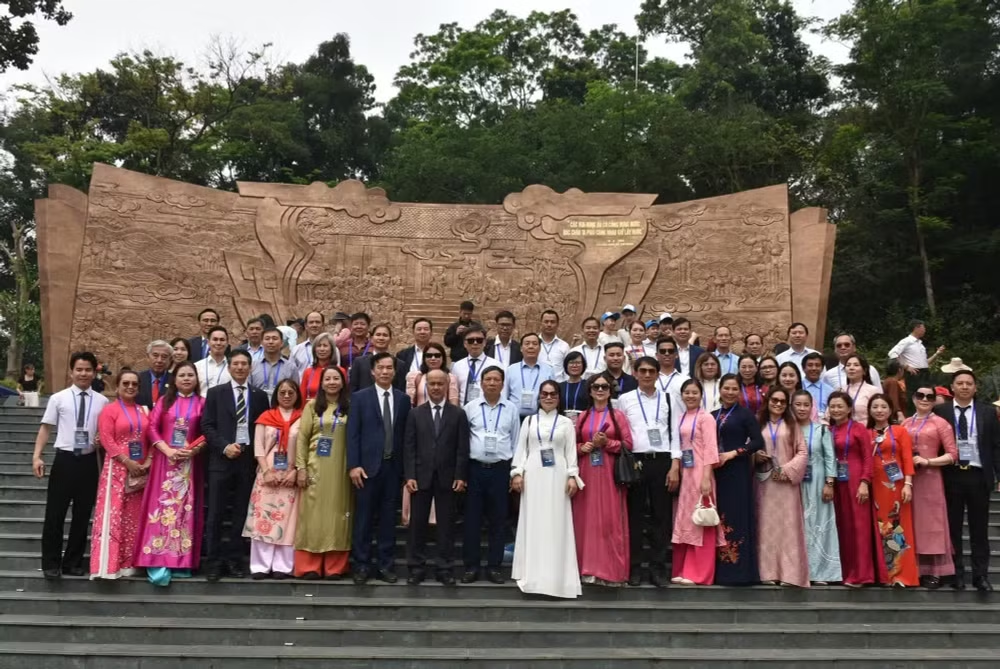
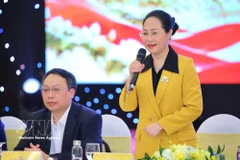
Discussing the issue, Le Thi Hong Van, Director of the Department of External Relations and Cultural Diplomacy under the Ministry of Foreign Affairs and Secretary-General of the Vietnam National Commission for UNESCO, said cultural diplomacy will remain a quiet but enduring force helping the country enter a new stage of development.
This effort involves ministries, sectors, localities, overseas representative agencies, businesses, artists, intellectuals and overseas Vietnamese, enabling everyone to become a “cultural ambassador” who promotes an image of Vietnam as resilient, innovative and responsible.
Regarding promotional solutions, Van said Vietnamese culture needed to be represented effectively in both physical and digital spaces, which increasingly shape perceptions, preferences and lifestyles, particularly among younger generations.
The department will develop shared multilingual databases and content, while stepping up the application of artificial intelligence and digital transformation. The focus, she said, must be on meaningful digitalisation, with clearly identified data, technical standards, interoperability and reusability, rather than simply increasing the volume of digital content.
“Throughout this journey, nearly 6.5 million Vietnamese people in more than 130 countries and territories are our most steadfast cultural ambassadors. Wherever there are Vietnamese people, there are Vietnamese cultural identity and community spirit,” Van emphasised./.