Jakarta (VNA) – ASEAN leaders have called for stronger regional energy connectivity, more diversified supply chains and faster development of renewable energy as the bloc seeks to bolster resilience against mounting global uncertainties.
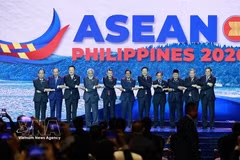
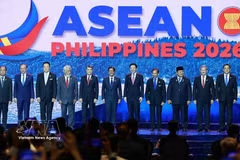
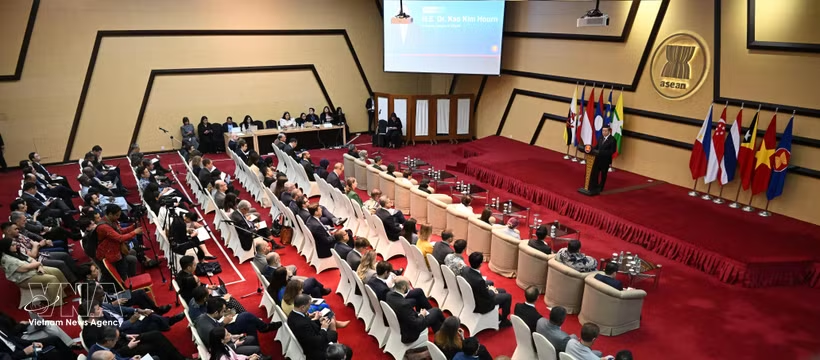
Announcing the outcomes of the 48th ASEAN Summit and related meetings held recently in the Philippines, ASEAN Secretary-General Kao Kim Hourn said the summit’s theme, “Navigating Our Future, Together”, reflected ASEAN’s determination to ensure future global shocks do not spiral into regional crises.
Energy security emerged as one of the summit’s central themes amid growing concerns over a potential global energy crunch linked to escalating tensions in the Middle East. ASEAN leaders stressed the importance of accelerating the ASEAN Power Grid, expanding regional energy integration and expediting ratification of the ASEAN Petroleum Security Agreement (APSA).
Food security also featured prominently in discussions, with leaders pledging to keep markets open, safeguard the flow of essential goods and speed up ratification of the upgraded ASEAN Trade in Goods Agreement (ATIGA 2.0). They also highlighted the role of the ASEAN Plus Three Emergency Rice Reserve (APTERR) in enhancing the region’s resilience against supply chain disruptions.
According to Kao Kim Hourn, ASEAN leaders voiced concern over the safety of ASEAN citizens living and working in the Middle East amid heightened geopolitical tensions. The bloc adopted a declaration on responding to the Middle East crisis, outlining coordinated measures on energy, food, finance, supply chains and consular support.
The ASEAN Secretary-General said the summit adopted and acknowledged 18 key documents, while reaffirming the bloc’s unity despite ongoing regional challenges, including the situation in Myanmar and border tensions between Cambodia and Thailand.
On Myanmar, leaders reiterated their commitment to implementing the Five-Point Consensus (5PC) and tasked ASEAN foreign ministers with continuing engagement efforts aimed at promoting reconciliation and reducing violence.
A notable development at the summit was the adoption of the Cebu Protocol amending the ASEAN Charter to formally include Timor-Leste among ASEAN member states and update the bloc’s flag and emblem to reflect its accession. It marks the first amendment to the ASEAN Charter since its adoption in 2007.
Maritime cooperation was also identified as a strategic priority. ASEAN leaders reaffirmed their commitment to maintaining peace, security and freedom of navigation in line with the 1982 United Nations Convention on the Law of the Sea (UNCLOS 1982), while pushing for substantive and effective negotiations on the Code of Conduct in the East Sea (COC).
The Secretary-General said member states had pledged to accelerate negotiations and work towards concluding the COC this year under the Philippines’ ASEAN chairmanship.
The summit also endorsed initiatives on climate action, disaster resilience, support for micro, small and medium-sized enterprises (MSMEs), digital transformation and green growth./.