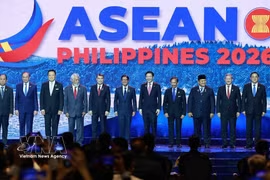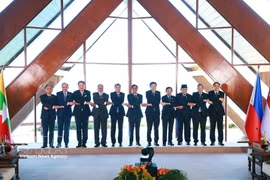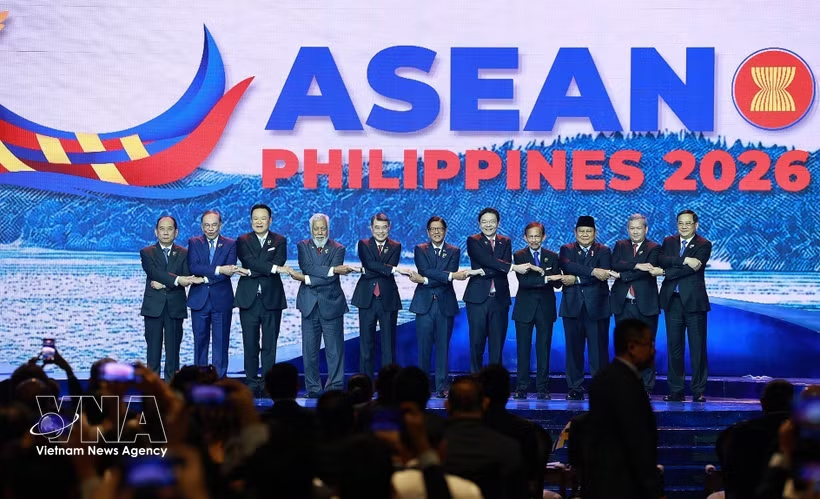
Hanoi (VNA) - Leaders of ASEAN member states agreed to accelerate the implementation of regional energy-sharing mechanisms and cross-border power grid connectivity projects amid growing concerns over potential disruptions to global fuel supplies caused by the conflict, Philippine President Ferdinand Marcos Jr. shared on May 8.
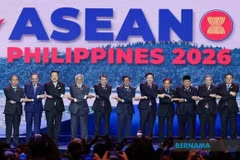
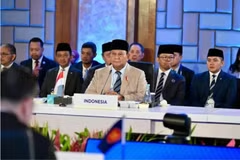
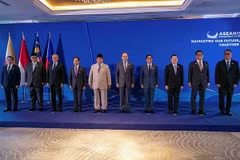
Speaking at a press conference following the 48th ASEAN Summit in Cebu, the President said all member states agreed on the need for stable and reliable energy supply chains and stronger regional cooperation on energy security.
Among the concrete measures discussed was the expedited ratification of the ASEAN Framework Agreement on Petroleum Security (APSA), which will allow ASEAN member-states to assist neighbours experiencing fuel shortages.
Participating leaders agreed on the importance of stable and reliable energy supply chains, greater energy interconnectivity and accelerated diversification toward renewable and alternative sources, Marcos told local and international media.
The APSA mechanism allows ASEAN countries to provide petroleum supplies to member-states facing shortages equivalent to at least 10% of their domestic fuel requirement.
Apart from the petroleum-sharing mechanism, ASEAN leaders also pushed for the operationalisation of the ASEAN Power Grid, a regional initiative aimed at connecting the electricity networks of all member states.
Marcos said the project will support cross-border electricity trading, improve renewable energy integration, and help provide more affordable electricity across Southeast Asia./.
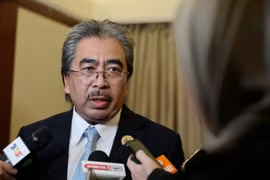
ASEAN needs to involve private sector in oil stockpiling framework: Malaysian minister
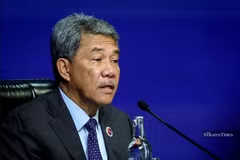
Malaysian Minister of Investment, Trade and Industry Datuk Seri Johari Abdul Ghani said the proposal to develop the framework was tabled during an ASEAN meeting held in Cebu, the Philippines on May 7.