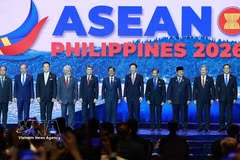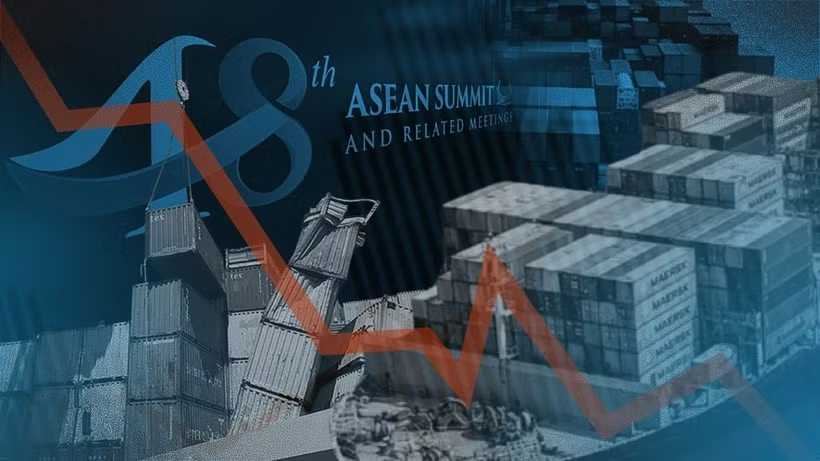
Hanoi (VNA) - As regional leaders have been gathering at the ASEAN Summit 2026 in Cebu to discuss regional cooperation and economic resilience, newly released trade data showed that the Philippines posted the largest trade deficit in Southeast Asia.
Based on bilateral trade figures from the UN Commodity Trade Statistics Database, the Philippines posted the largest trade deficit among member economies of the Association of Southeast Asian Nations (ASEAN) from 2015 to 2024.
Dr. Alicor Panao, Associate Professor at the University of the Philippines, said the gap widened from 8.5 billion USD to 26.8 billion USD over the period.
Based on government data, the Philippines recorded a six-month-high trade deficit of 4.5 billion USD in March as exports surged 20.4% to 6.78 billion USD while imports rose 12.3% to 11.29 billion USD.
While trade deficits are not inherently harmful, a sustained and widening deficit may signal deeper structural weaknesses in domestic production and competitiveness, Panao said in his latest analysis of the region’s trade data.
The Philippines has not made a comparable shift, Panao said, adding that the country continues to import significant volumes of fuel, food, and intermediate goods, while exporting relatively less in higher-value manufacturing.
He said the country’s external position is partly cushioned by remittances from overseas Filipino workers, but these primarily support domestic consumption and help finance imports rather than reduce dependence on them.
At the macroeconomic level, a widening trade deficit can strain the current account and expose the economy to swings in world prices, particularly for energy, which, Panao said, has been affected by the conflict in the Middle East.
To narrow the deficit and strengthen its regional standing, Panao said the Philippines may need to expand domestic production in sectors where it remains import-dependent.
He said the Philippine Government can modernise agriculture, develop higher-value manufacturing industries, increase participation in ASEAN supply chains, and accelerate investments in energy infrastructure to lessen reliance on imported fuel./.