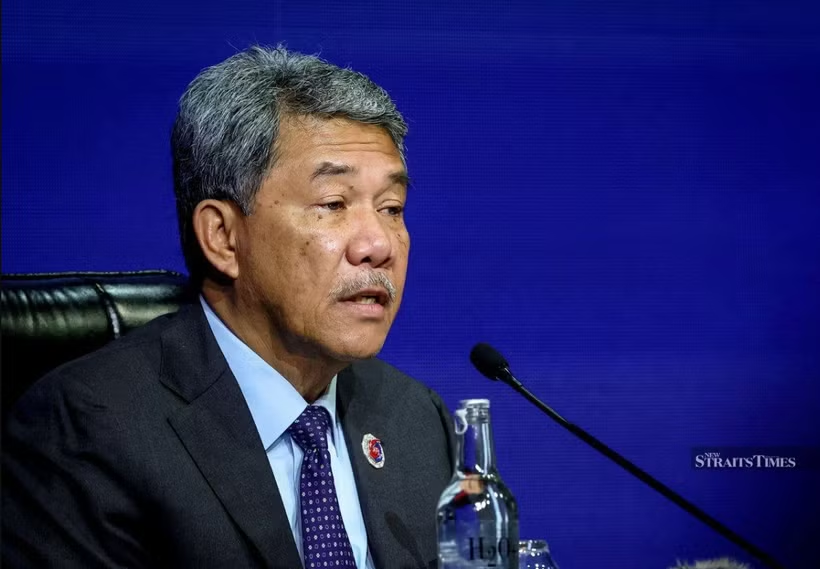
Kuala Lumpur (VNA) - ASEAN is committed to strengthening intra-regional trade, including increasing intra-bloc trade to at least 30% by 2030, according to Malaysian Foreign Minister Mohamad Hasan.
Stressing that intra-bloc trade has not yet reached 25%, Mohamad said ASEAN member countries now need to be more organised and united as a bloc to address the impacts of global conflicts, including disruptions to trade, economy, and regional security, especially during conflicts in Middle East.
ASEAN needs to emphasise efforts to strengthen free trade agreements (FTAs) and facilitate the movement of goods among member countries to bolster intra-regional trade.
If possible, trade between ASEAN countries should also be tariff-free, he told the media on May 8.
Mohamad also highlighted that the Middle East conflict serves as an important lesson for ASEAN, showing that cooperation and understanding among member states are essential to address regional and global challenges.
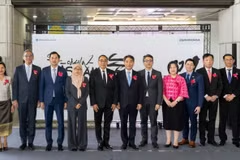
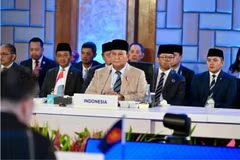
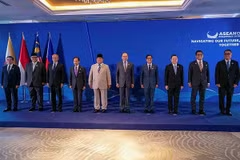
Regarding the Joint ASEAN Foreign Ministers and Economic Ministers Meeting held on May 7, Mohamad said it was an initiative launched under Malaysia's chairmanship to ensure coordination between the pillars of political-security and economic affairs.
He said that ASEAN's previous developments were largely focused on political and security issues, but the focus has now shifted to strengthening the economy and fostering more comprehensive regional cooperation.
A joint meeting involving both foreign and economic ministers was held to ensure that every decision is coordinated across all ASEAN pillars, including economic, social, and cultural aspects, he added./.
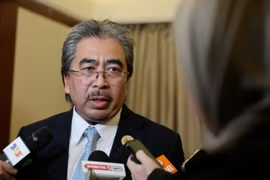
ASEAN needs to involve private sector in oil stockpiling framework: Malaysian minister
Malaysian Minister of Investment, Trade and Industry Datuk Seri Johari Abdul Ghani said the proposal to develop the framework was tabled during an ASEAN meeting held in Cebu, the Philippines on May 7.