ASEAN poised for greater role in global economy

ASEAN is a peaceful region, which makes it a conducive location for foreign direct investment and business ventures that can come from across the globe, said the chief economist of Bank Muamalat Malaysia Berhad.

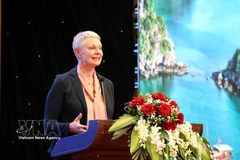
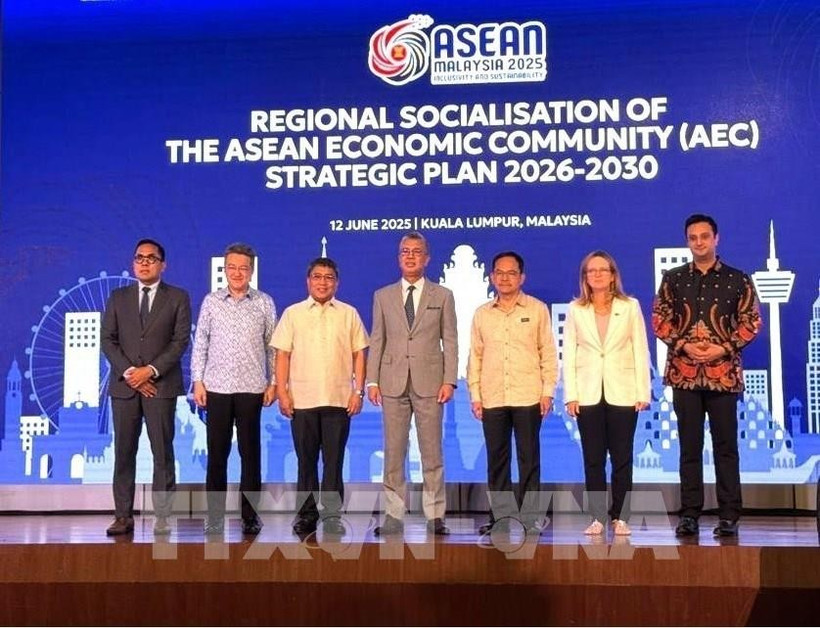
Through the ASEAN Economic Community Strategic Plan, ASEAN member countries aim to significantly enhance intra-regional trade by building greater resilience to external shocks and promoting the connectivity of the common market for goods, services and investment. (Photo: VNA)

Kuala Lumpur (VNA) – ASEAN could emerge as the world's fourth-largest economy in the coming decades but the regional bloc must accelerate integration, strengthen institutions, and adapt to global shifts to realise this potential, experts have said.

Mohd Munir Abdul Majid, Chairman of CARI ASEAN Research and Advocacy, said ASEAN, with an economic size of 3.8 trillion USD, could become the fourth-largest economy, particularly artificial intelligence (AI) in the services sector -- will drive future growth.

ASEAN has progressed based on consensus to deepen integration and free trade, he noted.

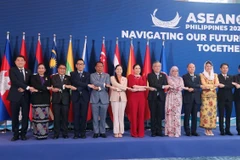
The ASEAN Free Trade Area was formed in 1992, followed by the establishment of the ASEAN Economic Community (AEC). The most recent direction for this integration was provided in the Kuala Lumpur Declaration and ASEAN Community Vision 2045, adopted at the 46th ASEAN Summit in Kuala Lumpur in May.

Mohd Afzanizam Abdul Rashid, chief economist of Bank Muamalat Malaysia Berhad, said that e-commerce could be an important catalyst for intra-regional trade, and ASEAN needs to continue to invest in building a robust digital infrastructure. He went on to say that payment systems such as QR code networks will be crucial to support micro, small and medium enterprises (MSMEs) in expanding to international markets.

Above all, ASEAN is a peaceful region, which makes it a conducive location for foreign direct investment and business ventures that can come from across the globe, Mohd Afzanizam stated, highlighting initiatives such as the Johor-Singapore Special Economic Zone as evidence of strengthening regional ties.

Li Yuqing, assistant professor at the Institute for International and Area Studies of Tsinghua University, said the updates to the ASEAN Trade in Goods Agreement enhance regional trade and deepen integration, supporting its goal of becoming the world's fourth-largest economy.

She also noted that integration makes ASEAN's investment environment more stable and transparent, enabling businesses to better access the ASEAN market and achieve more efficient resource allocation.

Oh Ei Sun, principal adviser at the Pacific Research Centre of Malaysia, stated that ASEAN should prioritise high-tech sectors that offer greater value-added potential. However, he also urged the bloc to address internal development disparities.

ASEAN should focus on eradicating poverty amongst itself for the least developed member states, and escaping the middle-income trap for the developing ones, he added.

He also suggested that ASEAN countries may deepen cooperation with China in infrastructure development, which would accelerate progress in the digital economy and green transition./.
VNA

See more

Thailand enters technical deflation: Expert

Thailand enters technical deflation: Expert

Associate Professor Thanavath Phonvichai, President of the University of the Thai Chamber of Commerce and Chairman of the Centre for Economic and Business Forecasting, attributed the current bout mainly to lower production costs, particularly cheaper fuel and persistently low agricultural prices.

Indonesia spots four Sumatran tigers at national park

Indonesia spots four Sumatran tigers at national park

Camera traps installed in Bukit Tigapuluh National Park of Indonesia have recorded four individual Sumatran tigers (Panthera tigris sumatrae), providing strong evidence that the conservation area's ecosystem remains well preserved.

Deputy Prime Minister and Agriculture Minister of Thailand Thammanat Prompao (Photo: The Nation)

Agricultural envoys ordered to boost Thai crop exports

Deputy Prime Minister and Agriculture Minister of Thailand Thammanat Prompao said that the ministry is prioritising a “market-led, innovation-supported, higher income” strategy, built on three key pillars: strengthening confidence in core, established markets to protect Thailand’s market share; targeting high-potential products to open new opportunities, including dried seahorses, dried geckos, live crocodiles for consumption, and breeding crocodile parent stock for farming; and expanding networks by deepening cooperation with key trading partners, including China, and widening sales channels, such as digital platforms, so Thai products can reach consumers more directly.

Illustrative image (Photo: Internet)

Thailand maps out national semiconductor strategy

Under the strategy, Thailand will prioritise power, sensor, photonics, discrete and analog semiconductors, which are closely linked to the country’s established electronics manufacturing base and supply chains serving the automotive, energy, data centre and industrial sectors.

MDEC headquarters (Photo: nabalunews.com)

Malaysia’s digital exports surge

Malaysia's digital exports recorded 6.8 billion RM (1.67 billion USD) between 2024 and the first half of 2025, marking a milestone in the country’s development journey of digital economy.

Malaysian Minister of Economy Akmal Nasrullah Nasir speaks at the Economy Minister Mandate 2026 on January 8. (Photo: Bernama)

Malaysia seeks to translate economic policies into practice

Malaysia enters the preparatory phase for the 13MP on the back of encouraging economic indicators in 2025. Gross domestic product (GDP) expanded by 5.2% in the third quarter of 2025, bringing average growth for the first nine months of the year to 4.7%.