Banks with sufficient funding base to benefit from new safety ratio policy

The new policy, which will take effect early next month, raises the loan-to-deposit ratio (LDR) cap to 95% from the current 85%, while starting a phased transition towards Basel III liquidity standards, including by introducing a liquidity coverage ratio (LCR) and net stable funding ratio (NSFR).

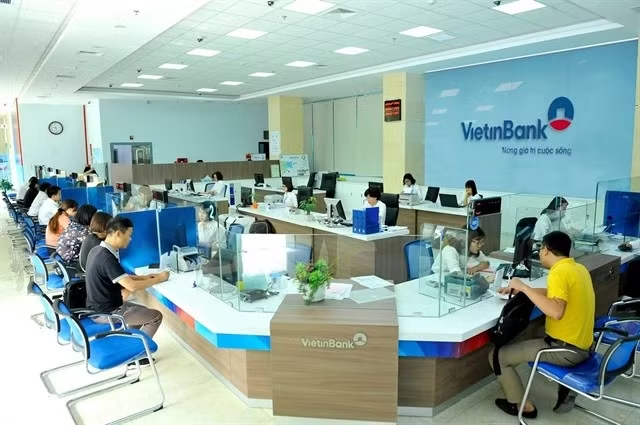
VietinBank’s LDR is around 92.8%, according to estimates by the ACB Securities Company based on data as of June 30. (Photo: VNA)

Hanoi (VNS/VNA) – To benefit from a new State Bank of Vietnam (SBV) regulation on expanding lending headroom, banks must ensure they have a sufficient funding base to support credit demand without incurring excessive liquidity risk, experts have said.

The SBV recently issued Circular 50/2026/TT-NHNN on safety limits and prudential ratios for banking operations. The new policy, which will take effect early next month, raises the loan-to-deposit ratio (LDR) cap to 95% from the current 85%, while starting a phased transition towards Basel III liquidity standards, including by introducing a liquidity coverage ratio (LCR) and net stable funding ratio (NSFR).

According to analysts, raising the LDR cap does not mean that every bank can immediately expand its lending. The actual impact of this policy will depend on each bank’s specific funding structure, its LDR as determined by the new calculation method and its ability to meet the newly introduced liquidity requirements.

Banks that have a sufficient funding base to support credit demand without incurring excessive liquidity risk might take advantage of the expanded lending headroom under the new regulation.

In contrast, some banks may find themselves hitting the LDR cap due to a contraction in their funding base when the new regulations come into effect.

According to ACB Securities Company (ACBS) estimates based on data as of June 30, the new formula could cause the LDR of the surveyed banks to rise by anywhere from three to 13 percentage points.

ACBS said that under the new formula, VPBank’s LDR stood at approximately 96.4%, exceeding the 95% threshold. VIB’s LDR was estimated at 93%, while VietinBank’s LDR was around 92.8%. In a simulation run by the securities company, VPBank surpassed its limit, and VIB and VietinBank only had about 2 and 2.2 percentage points of headroom remaining, respectively, before hitting the new LDR cap.

The firm also observed that the LDR increased most significantly at banks where deposits held at other credit institutions exceed their borrowings from such institutions, or where the scale of both interbank lending and borrowing is substantial. Specifically, the LDR rose by 13.3 percentage points for VIB, 10.1 percentage points for VietinBank and 7.7 percentage points for VPBank.

However, even when there is still regulatory headroom, banks face another challenge of raising the funds for additional lending as raising the LDR cap does not, in itself, generate new capital.

According to Nguyen Khanh, founder of economic training institution Hedge Academy, since the implementation of the LCR and the NSFR, banks have been required to keep their LDR at or below 95%. Only by simultaneously meeting the 100% threshold for both the LCR and NSFR can a bank be exempted from this LDR limit.

He said that this creates a scenario in which banks must work to grow their loan portfolios, deposits, high-quality liquid assets, stable funding sources and LDR, all while their ability to expand total deposits through new fundraising is limited.

At the same time, the pressure on banks to mobilise capital will not automatically vanish the moment the circular takes effect on December 1, Khanh said.

If banks cannot expand their deposit base quickly enough, the pressure will continue to manifest in maturity mismatches, rising costs of capital and higher deposit interest rates. A high level of deposit rates, along with a persistent gap between the growth rates of assets and funding, is likely to continue throughout the transition period, he noted./.
VNA

See more

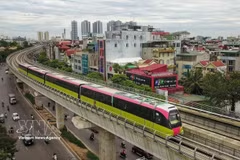
The North-South high-speed railway project is expected to shorten travel times between provinces and cities. (Photo: VNA)

Key consultancy contract for North-South high-speed railway project signed

The Thang Long Project Management Unit held a signing ceremony on November 25 for Contract Package TV-02, covering consultancy services for surveys and the preparation of a feasibility study report, including the Front-End Engineering Design (FEED) and bidding documents, for the North-South high-speed railway project.

The policy allowing businesses to deduct up to 200% of research and development (R&D) expenses helps ease financial pressure and free up additional resources for technology investment. (Illustrative photo: VNA)

Tax incentives encourage businesses to master technology

Tax incentives are particularly important for technology businesses, as R&D involves not only researching new technologies but also continuously improving products, enhancing features, optimising processes and increasing productivity. Such activities require sustained investment, while commercial returns often take considerable time to materialise.

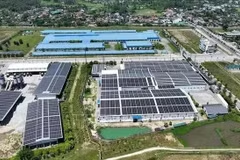
A rooftop solar power system installed at a factory in the Duc Tho Industrial Cluster, Duc Tho commune, Ha Tinh province. (Photo: VNA)

Government approves programme to drive North Central region's development

Deputy Prime Minister Pham Gia Tuc signed a decision on November 23 approving a programme to implement the North Central region's master plan for 2021-2030, with a vision to 2050, aiming to turn the region into a dynamic and sustainable growth hub, with science, technology and innovation serving as key economic drivers.

Quang Tri allocates over 50 billion VND for trade promotion in 2026-2030, supporting OCOP entities in market expansion and brand development (Photo: VNA)

E-commerce expands market access for OCOP products

Rather than relying on traditional outlets, cooperatives, businesses and household producers are increasingly using short videos, livestreams and e-commerce platforms to introduce their products, origins and production processes and distinctive values. These tools help bring producers closer to consumers and expand their reach beyond local markets.

Vietnam Expo HCMC 2026 features 986 booths showcasing products from 825 businesses. (Photo: bnews.vn)

Vietnam Expo 2026 to feature 986 booths, 825 exhibitors

The 24th Vietnam International Trade Fair (Vietnam Expo 2026) will feature 986 booths and 825 enterprises, trade promotion bodies and industry associations from 18 countries and territories, including Vietnam, India, Belarus, the Republic of Korea, Malaysia, China and Taiwan (China)

Processing octopus for export to the Japanese market at Huy Nam Company, An Giang (Photo: VNA)

Vietnam shifts focus towards import-export quality, efficiency

Speaking at a consultation workshop on the strategy for merchandise exports and imports, recently held by the Ministry of Industry and Trade (MOIT), Deputy Minister of Industry and Trade Luong Hoang Thai said rising export turnover did not necessarily reflect a corresponding improvement in the economy's endogenous capacity.

Delegates at the event (Photo: SGGP)

Asia Nuclear Business Platform makes Vietnam debut

The 11th Asia Nuclear Business Platform, taking place in Hanoi on November 25-26, offers Vietnam an opportunity to strengthen ties with international partners, gain access to advanced technologies and experience, and promote cooperation while enhancing national capacity, laying the groundwork for safe, secure and sustainable nuclear power development.

Domestic and international businesses engage in trade networking at the exhibition. (Photo: VNA)

VINAMAC EXPO 2026 spotlights industrial machinery, technologies

Exhibitors are showcasing a wide range of products, machinery, equipment and advanced solutions in mechanical engineering, metalworking, welding and cutting technologies, metallurgy, control and automation, industrial robotics, electromechanics, industrial equipment and supporting industries.

Vehicles showcased at the Vietnam Mobility Show 2025 (Photo: VNA)

Vietnam Mobility Show 2026 gears up for 40-plus brands

The fourth edition is scaling up, spanning mass-market, electric vehicle (EV), luxury and high-performance segments. Beyond static displays, the show will offer test drives, tech showcases, and ownership and operating solutions.