Hanoi (VNA) – High costs, fragmented connectivity, heavy reliance on road transport and uneven business capacity remain major bottlenecks facing the logistics sector of Ho Chi Minh City.
As the city seeks to make logistics a key service industry, targeting average annual growth of 13-16% during 2026-2035, it needs not only to expand infrastructure but also better organise cargo flows, develop multimodal transport, accelerate digitalisation and resolve business difficulties.
Fragmented connectivity
Logistics plays an increasingly important role in the city's import-export activities and economic growth. However, its advantages in seaports, airports and industrial parks have yet to be translated into an efficient logistics chain.
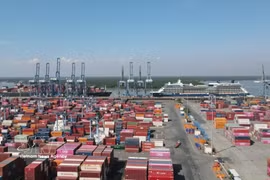
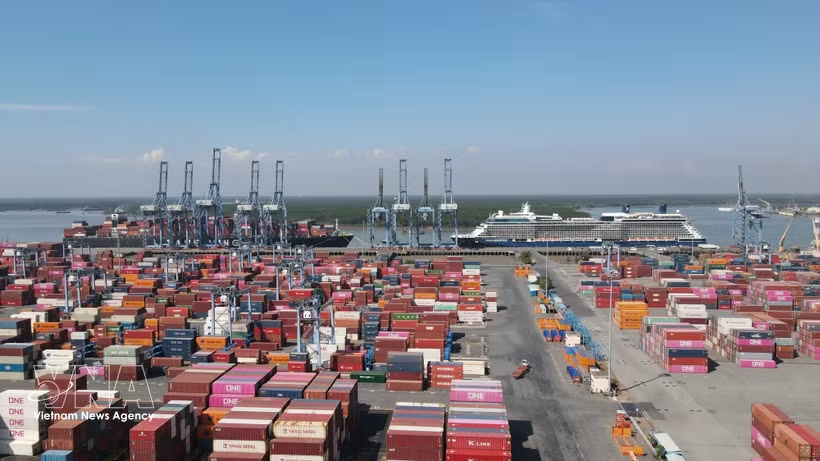
Huynh Tuan Hoang, Deputy Head of the International Economics Division under the municipal Department of Industry and Trade, said the city currently has one port-linked free trade zone, 203 wharves, 90 seaports, 37 inland waterway ports, 16 inland container depots and three railway stations.
However, transport links between seaports, airports, industrial parks and logistics centres remain fragmented. Road transport accounts for a disproportionately large share, while railways and waterways have yet to reach their full potential.
These shortcomings have pushed logistics costs to around 16-17% of the city's GRDP, above the global average of 11.6% and levels in Singapore (8.5%) and Malaysia (13%), Hoang said.
Pham Van Xo, Chairman of the Ho Chi Minh City Import-Export Association, said logistics development requires greater synchronisation between regulations and infrastructure. Although the city has planned logistics centres and a free trade zone, their links with transport networks and seaports need to be strengthened.
Road transport currently handles 88% of cargo volumes. Xo said expanding rail and waterway transport would provide more options for businesses, reduce pressure on roads and lower transport costs.
Restructuring supply chains
Under its action plan implementing the national logistics development strategy for 2025-2035, with a vision to 2050, Ho Chi Minh City aims to raise logistics value added to 8-10% of GRDP, reduce logistics costs to 11-14% and develop at least one internationally competitive modern logistics service centre during 2026-2035.
Le Van Danh, Deputy Director of the municipal Department of Industry and Trade, said the city would focus on synchronising logistics infrastructure, including seaports, warehouses, key transport routes and logistics centres.
The city is also looking to free trade zones and integrated logistics areas as new growth drivers, while encouraging logistics companies to develop services linked to energy efficiency, digitalisation and green transition.
Bui Ba Nghiem, a senior expert at the Agency of Foreign Trade under the Ministry of Industry and Trade, stressed the need to identify specific difficulties faced by businesses and provide targeted support. He proposed a digital platform for import-export coordination and logistics to collect real-time data on bottlenecks, enabling authorities to address issues and monitor them through to resolution.
Vo Thi Phuong Lan, Standing Vice Chairwoman of the Ho Chi Minh City Logistics and Seaport Association, said digitalisation, automation and transparent procedures could further reduce costs. Connecting data and processing delivery, payment, customs declaration, clearance and cargo coordination online would help cut waiting times and incidental expenses.
Meanwhile, Xo highlighted the role of logistics centres, free trade zones and deep-water ports in creating major cargo consolidation, transit and distribution hubs. Greater connectivity among road, rail and waterway networks would help link production areas and economic corridors with seaports.
Nguyen Loc Ha, Vice Chairman of the municipal People's Committee, said stronger links between import-export activities, logistics and supply chains would enhance the competitiveness of the city's goods and help it integrate more deeply into global supply chains.
Achieving the city's logistics ambitions will require not only more warehouses, ports and logistics centres, but also more efficient connections among existing facilities, lower costs and faster cargo flows from production to export./.