Indonesia sets ambitious labour export target for 2025

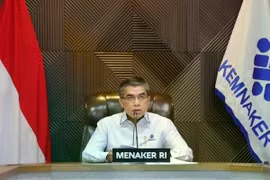
Indonesia aims to send at least 425,000 workers abroad in 2025, a move expected to boost the nation’s economic growth by 0.52% and generate over 300 trillion IDR (18.5 billion USD) in foreign exchange earnings, according to Minister of Migrant Worker Protection Abdul Kadir Karding.

Jakarta (VNA) – Indonesia aims to send at least 425,000 workers abroad in 2025, a move expected to boost the nation’s economic growth by 0.52% and generate over 300 trillion IDR (18.5 billion USD) in foreign exchange earnings, according to Minister of Migrant Worker Protection Abdul Kadir Karding.

In 2024, Indonesia deployed 297,000 overseas workers, contributing 251 trillion IDR to foreign exchange revenues and increasing economic growth by 0.36%. This programme also helped reduce unemployment by nearly 4%, benefiting 7.47 million workers.

Despite these achievements, the 2024 figures fell short of meeting the global labour market’s demand for 1.35 million workers. To address this, the government has raised its 2025 target and is intensifying efforts to maximise overseas job opportunities to further stimulate the national economy.

Key strategies include enhancing workers' language skills, with English prioritised starting from elementary education. This aims to improve the competitiveness of Indonesian workers.

Besides, prospective overseas workers will undergo skill certification, safety training, and other preparatory programmes.

Karding emphasised that building the capacity of Indonesian workers will also help reduce illegal labour practices and exploitation abroad.

Currently, approximately 5 million Indonesians are employed in over 100 countries, primarily in Malaysia, Saudi Arabia, and the Republic of Korea. However, an equal number of Indonesians are believed to be working overseas illegally.

To cope this issue, Indonesia has developed the SISKOP2MI system, a digital platform to safeguard the rights of Indonesian migrant workers and streamline protective services./.


VNA

See more

An overview of the dialogue between ASEAN leaders and the ASEAN Business Advisory Council (ASEAN-BAC) in Manila on November 15 (Photo: VNA)

Vietnam puts forward priorities to advance ASEAN cooperation

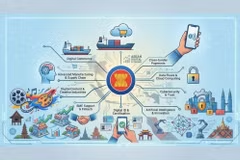
Appreciating ASEAN-BAC’s report and recommendations, Deputy Minister of Foreign Affairs Dang Hoang Giang, head of Vietnam’s ASEAN Senior Officials’ Meeting (SOM) delegation, called for simplifying procedures, reducing costs, accelerating digitalisation, upgrading the ASEAN Single Window (ASW) and effectively implementing the ASEAN Digital Economy Framework Agreement (DEFA) to make the regional market more accessible.

ASEAN signs Digital Economy Framework Agreement

ASEAN signs Digital Economy Framework Agreement

The Digital Economy Framework Agreement (DEFA), the bloc’s first standalone and legally binding digital economy agreement, establishes common rules covering digital trade, cross-border data flows, electronic payments, cyber security and artificial intelligence (AI).

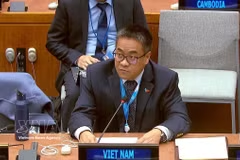
Minister Counsellor Nguyen Hai Luu, Deputy Permanent Representative of Vietnam to the UN, speaks at the discussion on November 12, 2026. (Photo: VNA)

Vietnam supports peace, reconstruction efforts in Gaza: diplomat

Minister Counsellor Nguyen Hai Luu, Deputy Permanent Representative of Vietnam to the UN, expressed deep concern over the dire humanitarian situation in Gaza, particularly as recent heavy rains and flooding have worsened living conditions for residents.

Thailand diversifies oil sources to ensure energy security

Thailand diversifies oil sources to ensure energy security

Although the diversification of oil import sources has helped reduce the risk of domestic oil shortage, it has not immediately reduced energy costs because import prices depend on market mechanisms, transportation costs, foreign exchange rates and the terms of oil contracts.

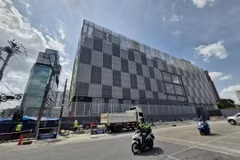
ST Telemedia Global Data Centres (Thailand), an affiliate of Singapore Telecom, is developing three data cehtres in Thailand including this facility on Rama IX Road in Bangkok. (Photo: bangkokpost)

Thailand tightens regulations on data centres

The new rules focus on controlling investment scale, electricity and water consumption, environmental impacts, and preventing investors from reserving resource quotas beyond their actual needs.

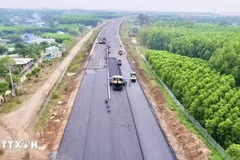
A road is under construction in Dong Nai city, Vietnam. (Photo: VNA)

ADB: Southeast Asia needs 7.1 trillion USD in infrastructure investment by 2040

ADB estimates that the region will need an average of 476 billion USD in infrastructure investment annually during 2026–2040, equivalent to 8.7% of GDP. However, at current investment levels, government budget resources would cover only around 45% of this demand, leaving an annual financing gap of 264 billion USD.

Kyodo News publishes an article titled “Sculptures by Japanese, Vietnamese artists on display in Yokohama,” (Screenshot photo)

Japanese media widely cover top Vietnamese leader ’s visit

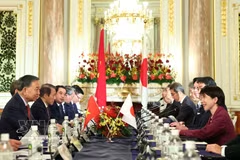
Japanese media have continued extensive coverage of General Secretary of the Communist Party of Vietnam (CPV) Central Committee and President To Lam’s activities in Japan, highlighting his meetings with representatives of leading financial institutions at the Tokyo Stock Exchange, witnessing of cooperation agreement signing and participation in cultural exchanges.

Thailand pushes for establishment of ASEAN emergency public health centre

Thailand pushes for establishment of ASEAN emergency public health centre

The draft agreement stipulates that ACPHEED will comprise three specialised centres based in three ASEAN member states. Vietnam will oversee the centre for prevention and preparedness; Indonesia will host the centre for detection and risk assessment; and Thailand will be responsible for the centre for response and risk communication.