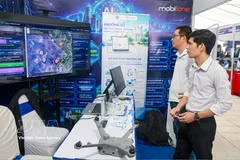
The programme has been popularised among young Vietnamese intellectuals across the world since April this year.
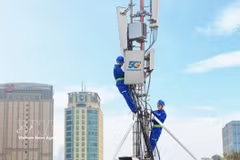
By October 31, Viettel had activated all 1,337 BTS stations, eliminating 1,856 mobile signal dead zones, including 788 villages and hamlets and 1,068 residential clusters with at least 50 residents each.
Designed with eight fibre pairs, the system will employ next-generation wavelength-division multiplexing (WDM) technology and an open-cable architecture. It is expected to deliver a round-trip data latency of just 12 milliseconds, about 50% lower than the current average.
Clex was researched and developed by CMC based on a large language model specialising in Vietnamese law, which was trained and fine-tuned on a knowledge base comprising more than two million legal documents.
The shift from near-bottom rankings in the 2G/3G era to the global top 10 spans three network generations in about a decade. But most of the gain came in less than two years after 5G’s arrival.
Experts said the first step is not another broad strategy but a hard-headed audit of what Vietnam can actually do and a clear-eyed map of its advantages, technology gaps and opportunities in the global value chain.
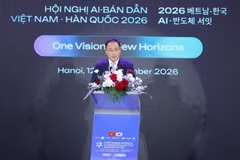
For Vietnam, AI-driven transformation is both a strategic opportunity and an inevitable requirement for development. Science, technology and innovation are becoming key drivers of growth, productivity and competitiveness, said Deputy Minister of Foreign Affairs Nguyen Manh Cuong.
As science, technology and digital transformation become increasingly integrated into production, governance and daily life, they can help create new drivers of growth and advance the development goals set out in the resolution.
The Vietnam National Authority of Tourism (VNAT) reported that Vietnam drew about 19.5 million foreign arrivals in the first 10 months of 2026, up 13.8% from a year earlier. That growth, along with changing consumer behavior, is forcing travel companies to rethink sales, service quality and how they mine customer data.
Van expressed her hope that the NIC would serve as a bridge to encourage businesses and major corporations from the GBA to invest in Vietnam and transfer innovative technologies, particularly in artificial intelligence (AI), green transition and financial technology (FinTech).
The ambassador highlighted the complementary strengths of Vietnam and the Indian state, home to the country's Silicon Valley, and significant potential for cooperation in artificial intelligence (AI), semiconductors, digital technology, and research and development.
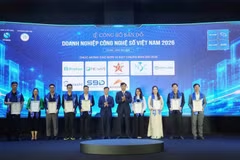
Available at top10ict.com, the online map allows customers, partners and investors to search for enterprises throughout the year. A new feature introduced in 2026 is VINASA's year-round reception, verification and updating of enterprise profiles, replacing the previous annual update cycle.
Vietnam's growing focus on science and technology, digital transformation and innovation as new drivers of development made India a natural partner in achieving its development and digital transformation goals. Cooperation potential between the two countries remains substantial, spanning both hardware and software.
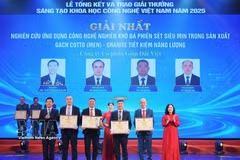
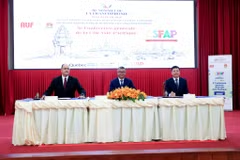
After more than 30 years since its establishment in 1995, VIFOTEC had established itself as one of the country's prestigious awards for the intellectual community. Beyond recognising outstanding research achievements, it reflects the pivotal role played by the community
Vietnamese Deputy Minister of Science and Technology Tran Trung Tinh stressed that the Politburo's Resolution No. 57-NQ/TW identifies science and technology, innovation and digital transformation as leading breakthroughs and key drivers of rapid and sustainable development. Semiconductors and artificial intelligence (AI) are among the strategic technologies prioritised for development.
The 2026 state budget allocated about 95 trillion VND (3.65 billion USD) for science, technology, innovation and digital transformation. As of October 30, disbursement was only 42.12%, with innovation at 27.98%, and digital transformation 29.9%.
The agreement establishes a cooperation framework to modernise higher education through digital governance, digital learning, artificial intelligence (AI) applications, and capacity building through training and knowledge sharing. It also aims to expand internship, employment and scholarship opportunities for students.
By 2035, Vietnam is expected to have a workforce and corporate base with financial capacity, technology ownership and markets, according to Assoc. Prof. Vu Viet Hung, Chairman of the Canadian Vietnamese Scientists and Experts Association (CVSEA).
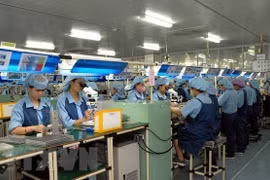
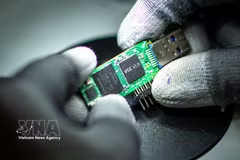
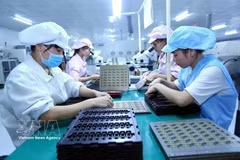
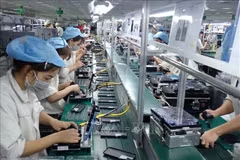
Hardware and electronics exports reached an estimated 30.681 billion USD in October, up 108% from the same month last year.
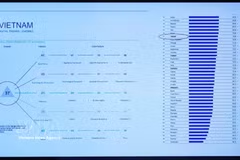
Vietnam ranked 13th in AI application, 15th in digital and AI governance, and 21st in efficiency, highlighting its strengths in digital technology and AI application, and in digital governance.
The 2025 and 2026 GII reports show that Vietnam continued to rank first globally in the share of high-tech exports and creative goods in total trade.