Vietnam builds technological capacity in digital era

As science, technology and digital transformation become increasingly integrated into production, governance and daily life, they can help create new drivers of growth and advance the development goals set out in the resolution.

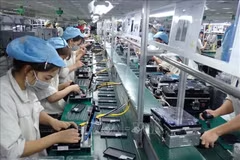
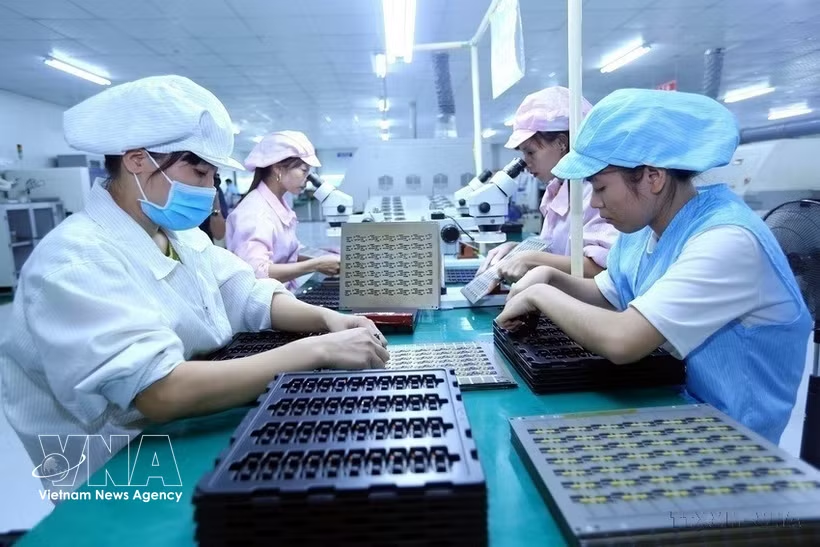
Assembling electronic components on the production line of Bao Sen Co., Ltd in Bac Ninh City. (Photo: VNA)

Hanoi (VNA) – Science, technology, innovation and digital transformation are being promoted as key drivers of national development under the Politburo’s Resolution No. 57-NQ/TW, dated December 22, 2024.

Science and technology awards are playing an important role in recognising creative achievements, encouraging research and supporting the development and application of home-grown technologies.

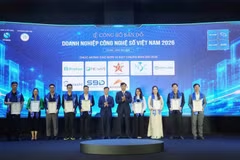
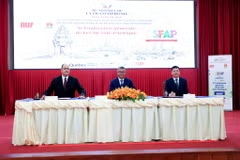
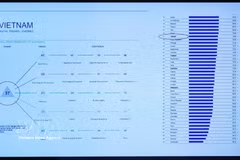
The Vietnam Digital Technology Enterprise Map 2026 and the Top 10 Vietnam Digital Technology Enterprises 2026 programme, organised by the Vietnam Software and IT Services Association (VINASA) under the sponsorship of the Ministry of Science and Technology, have provided an overview of the domestic digital technology sector.

Covering 11 fields and featuring 108 enterprise positions, the map identifies companies with strong capabilities and highlights their growing role in the technology value chain.

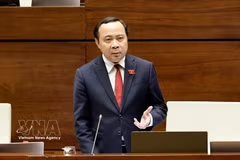
Deputy Minister of Science and Technology Pham Duc Long said the map not only introduces leading companies but also reflects Vietnam’s digital technology capabilities, the technologies mastered by local businesses and their ability to address practical challenges.

Developing young scientific talent is another priority for building technological capacity over the long term.

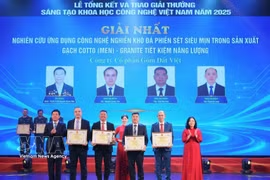
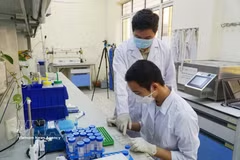
In 2026, the Golden Globe Science and Technology Awards continued to honour outstanding Vietnamese scientists aged 35 or under for their achievements in research, development and technology application. Ten young scientists were recognised for work in strategic technology fields.

This year's awards expanded the number of eligible fields from five to 10, while placing greater emphasis on research quality, mastery of core technologies, practical value, scientific integrity and the award winners' commitment to contributing to national development.

The 2025 Vietnam Science and Technology Innovation Awards (VIFOTEC) also recognised research projects with strong application potential and benefits for the community. Of 83 entries across six fields, 42 were selected for awards. The projects covered mechanical engineering and automation, information technology, electronics and telecommunications, materials, energy, the environment and biology.

Notably, two first-prize winning projects in energy conservation and new energy use, and materials technology, received certificates of recognition from the Director General of the World Intellectual Property Organisation (WIPO) as outstanding works of 2025.

Many of the awarded projects are aimed at practical applications in production, energy saving, environmental treatment and efficient resource use.

The value of these awards extends beyond recognition. They can open up opportunities for further research, cooperation, access to infrastructure and links with businesses, helping turn knowledge and creativity into technological capabilities, products and tangible economic value.

Making digital transformation deliver practical results

Digital transformation under Resolution No. 57-NQ/TW is increasingly assessed through concrete and verifiable outcomes. Efforts to connect State databases and bring digital platforms closer to citizens show how technology is being applied to public administration and everyday needs.

Following a 100-day campaign to address bottlenecks in digital transformation, the Ministry of Home Affairs completed the connection and synchronisation of data from all 12 of its databases with the National Data Centre.

vnanet_potal-bac-ninh-thao-go-diem-nghen-nang-hieu-qua-chuyen-doi-so-8965839.jpg
People are instructed to use digital utilities on their smartphones. (Photo: VNA)

Of these, 11 databases have been cross-checked against the National Population Database, nine successfully connected with the ministry's internal databases, and seven put into operation. The data is being used to support information searches and administrative procedures for citizens and businesses.

To meet the targets, the ministry carried out database development, digital platform building, institutional improvements and administrative reform in parallel. It also strengthened coordination between specialised and technical units to resolve difficulties in data connection, synchronisation and standardisation.

Rather than waiting for the entire infrastructure system to be completed before transferring data, the ministry implemented different tasks simultaneously. Its units worked with those of the Ministry of Public Security to connect, synchronise, cross-check and clean data, while addressing problems arising.

Public access to and use of digital services are another direct measure of the effectiveness of digital transformation. Thanh Hoa province launched a 60-day campaign to encourage residents to install its Thanh Hoa Digital Application, running from November 2 to December 31, 2026. The campaign covers 166 communes and wards and aims to have 40% of the adult population install the application.

Local authorities are combining installation drives with direct guidance on how to use its practical functions. In Hoang Giang hamlet, Trung Chinh commune, local officials and grassroots forces have helped residents register accounts and become familiar with the application.

So far, all civil servants and public employees in the commune have installed it. A total of 6,459 adults have also done so, accounting for more than 26% of the adult population.

In Quang Yen commune, Party members, mass organisations and community digital technology teams are helping residents use features such as submitting feedback and proposals, accessing online public services, tracking administrative dossiers and looking up essential information.

These results show that Resolution No.57-NQ/TW is being translated into action across public administration, research and business activities. Sustaining and expanding these efforts will be essential to generating wider socio-economic benefits.

As science, technology and digital transformation become increasingly integrated into production, governance and daily life, they can help create new drivers of growth and advance the development goals set out in the resolution./.


VNA

See more

The beauty of Dong Van Karst Plateau (Photo: VNA)

Vietnam tourism’s competitive future runs on digitalisation

The Vietnam National Authority of Tourism (VNAT) reported that Vietnam drew about 19.5 million foreign arrivals in the first 10 months of 2026, up 13.8% from a year earlier. That growth, along with changing consumer behavior, is forcing travel companies to rethink sales, service quality and how they mine customer data.

Visitors at the exhibtion held within the framework of the 16th Business of IP Asia Forum. (Photo: VNA)

Vietnam promotes innovation links at Hong Kong Entrepreneur Day 2026

Van expressed her hope that the NIC would serve as a bridge to encourage businesses and major corporations from the GBA to invest in Vietnam and transfer innovative technologies, particularly in artificial intelligence (AI), green transition and financial technology (FinTech).

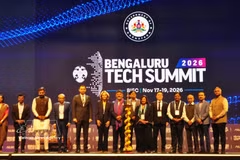
Delegates pose for a group photo at the Bengaluru Tech Summit 2026 in Karnataka, India (Photo: VNA)

Vietnam attends annual int’l tech summit in India

Vietnam's growing focus on science and technology, digital transformation and innovation as new drivers of development made India a natural partner in achieving its development and digital transformation goals. Cooperation potential between the two countries remains substantial, spanning both hardware and software.

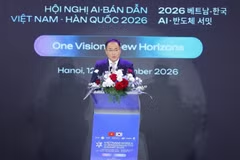
Vietnamese Deputy Minister of Science and Technology Tran Trung Tinh speaks at the event. (Photo: Published by VNA)

Vietnam, RoK seek to expand cooperation in AI and semiconductor sectors

Vietnamese Deputy Minister of Science and Technology Tran Trung Tinh stressed that the Politburo's Resolution No. 57-NQ/TW identifies science and technology, innovation and digital transformation as leading breakthroughs and key drivers of rapid and sustainable development. Semiconductors and artificial intelligence (AI) are among the strategic technologies prioritised for development.

Representatives of Cambodia’s Ministry of Education, Youth and Sport (MoEYS), the Agence Universitaire de la Francophonie (AUF) and Viettel Cambodia (Metfone) sign a tripartite agreement to strengthen cooperation and accelerate digital transformation in Cambodia’s higher education sector. (Photo: khmertimeskh.com)

Vietnamese company joins Cambodia’s digital transformation efforts

The agreement establishes a cooperation framework to modernise higher education through digital governance, digital learning, artificial intelligence (AI) applications, and capacity building through training and knowledge sharing. It also aims to expand internship, employment and scholarship opportunities for students.

USTH students access modern equipment (Photo: VNA)

Vietnam’s AI ambition runs into talent wall

AI is becoming a foundational technology, cutting across industrial production, healthcare, education, finance, governance and public service delivery. But turning technological potential into practical value requires a workforce able to study, master and apply AI to Vietnam’s real-world problems.

Trainees practise programming and operating robots at the Ho Chi Minh City High-Tech Park Training Centre. (Photo: VNA)

Vietnam, Malaysia hold potential for cooperation in robotics industry

Businesses from both countries should lead joint research and field-testing projects in areas such as electronic component inspection, warehouse transport, agricultural monitoring and medical logistics, said Samirul Ariff Othman, a policy, economic and business analyst at Global Asia Consulting and visiting lecturer at Universiti Teknologi PETRONAS.

Illustrative image (Photo: SGGP)

Ericsson establishes R&D capability in Vietnam

This initiative builds on Ericsson’s growing software engineering and testing capabilities in the country, and will further strengthen Vietnam’s contribution to Ericsson’s global technology development.

An AI-powered robot at the 2026 Seoul AI Conference. (Photo: VNA)

RoK’s AI robotics drive opens cooperation opportunities with Vietnam

Dao Tuan Hung, President of the Business Association of Vietnamese in Korea (BAVIK), said Vietnam should adopt a practical approach by prioritising specialised robots, including autonomous mobile robots (AMR/AGV), collaborative robots and machine vision systems, in sectors such as agro-fishery processing, textiles and garments, electronics and logistics.

Russian survey vessel Akademik M.A. Lavrentyev (Photo: VNA)

Russian survey vessel docks in Hai Phong

This is the third joint marine scientific survey in Vietnamese waters, running from November 4 - December 12, and one of the opening field activities under the Vietnam–Russia roadmap for marine scientific research cooperation for 2026-2035.

Smart products, chips and semiconductor materials are displayed at the launch ceremony of the national semiconductor chip prototyping support centre in Hanoi on June 26, 2026. (Photo: VNA)

Vietnam-Japan semiconductor cooperation paves the way for high-tech investment

The two countries are implementing five semiconductor research projects involving leading universities, with funding agreements signed in July. The projects cover three-dimensional integrated circuits, advanced semiconductor materials, secure artificial intelligence (AI) chips and power electronic components.

An exhibition space at the “Da Nang Semiconductors and High-Tech 2026” conference, organised by the Da Nang People’s Committee. (Illustrative photo: VNA)

Mobilising international resources to drive Vietnam’s technology development

Vietnam previously focused mainly on attracting overseas experts and intellectuals to work in the country over the long term, but this approach encountered certain difficulties. Cooperation methods are now shifting towards greater flexibility, allowing experts to take part in conferences and scientific seminars, contribute to addressing major national challenges, or participate in short-term training and research programmes.