Mobilising international resources to drive Vietnam’s technology development

Vietnam previously focused mainly on attracting overseas experts and intellectuals to work in the country over the long term, but this approach encountered certain difficulties. Cooperation methods are now shifting towards greater flexibility, allowing experts to take part in conferences and scientific seminars, contribute to addressing major national challenges, or participate in short-term training and research programmes.

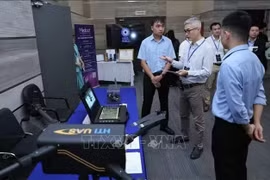
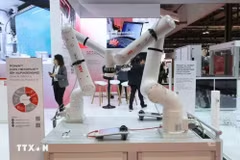
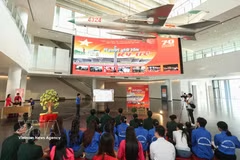
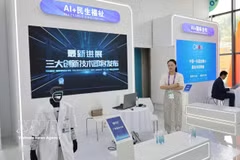
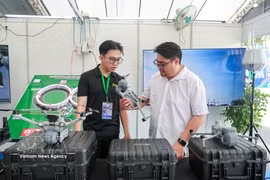
An exhibition space at the “Da Nang Semiconductors and High-Tech 2026” conference, organised by the Da Nang People’s Committee. (Illustrative photo: VNA)

Hanoi (VNA) – Attracting experts, mobilising knowledge to support semiconductor chip research and design, and developing testing infrastructure are among the steps helping strengthen Vietnam’s technological self-reliance, lay the groundwork for innovation and enable deeper integration into global value chains.

Connecting international expertise to domestic development needs

Efforts to attract overseas Vietnamese experts and intellectuals are taking a more practical approach, with domestic development needs serving as the basis for engagement.

According to Do Quynh Hoa, Deputy Director of the Department of International Cooperation under the Ministry of Science and Technology, Vietnam previously focused mainly on attracting overseas experts and intellectuals to work in the country over the long term, but this approach encountered certain difficulties. Cooperation methods are now shifting towards greater flexibility, allowing experts to take part in conferences and scientific seminars, contribute to addressing major national challenges, or participate in short-term training and research programmes.

The new approach goes beyond connecting with highly qualified individuals. It aims to proactively identify domestic needs, commission research and mobilise suitable experts to help address them.

Specifically, the Ministry of Foreign Affairs is leading the development of a database of experts and intellectuals organised by field of expertise. The Ministry of Science and Technology has established a network of experts in artificial intelligence, with a view to expanding the model to other fields. The two ministries are coordinating to develop a regular networking mechanism to help overseas experts identify suitable research institutes and universities in Vietnam.

The goal is to make effective use of the intellectual resources of the more than 6 million Vietnamese living abroad to support the country's development in science, technology and innovation.

Cooperation between Vietnam and Switzerland demonstrates the effectiveness of connecting international research resources. According to Swiss Ambassador to Vietnam Thomas Gass, since the establishment of a science cooperation framework in 2020, the two countries have launched two calls for research proposals and funded more than 20 projects, with total disbursements and investment amounting to around 8 million USD.

Gradually mastering strategic technologies

Research into and mastery of core and strategic technologies is one of the key tasks set out in Resolution No. 57-NQ/TW.

To implement the resolution, Decision No. 21/2026/QD-TTg issued by the Prime Minister on the list of strategic technologies and strategic technology products identifies semiconductor chip technology as one of the strategic fields requiring focused development.

The strategy for the Development of Vietnam's Semiconductor Industry to 2030, with a vision to 2050, also sets out orientations for building capabilities across the semiconductor industry, from research and design to manufacturing, packaging and testing.

On November 3, the Government Cipher Committee and the Military Industry and Telecommunications Group (Viettel) unveiled the VGC v1.0 security chip and Vietnam's first domestically designed secure semiconductor platform.

Developed by engineers from Viettel and the Government Cipher Committee, the VGC v1.0 chip delivers encryption and decryption speeds 15 times faster than software-based solutions and is designed to protect data on digital devices. The launch marks a milestone in domestic semiconductor research and development, while opening up new approaches to safeguarding national security and digital sovereignty.

The secure semiconductor platform is built on the open RISC-V instruction set architecture, enabling engineers to independently modify processor designs and master the design process from the ground up, as well as verification procedures.

The VGC v1.0 chip is initially being deployed in secure USB storage devices for Party, State and defence agencies.

Alongside research and design capabilities, developing testing and packaging facilities is another important step towards building a domestic semiconductor industry.

On November 3, FPT Group began trial operations at its semiconductor chip testing and packaging plant in Yen Phong II-C Industrial Park in Bac Ninh city

The plant has six production lines and a maximum designed capacity of 300 million chips a year. In its initial phase, the plant will focus on providing functional, quality and reliability testing services for domestic and international businesses. FPT plans to undertake its first chip-testing order for a Korean partner.

These developments show that domestic businesses are gradually entering key stages of the semiconductor value chain. The strategic technology development orientations set out in Resolution No. 57-NQ/TW are being translated into concrete activities in research, design, product development and investment in technological infrastructure.

Connecting the capabilities of management agencies, research institutions and businesses, while aligning research with practical application needs, will help strengthen technological self-reliance, lay the foundation for the growth of Vietnam's semiconductor industry and enable it to participate more deeply in global supply chains./.

VNA
See more

Assoc. Prof. Dr. Dinh Ngoc Thach, lecturer and researcher in automatic control theory and robotics at the French National Conservatory of Arts and Crafts (Cnam) (Photo: VNA)

Core technologies key to sustainable robotics development in Vietnam: expert

Vietnam should select suitable robotic platforms and gradually build capacity in core technologies, including sensing, environmental perception, positioning, state estimation, AI, control and system integration. This will help develop technologies applicable across multiple sectors while avoiding fragmented investment and dependence on a single product category.

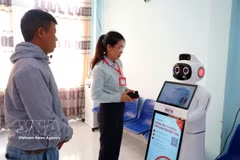
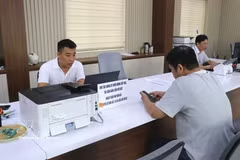
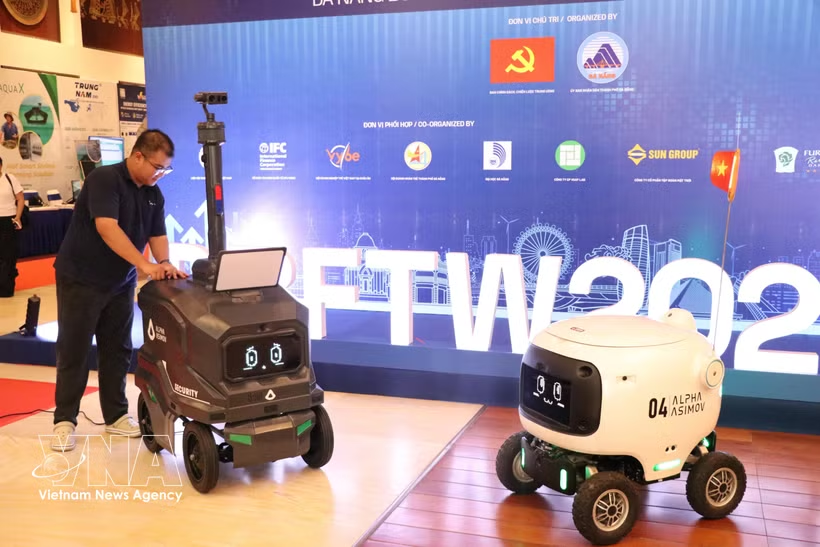
AI robots have become effective assistants in providing administrative services and reducing the workload of officials in Lam Dong province (Photo: VNA)

AI robots help streamline administrative procedures

Operating around the clock, AI robots provide information on administrative procedures, required documents, processing times, fees and relevant regulations, complementing assistance from civil servants.

High prospects for Vietnam-Italy cooperation in robotics industry

High prospects for Vietnam-Italy cooperation in robotics industry

Vietnam and Italy have highly complementary strengths in this robotics field. Italy has experience in machinery manufacturing, industrial robotics applications and an established business network, while Vietnam has a dynamic market, strong demand for production modernisation and a promising young engineering workforce.

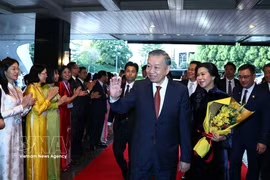
General Secretary of the Communist Party of Vietnam (CPV) Central Committee and President To Lam and the foreign ambassadors at the meeting (Photo: VNA)

Top leader receives new foreign ambassadors

Vietnam wishes to step up cooperation with the countries in such areas as economy, trade and investment; cutting-edge science and technology applications, semiconductors, artificial intelligence, new materials, digital transformation, sustainable agriculture, the environment, energy and renewable energy, the marine economy and maritime transport.

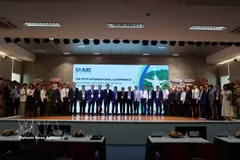
Delegates at the event (Photo: VNA)

Over 400 scientists attend international material conference

Discussions focus on six key areas, including advanced materials and their applications for sustainable development; environmentally friendly material processing technologies; product lifecycle engineering; sustainable machine design; low-carbon industries and the circular economy; and artificial intelligence and digital transformation in material and mechanical engineering.

Deputy Prime Minister Ho Quoc Dung (R) and Pierre Barnabé, Chief Operating Officer of French technology group Dassault Systèmes. (Photo: VNA)

Vietnam, France step up cooperation in AI, digital twin technology

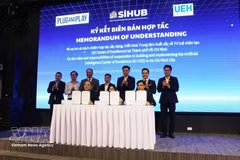
At the meeting, the Deputy PM praised the group's contributions to promoting technology cooperation between Vietnam and France, particularly its collaboration with the Ministry of Finance and the National Innovation Centre (NIC) to establish a Centre of Excellence (CoE) for digital twins and artificial intelligence (AI) in Hanoi.

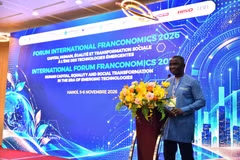
Rigobert Pinga Pinga, Acting Representative of OIF for Asia-Pacific speaks at the event. (Photo: VNA)

Franconomics 2026 explores human-centred technological transformation

Addressing the opening ceremony, Nguyen Anh Tuan, Rector of VNU-IS, said Franconomics was launched in 2019 as a multidisciplinary platform connecting scientists, policymakers, businesses and international organisations to discuss socio-economic issues relevant to Vietnam and the Francophone community.

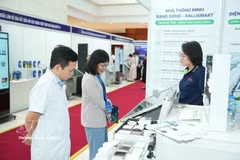
A new technology exhibition area arranged within the framework of the International Research and Innovation Funders Forum in Hanoi (Photo: VNA)

Vietnam promotes int'l cooperation in science, technology and innovation

Science is opening up new opportunities in artificial intelligence, healthcare, semiconductors and clean energy, while challenges such as climate change, energy security and epidemics require international cooperation. Science, technology, innovation and digital transformation are central to Vietnam’s new growth model.

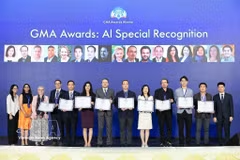
GMA Awards are presented to honour outstanding AI courses at the Global MOOC & Online Education Conference 2026. (Photo: VNA)

Responsible AI, teaching overhaul, global ties dominate GMC 2026

Panelists said AI can support knowledge delivery, information processing and personalised learning, but cannot replace teachers in building independent thinking, critical capacity, emotional intelligence and humanistic values. Universities therefore need to overhaul teaching, testing and assessment and redefine lecturers’ role in an AI-integrated environment.

An overview of the seminar (Photo: VNA)

Coordinated development of energy, AI and infrastructure needed for industrial growth

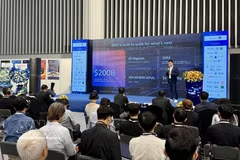
Vietnam is emerging as a regional bright spot for data infrastructure development, driven by growing demand for AI, cloud computing, 5G commercialisation and digital transformation. However, the country needs coordinated preparations, including green power supplies, international submarine cable connectivity and operational capabilities meeting global standards.

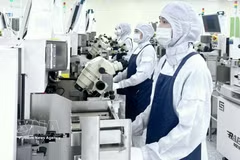
Production line at Hana Micron Vina Co., Ltd in Bac Ninh city (Photo: VNA)

Vietnam works to bridge gap between chip research and commercialisation

According to the Ministry of Science and Technology, Vietnam’s semiconductor industry has made notable progress. In 2025, it generated more than 21 billion USD in revenue and attracted over 14 billion USD in foreign investment through more than 240 projects. The country is now home to around 60 chip design companies and over 7,000 semiconductor design engineers.

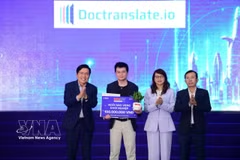
The Golden Startup Star award, worth 100 million VND, is presented to the Doctranslate.io project (Photo: VNA)

AI-powered translation platform wins Golden Startup Star award

Doctranslate.io offers contextual translation, audio recording, transcription and content summarisation services for communication, meetings and international events. Supporting 80 languages, the platform aims to add more less widely spoken languages.