Responsible AI, teaching overhaul, global ties dominate GMC 2026

Panelists said AI can support knowledge delivery, information processing and personalised learning, but cannot replace teachers in building independent thinking, critical capacity, emotional intelligence and humanistic values. Universities therefore need to overhaul teaching, testing and assessment and redefine lecturers’ role in an AI-integrated environment.

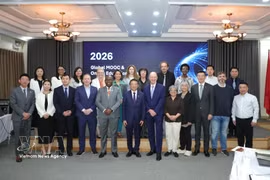
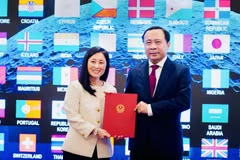
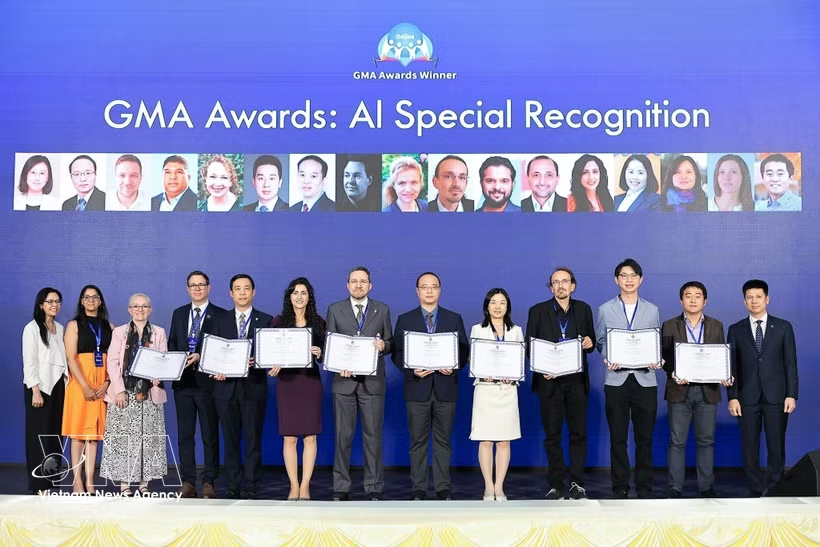
GMA Awards are presented to honour outstanding AI courses at the Global MOOC & Online Education Conference 2026. (Photo: VNA)

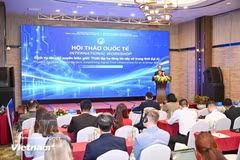
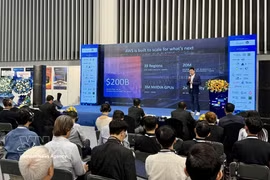
Hanoi (VNA) – Responsible AI use, teaching and assessment reform and stronger international education cooperation topped the agenda at the Global MOOC & Online Education Conference 2026 (GMC 2026), held at the Vietnam National University (VNU)-Hanoi on November 3-4.

GMC 2026’s thematic sessions drew university leaders and international experts from the UNESCO Institute for Information Technologies in Education (IITE), the University of Ottawa (Canada), the University of Johannesburg (South Africa), Chulalongkorn University (Thailand), Queen Mary University of London (UK), Beijing University of Posts and Telecommunications (China), the London School of Economics and Political Science (UK) and Harvard University (US).

Talks focused on reinventing the university model, governance and leadership in the AI era; building learner capacity, lifting education quality and creating learning ecosystems that keep pace with fast-moving technology.

Prof. Li Luming, President of China’s Tsinghua University and Chair of Board of the Global MOOC and Online Education Alliance (GMA), pressed the concept of “redistribution of intelligence” as AI redraws the division of cognitive labour between humans and machines.

In his view, as AI explains knowledge, solves complex problems and supports research, human value increasingly lies in asking questions, thinking critically, verifying information and making responsible judgments. That pushes universities to move from knowledge transmission to learners’ independent thinking, problem solving and creativity.

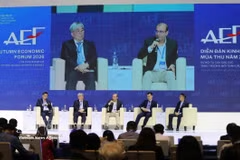
A roundtable moderated by Assoc. Prof. Dr. Nghiem Xuan Huy, Director of the VNU-Hanoi Institute of Quality Management and Assessment focused on drawing the line between tasks AI can take on and the core values higher education must protect.

Panelists said AI can support knowledge delivery, information processing and personalised learning, but cannot replace teachers in building independent thinking, critical capacity, emotional intelligence and humanistic values. Universities therefore need to overhaul teaching, testing and assessment and redefine lecturers’ role in an AI-integrated environment.

Assoc. Prof. Dr. Tran Thanh Nam, Rector of the VNU-Hanoi’s University of Education, said education must keep the core values of learning, especially intellectual effort, social connection and learner autonomy. Technology should help learners explore actively and build cognitive capacity rather than replace thinking. Digital education should be judged by learners’ substantive progress, not technology usage metrics alone.

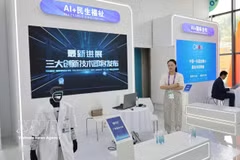
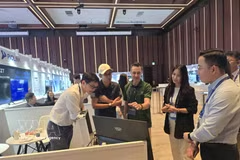
A GMC 2026 highlight was an exhibition on smart education achievements, showcasing 39 models, products and initiatives from educational establishments and international organisations across five thematic groups.

The exhibition featured Tsinghua University, Fudan University and Shanghai Jiao Tong University (China), Nanyang Technological University (Singapore), Hong Kong University of Science and Technology (China), Chulalongkorn University (Thailand), Macquarie University (Australia) and the University of Johannesburg (South Africa), plus units under the VNU-Hanoi.

The “Intelligence building foundations” group presented 10 models, products and initiatives for specialised AI, knowledge bases and education support platforms in engineering, energy, medicine, agriculture and social sciences.

The “Intelligence driving coexistence” group featured five initiatives on AI agents, situational learning and human-AI collaboration models aimed at personalised learning, problem-solving and thinking-capacity development.

The “Intelligence reshaping learning environments” group introduced five models for smart education platforms, digital learning ecosystems and future learning spaces.

The “Intelligence Promoting Integration and Innovation” group added eight initiatives applying AI in practical training, professional development, university-industry cooperation and testing and assessment reform.

Notably, the “Intelligence connecting the world” group showcased 11 courses and education initiatives under the GMA network, spanning computer science, AI, medicine, social sciences, foreign languages and professional development.

Within that group, the “English B1 on the LMS system” course from VNU-Hanoi’s University of Languages and International Studies was presented as a flagship product and honoured at the GMA Awards 2026.

This year’s awards drew 47 nominations from 30 educational establishments in 22 countries, judged by 30 experts from 17 countries. The VNU-Hanoi course award recognises work on digital learning materials, technology application and online training innovation.

Nam said VNU-Hanoi will keep working with international partners to develop online courses in Vietnamese and English, pilot cross-border blended classrooms and push AI research in teaching, assessment and faculty development./.

VNA
See more

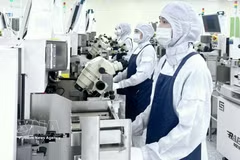
Production line at Hana Micron Vina Co., Ltd in Bac Ninh city (Photo: VNA)

Vietnam works to bridge gap between chip research and commercialisation

According to the Ministry of Science and Technology, Vietnam’s semiconductor industry has made notable progress. In 2025, it generated more than 21 billion USD in revenue and attracted over 14 billion USD in foreign investment through more than 240 projects. The country is now home to around 60 chip design companies and over 7,000 semiconductor design engineers.

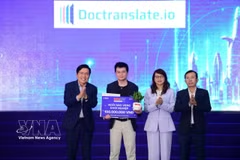
The Golden Startup Star award, worth 100 million VND, is presented to the Doctranslate.io project (Photo: VNA)

AI-powered translation platform wins Golden Startup Star award

Doctranslate.io offers contextual translation, audio recording, transcription and content summarisation services for communication, meetings and international events. Supporting 80 languages, the platform aims to add more less widely spoken languages.

Participants at the Vietnam–RoK AI and Digital Technology Forum 2026. (Photo: VNA)

Vietnam, RoK promote AI cooperation

Vietnam attaches importance to international cooperation while building its own technological capabilities, gaining greater mastery of key technologies and strengthening its participation in global AI value chains, and the RoK is its important partner in this process.

Deputy Minister of Science and Technology Pham Duc Long speaks at the international seminar entitled “Trusted Services Beyond Borders: Establishing Digital Trust Infrastructure for an AI-Driven World” on October 29, 2026. (Photo: VNA)

Vietnam promotes cross-border digital trust in AI era

As AI becomes increasingly involved in digital transactions, digital content's origin and integrity must be verified proactively, rather than merely detecting false information after it emerges, an official has said.

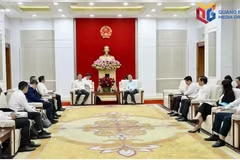
An overview of the reception (Photo: Quang Ninh Newspaper)

Quang Ninh, China’s Guangxi seek stronger cooperation in digital economy, AI

The city leader expressed his hope that the delegation would engage in professional exchanges with Quang Ninh’s departments and agencies to translate into concrete initiatives the cooperation areas in science and technology, artificial intelligence (AI) and the digital economy agreed upon by senior leaders of the two sides.

He Zhenwei, Chairman of the China Overseas Development Association in an interview with the Vietnam News Agency (Photo: VNA)

Vietnam, China explore greater scope for high-tech cooperation

Vietnam is attracting growing interest from Chinese businesses, not only in trade and traditional manufacturing but also in high-tech sectors such as artificial intelligence (AI), the digital economy, the low-altitude economy and smart agriculture, Chinese businesses and associations told Vietnam News Agency correspondents in China.

Minister of Science and Technology Vu Hai Quan (R) receives the Artemis Accords from US Ambassador to Vietnam Jennifer Wicks (Photo: Ministry of Science and Technology)

Vietnam joins Artemis Accords on space exploration

Vietnam views space science and technology as a strategic sector that can lift national science-technology capacity and support sustainable growth. The country wants to work with member nations on peaceful, safe, equitable, transparent and sustainable space exploration under international law, with tangible benefits for people and the planet.

Speakers at the discussion (Photo: VNA)

Experts discuss promotion of cybersecurity readiness in quantum era

Cuong said data safety and security in the quantum era is vital to the sustainable development of cities in the digital age. Ho Chi Minh City’s proactive approach aligns with the government’s strategic direction, which identifies quantum technology as a core technology requiring priority investment to enhance national technological self-reliance, he emphasised.

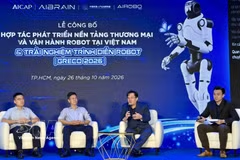
A roundtable on developing a localised platform for robot trading and operation in Vietnam held at the initiative launch on October 26. (Photo: VNA)

Strategic cooperation initiative aims develop robotics ecosystem

The initiative seeks to realise a plan to develop a localised platform for robot trading and operation in Vietnam. The partners will establish an industrial cooperation framework to promote robot sales, services and deployment tailored to the domestic market.

A modern production line of Hana Micron Vina Co., Ltd in Bac Ninh city (Photo: VNA)

Vietnam seeks deeper role in global semiconductor value chain

As global semiconductor supply chains are restructured, experts said Vietnam’s opportunity lies not only in attracting projects but also in accumulating knowledge, technology and management expertise to move into higher-value activities.

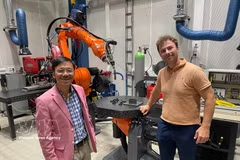
Associate Professor Vu Viet Hung (left) visits a 3D-printed space built by robots (Photo: VNA)

Solutions proposed to harness overseas Vietnamese expertise

Assoc. Prof. Vu Viet Hung, President of the Canadian Vietnamese Scientists and Experts Association (CVSEA), said the effectiveness of OV intellectuals’ contributions depends on programme design, resource allocation and stakeholder coordination.

Vietnam International Digital Week 2026 (VIDW 2026) will take place in Quang Ninh from October 28 to 30.

Vietnam Digital Week to drive international cooperation in AI, strategic technologies

Under the theme “Intelligent Connectivity: AI Governance, Shaping AI Transformation,” the event, slated for October 28-30 in Quang Ninh city, aims to deepen policy dialogue, forge international partnerships and accelerate technology research, development, transfer and commercialisation, particularly in strategic and emerging technologies.

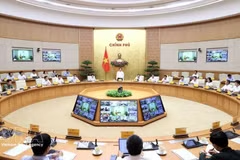
Deputy Prime Minister Ho Quoc Dung speaks at the meeting the Ministry of Science and Technology (MOST) and the Ministry of Finance (MOF) on October 21. (Photo: VNA)

Vietnam moves to standardise digital economy measurement

The digital economy is a strategic priority for Vietnam, which aims to raise its share of GDP to at least 30% by 2030, in line with the Politburo’s Resolution No. 57-NQ/TW on breakthroughs in science and technology, innovation and national digital transformation.