Paris (VNA) - Vietnam should prioritise mastering core technologies applicable to various types of robots and autonomous systems rather than pursuing every emerging trend, while ensuring safety, reliability and cybersecurity from the design stage, according to a French-Vietnamese robotics expert.
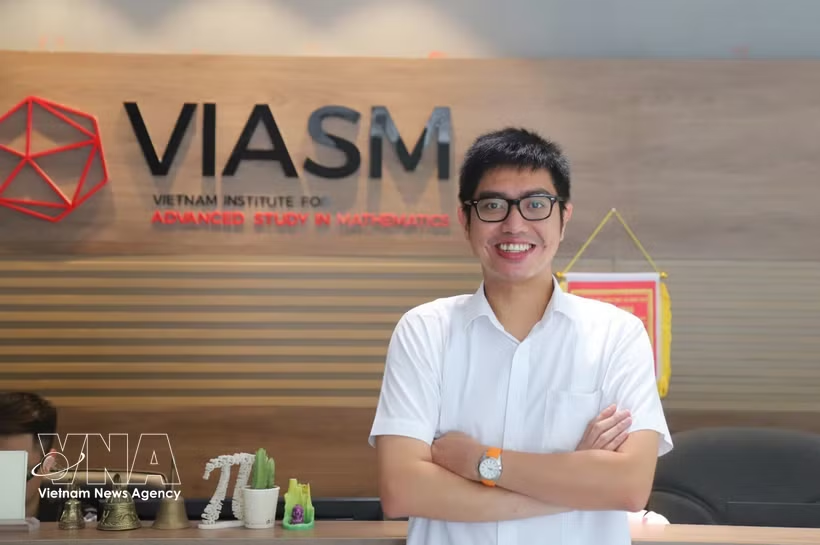
In an interview with Vietnam News Agency correspondents in Paris, Assoc. Prof. Dr. Dinh Ngoc Thach, a lecturer and researcher in automatic control theory and robotics at the French National Conservatory of Arts and Crafts (Cnam), gave updates on robotics trends in France and Europe, and proposed orientations for Vietnam.
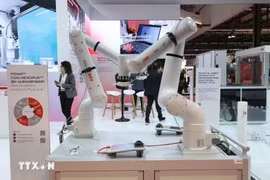
According to the expert, robotics in France and Europe was increasingly integrating artificial intelligence (AI), control theory, sensors and digital technologies. Robots are evolving from machines performing pre-programmed tasks into systems capable of sensing, learning, adapting, making decisions and coordinating with other systems.
France and the European Union (EU) are increasing investment in AI and robotics, focusing on mastering core technologies and translating research into practical applications. Under the France 2030 plan, the country is supporting the development of advanced autonomous systems and components for robots, unmanned aerial vehicles and smart devices.
Drawing on his research, Thach stressed the importance of combining AI with model-based methods. He said while AI enables systems to learn from data and adapt, control theory and estimation methods help ensure stability, reliability and safety operation in uncertain environments.
Vietnam should therefore invest in technologies with broad application rather than focus on individual robot types, he said.
He cautioned that greater use of AI does not necessarily mean better performance. For robots interacting directly with the physical environment, safety, reliability and the ability to operate under uncertain conditions remain essential. Cybersecurity must also be integrated from the outset as these systems become increasingly connected to the Internet of Things (IoT), cloud computing and digital networks.
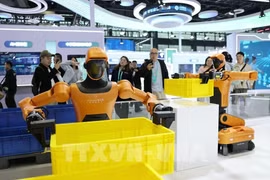
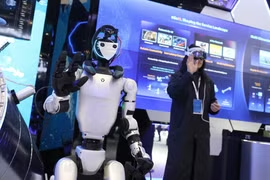
For Vietnam, he recommended prioritising practical needs such as precision agriculture, water resource management, environmental monitoring, industrial manufacturing, logistics, infrastructure inspection and marine economy applications, rather than pursuing high-profile products such as humanoid robots.
Based on these needs, Vietnam should select suitable robotic platforms and gradually build capacity in core technologies, including sensing, environmental perception, positioning, state estimation, AI, control and system integration, he said, adding that this will help develop technologies applicable across multiple sectors while avoiding fragmented investment and dependence on a single product category.
Regarding cooperation with France and the EU, Thach underlined the need for Vietnam to shift from academic exchanges and scientific publications to collaborative programmes capable of delivering tangible products and practical application. He recommended partnerships among universities, laboratories, businesses and end-users, covering the entire process from research and personnel training to prototype development, testing and technology transfer.
The expert said programmes such as Horizon Europe and the Marie Skłodowska-Curie Actions (MSCA) offer Vietnamese scientists and research teams opportunities to join European research and innovation networks. Stronger EU-Vietnam cooperation can also promote joint research, personnel exchanges and closer links between research institutions and businesses.
Vietnam should focus on areas where it has clear needs and advantages, developing core technologies for multiple autonomous systems, he said, stressing that France and the EU could support these efforts through collaboration in research, personnel training and technology transfer./.