Vietnam promotes int'l cooperation in science, technology and innovation

Science is opening up new opportunities in artificial intelligence, healthcare, semiconductors and clean energy, while challenges such as climate change, energy security and epidemics require international cooperation. Science, technology, innovation and digital transformation are central to Vietnam’s new growth model.

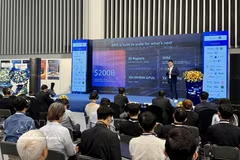
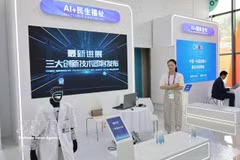
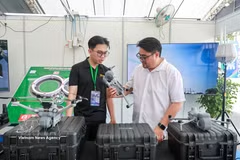
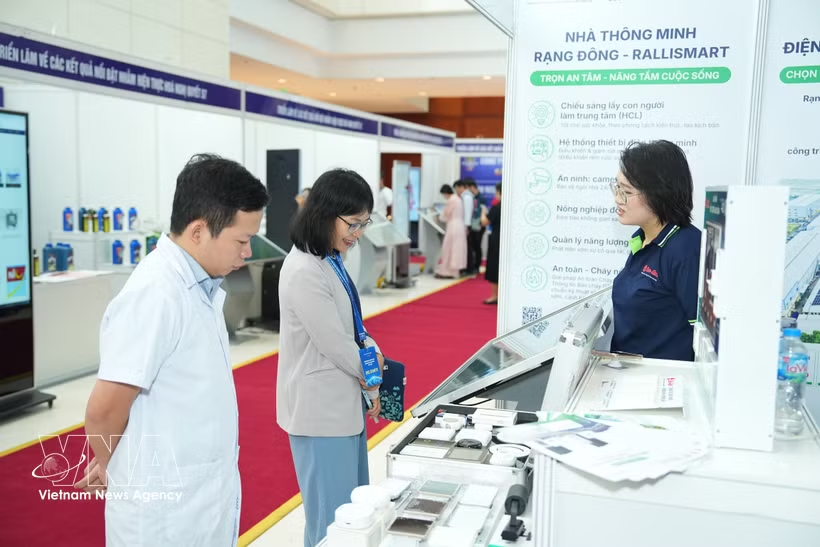
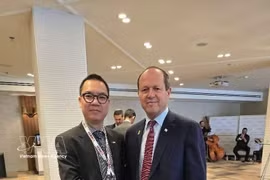
A new technology exhibition area arranged within the framework of the International Research and Innovation Funders Forum in Hanoi (Photo: VNA)

Hanoi (VNA) – Vietnam is seeking to strengthen international cooperation in science, technology and innovation, moving beyond knowledge and technology acquisition towards jointly creating new knowledge, developing technologies and sharing achievements with international partners, Minister of Science and Technology Vu Hai Quan told a forum in Hanoi on November 5.

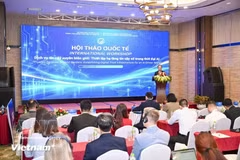
The International Research and Innovation Funders Forum (IRIFF 2026), hosted by the National Foundation for Science and Technology Development (NAFOSTED) on November 5-6, has brought together more than 300 domestic and foreign delegates representing management agencies, scientific organisations, universities, research institutes, funding agencies and businesses

Seeking to make further progress in acquiring knowledge and technology


In his remarks, Quan said science is opening up new opportunities in artificial intelligence, healthcare, semiconductors and clean energy, while challenges such as climate change, energy security and epidemics require international cooperation. Science, technology, innovation and digital transformation are central to Vietnam’s new growth model, he noted.
vnanet-hq.jpg
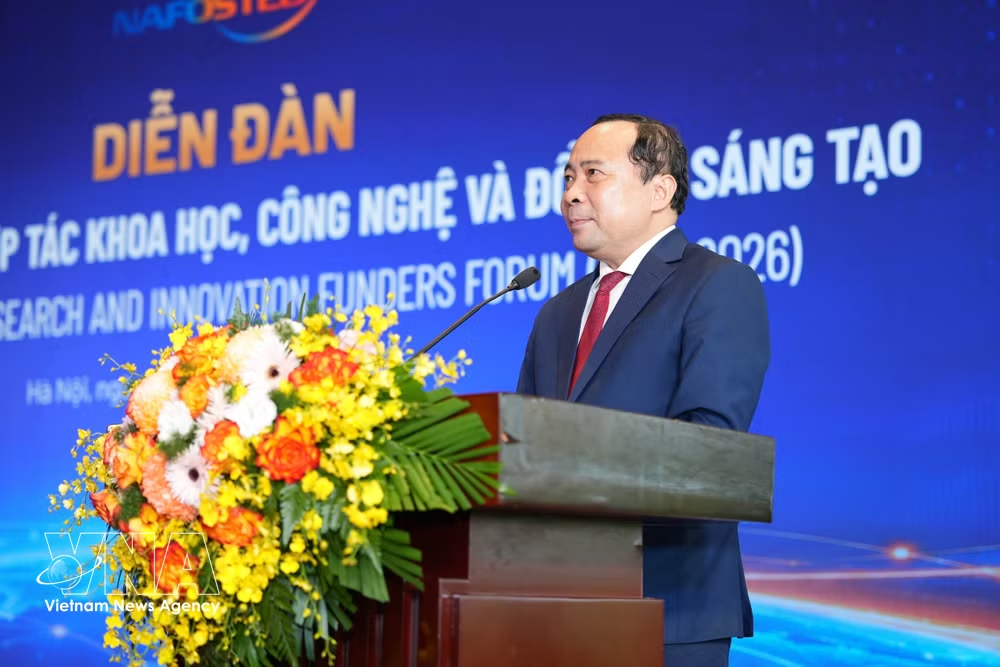
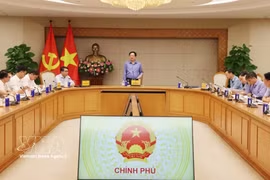
Minister of Science and Technology Vu Hai Quan speaks at the forum. (Photo: VNA)

He called for stable funding and greater investment in human resources and an enabling environment for research, particularly basic research and young scientists. Funding mechanisms should be fair, transparent and suited to different types of research, while ensuring scientific quality and accountability in the use of public resources, he said.

The minister also stressed the need to strengthen links between researchers and businesses from the stage of identifying research needs, with support for testing, prototyping and bringing promising results from laboratories into production. Success should be measured by better products, stronger businesses and improved living standards.

To turn international partnerships into joint action, partners should identify common priorities, coordinate research calls, pool funding, share infrastructure and expertise, and create more opportunities for young scientists to work with international colleagues, he said.

Bringing State-scientist-business linkage into practice

Assoc. Prof. Dr. Dao Ngoc Chien, Director of NAFOSTED, said international scientific cooperation should go beyond academic exchanges to jointly define research questions, combine strengths and infrastructure, share costs and risks, and translate knowledge into practical impact.

He said research funding agencies play an important role in facilitating such cooperation through transparent and competitive funding processes, joint calls for proposals, common evaluation principles and support for cross-border research teams.

Chien underscored the need to put the State-scientist-business linkage into practice, with NAFOSTED serving as a bridge and developing funding mechanisms to facilitate domestic and international coordination projects.

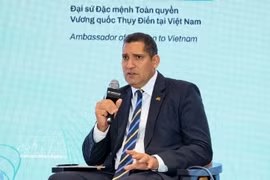
Swiss Ambassador to Vietnam Thomas Gass highlighted the importance of providing scientists with time and resources to pursue new ideas, including those whose outcomes are not yet clear.

Under a scientific cooperation framework established in 2020, Switzerland and Vietnam have issued two joint calls for research proposals, supporting more than 20 projects with a total investment of around 8 million USD. Their collaboration also includes research on the Mekong Delta, the use of artificial intelligence to interpret chest X-rays, and biomedicine with the University of Geneva. The Swiss National Science Foundation and NAFOSTED are considering a third joint research call in 2027, he said.

Initiated by NAFOSTED, IRIFF 2026 features international presentations, a roundtable of research funding agencies and field visits. Discussions focus on research excellence, the State-scientist-business linkage, strategic technology transfer and scientific integrity./.
VNA

See more

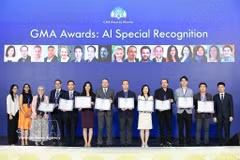
GMA Awards are presented to honour outstanding AI courses at the Global MOOC & Online Education Conference 2026. (Photo: VNA)

Responsible AI, teaching overhaul, global ties dominate GMC 2026

Panelists said AI can support knowledge delivery, information processing and personalised learning, but cannot replace teachers in building independent thinking, critical capacity, emotional intelligence and humanistic values. Universities therefore need to overhaul teaching, testing and assessment and redefine lecturers’ role in an AI-integrated environment.

An overview of the seminar (Photo: VNA)

Coordinated development of energy, AI and infrastructure needed for industrial growth

Vietnam is emerging as a regional bright spot for data infrastructure development, driven by growing demand for AI, cloud computing, 5G commercialisation and digital transformation. However, the country needs coordinated preparations, including green power supplies, international submarine cable connectivity and operational capabilities meeting global standards.

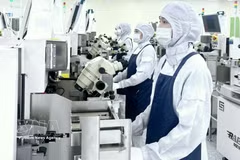
Production line at Hana Micron Vina Co., Ltd in Bac Ninh city (Photo: VNA)

Vietnam works to bridge gap between chip research and commercialisation

According to the Ministry of Science and Technology, Vietnam’s semiconductor industry has made notable progress. In 2025, it generated more than 21 billion USD in revenue and attracted over 14 billion USD in foreign investment through more than 240 projects. The country is now home to around 60 chip design companies and over 7,000 semiconductor design engineers.

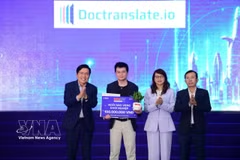
The Golden Startup Star award, worth 100 million VND, is presented to the Doctranslate.io project (Photo: VNA)

AI-powered translation platform wins Golden Startup Star award

Doctranslate.io offers contextual translation, audio recording, transcription and content summarisation services for communication, meetings and international events. Supporting 80 languages, the platform aims to add more less widely spoken languages.

Participants at the Vietnam–RoK AI and Digital Technology Forum 2026. (Photo: VNA)

Vietnam, RoK promote AI cooperation

Vietnam attaches importance to international cooperation while building its own technological capabilities, gaining greater mastery of key technologies and strengthening its participation in global AI value chains, and the RoK is its important partner in this process.

Deputy Minister of Science and Technology Pham Duc Long speaks at the international seminar entitled “Trusted Services Beyond Borders: Establishing Digital Trust Infrastructure for an AI-Driven World” on October 29, 2026. (Photo: VNA)

Vietnam promotes cross-border digital trust in AI era

As AI becomes increasingly involved in digital transactions, digital content's origin and integrity must be verified proactively, rather than merely detecting false information after it emerges, an official has said.

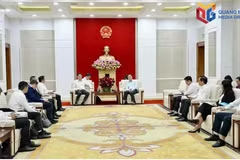
An overview of the reception (Photo: Quang Ninh Newspaper)

Quang Ninh, China’s Guangxi seek stronger cooperation in digital economy, AI

The city leader expressed his hope that the delegation would engage in professional exchanges with Quang Ninh’s departments and agencies to translate into concrete initiatives the cooperation areas in science and technology, artificial intelligence (AI) and the digital economy agreed upon by senior leaders of the two sides.

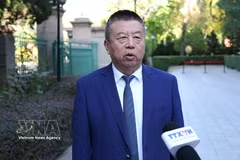
He Zhenwei, Chairman of the China Overseas Development Association in an interview with the Vietnam News Agency (Photo: VNA)

Vietnam, China explore greater scope for high-tech cooperation

Vietnam is attracting growing interest from Chinese businesses, not only in trade and traditional manufacturing but also in high-tech sectors such as artificial intelligence (AI), the digital economy, the low-altitude economy and smart agriculture, Chinese businesses and associations told Vietnam News Agency correspondents in China.

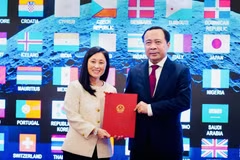
Minister of Science and Technology Vu Hai Quan (R) receives the Artemis Accords from US Ambassador to Vietnam Jennifer Wicks (Photo: Ministry of Science and Technology)

Vietnam joins Artemis Accords on space exploration

Vietnam views space science and technology as a strategic sector that can lift national science-technology capacity and support sustainable growth. The country wants to work with member nations on peaceful, safe, equitable, transparent and sustainable space exploration under international law, with tangible benefits for people and the planet.

Speakers at the discussion (Photo: VNA)

Experts discuss promotion of cybersecurity readiness in quantum era

Cuong said data safety and security in the quantum era is vital to the sustainable development of cities in the digital age. Ho Chi Minh City’s proactive approach aligns with the government’s strategic direction, which identifies quantum technology as a core technology requiring priority investment to enhance national technological self-reliance, he emphasised.

A roundtable on developing a localised platform for robot trading and operation in Vietnam held at the initiative launch on October 26. (Photo: VNA)

Strategic cooperation initiative aims develop robotics ecosystem

The initiative seeks to realise a plan to develop a localised platform for robot trading and operation in Vietnam. The partners will establish an industrial cooperation framework to promote robot sales, services and deployment tailored to the domestic market.

A modern production line of Hana Micron Vina Co., Ltd in Bac Ninh city (Photo: VNA)

Vietnam seeks deeper role in global semiconductor value chain

As global semiconductor supply chains are restructured, experts said Vietnam’s opportunity lies not only in attracting projects but also in accumulating knowledge, technology and management expertise to move into higher-value activities.

Associate Professor Vu Viet Hung (left) visits a 3D-printed space built by robots (Photo: VNA)

Solutions proposed to harness overseas Vietnamese expertise

Assoc. Prof. Vu Viet Hung, President of the Canadian Vietnamese Scientists and Experts Association (CVSEA), said the effectiveness of OV intellectuals’ contributions depends on programme design, resource allocation and stakeholder coordination.

Vietnam International Digital Week 2026 (VIDW 2026) will take place in Quang Ninh from October 28 to 30.

Vietnam Digital Week to drive international cooperation in AI, strategic technologies

Under the theme “Intelligent Connectivity: AI Governance, Shaping AI Transformation,” the event, slated for October 28-30 in Quang Ninh city, aims to deepen policy dialogue, forge international partnerships and accelerate technology research, development, transfer and commercialisation, particularly in strategic and emerging technologies.