Technology, intellectual property drive sustainable development of cultural industries

Combining technology with a creative mindset has enabled familiar cultural materials to reach wider audiences, bringing new life to traditional cultural values.

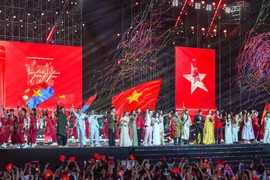
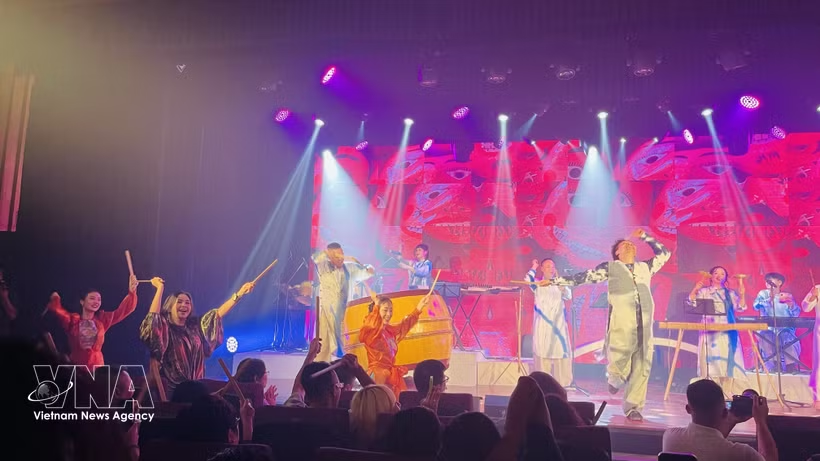
“Chuyen Ha Noi – Mot ngay rat Ha Noi” (Hanoi stories – A truly Hanoi day), a programme held by the Thang Long Song, Dance and Music Theatre, is a cultural product developed to serve tourism and contribute to the development of the capital's cultural industries. (Photo: VNA)

Hanoi (VNA) – Technology has been seen as a powerful tool for unlocking cultural potential, while intellectual property (IP) is recognised as a key foundation for promoting the sustainable development of creative values.

Resolution No. 80-NQ/TW, issued by the Political Bureau on January 7, 2026, on the development of Vietnamese culture, identifies science and technology, innovation and digital transformation as key drivers of cultural development.

This orientation highlights not only the role of technology in optimising and spreading cultural values but also the need to apply technological advances to create new cultural products and values.

Combining technology with a creative mindset has enabled familiar cultural materials to reach wider audiences, bringing new life to traditional cultural values.

3D mapping, virtual reality (VR) and light art have created new visitor experiences at heritage sites such as the Van Mieu - Quoc Tu Giam (Temple of Literature) complex, the Thang Long Imperial Citadel and the Hue Imperial Citadel, helping create attractive tours with both economic and cultural-educational values.

Meanwhile, young artists are giving traditional art forms, including cheo singing (Vietnamese traditional opera), xam (traditional blind buskers' singing) and quan ho (Love duet) singing, fresh expressions to attract contemporary audiences.

Digital platforms are also helping cultural products reach wider markets and generate additional revenue. Music television programmes such as “Anh trai vuot ngan chong gai” (Call me by fire) and “Anh trai say hi,” have expanded into concert shows, concert films and related commercial products.

These examples show how cultural values can develop into cultural IPs across different platforms, creating new opportunities for the creative economy.

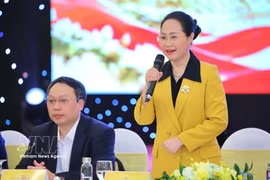
Lawyer Tran Thi Tam, Director of IPCOM Vietnam, said cultural IPs are creative works that could be commercially exploited across sectors such as entertainment, cinema, consumer goods and tourism, with technology helping expand their reach and competitiveness.

Cultural products, from films, music and performances to festivals, tourist destinations, craft village products and handicrafts, may be protected through various IP rights, including copyright, related rights, trademarks, trade names and geographical indications, she said.

Nguyen Thi Hoang Lan, Director of the Authority of Electronic Information and Digital Transformation under the Ministry of Culture, Sports and Tourism, said cultural resources could generate lasting economic value only when developed through a complete value chain linking heritage holders, creators, technology providers and businesses.

She called for an integrated value chain covering the identification of cultural origins and rights holders, creative development, commercialisation and benefit-sharing. She also stressed the need for closer coordination among cultural stakeholders, creative professionals, technology providers and businesses, with the State acting as a facilitator.

Recently, the Vietnam Green Dragon Awards 2026 has been launched to connect creators with businesses, technology and markets, promote cultural innovation and contribute to the development of the country's cultural industries and soft power.

Focusing on four pillars – Creativity, Technology, Experience and Impact – the awards will honour initiatives, products and cultural IPs that renew heritage through contemporary ideas and technology. Eligible fields include arts, music, design, tourism, STEAM education and technology-based cultural digitisation. The awards ceremony is scheduled for January 2027./.

VNA
See more

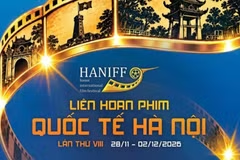
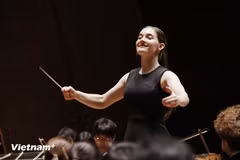
The 8th Hanoi International Film Festival (HANIFF VIII) is scheduled for November 28 to December 2, 2026. (Photo: the organising board)

Hanoi Int’l Film Festival 2026 to connect cinema, heritage, tourism

According to organisers, five public screening venues will be set up in Ba Dinh, Hoan Kiem, Dong Anh, Son Tay and Cau Giay, combining film screenings with art performances and exchanges with audiences. The initiative aims to expand access to films and bring cinematic works closer to local residents.

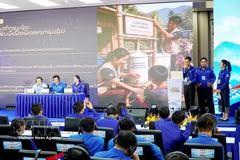
At the seminar among the three countries' youth (Photo: VNA)

Vietnam - Cambodia - Laos Youth Festival 2026 opens in Quang Ngai

In his opening speech, Standing Vice Secretary of the provincial Party Committee and head of the provincial National Assembly delegation U Huan said the festival carries deep political, diplomatic and people-to-people significance and is becoming a traditional fixture.

Nguyen Yen Trang receives the crown from Miss Vietnam 2024 Ha Truc Linh (Photo: Organising board)

Nguyen Yen Trang wins Miss Vietnam 2026

Speaking at the final, Editor-in-Chief of the Tien Phong newspaper and head of the Miss Vietnam 2026 organising board, journalist Phung Cong Suong, stressed the contest’s nearly four-decade record of honouring the beauty of Vietnamese women across generations.

A performance at the International Gong Festival (Photo: VNA)

Gia Lai opens International Gong Festival

Nearly 300 artisans representing 39 delegations from 10 cities and provinces, including Gia Lai, Quang Tri, Hue City and Da Nang, joined thousands of residents and domestic and foreign tourists at the event.

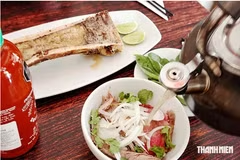
A bowl of the restaurant’s signature dish, “pho” with roasted beef marrow. (Photo: thanhnien.vn)

Vietnamese cuisine brings a taste of home to Colombia

Hieu Le’s restaurant in Medellin, Colombia, is called District 1. Beneath its name is the Spanish phrase “Auténtica Cocina Vietnamita”, meaning authentic Vietnamese cuisine. Paper umbrellas hang outside, while red lanterns cast a warm glow over dark wooden tables inside. Paintings of a woman wearing an ao dai and a conical hat, alongside illustrations of Vietnamese dishes such as broken rice, crab noodle soup and banh mi, decorate the walls.

Vietnamese film industry joins AI race

AI is a budget tool, offering visual development, previsualisation, animation, visual effects and other resource-heavy stages. It lets Vietnamese filmmakers test bold ideas, build worlds, create creatures and simulate action before committing to costly production.

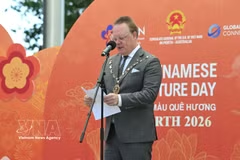
Lord Mayor of Perth Bruce Reynolds speaks at the event (Photo: VNA)

Vietnamese culture shines at festival in Australia

Vietnamese Consul General in Perth Pham Hai Anh called on the Vietnamese community there to preserve the language, family traditions and national values, actively promote Vietnamese culture internationally and encourage creativity to bring national culture closer to the world while harmonising tradition with modernity.

Lidia Brito, UNESCO Assistant Director-General for Priority Africa and External Relations (Photo courtesy of UNESCO)

UNESCO expects Vietnam to lead cultural cooperation initiatives

Lidia Brito, UNESCO Assistant Director-General for Priority Africa and External Relations, praised Vietnam’s contributions to education, science, culture and information, describing the 50-year partnership between Vietnam and UNESCO as a sustained and increasingly substantive journey.

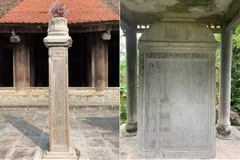
Pho Hien Stone Steles in Hung Yen province (Photo: Department of Cultural Heritage)

Two new UNESCO heritage listings bring preservation challenges to Vietnam

Dr Vu Thi Minh Huong, Vice Chair of the UNESCO Memory of the World Committee for Asia and the Pacific, said with the “Pho Hien Stone Steles” and the “Cliff-based inscriptions on Non Nuoc Mountain” recognised, Hung Yen and Ninh Binh provinces must continue studies and roll out conservation and restoration plans in line with cultural heritage law and UNESCO guidance.