Paving the way for SMEs to join core value chains

Moving beyond low-value processing and assembly will require a shift from attracting FDI through isolated projects towards developing industrial clusters, strengthening corporate governance, digitalising operations through enterprise resource planning (ERP) systems and investing more deeply in precision components to help domestic SMEs enter core value chains.

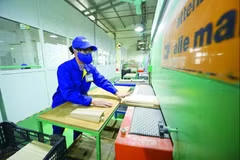
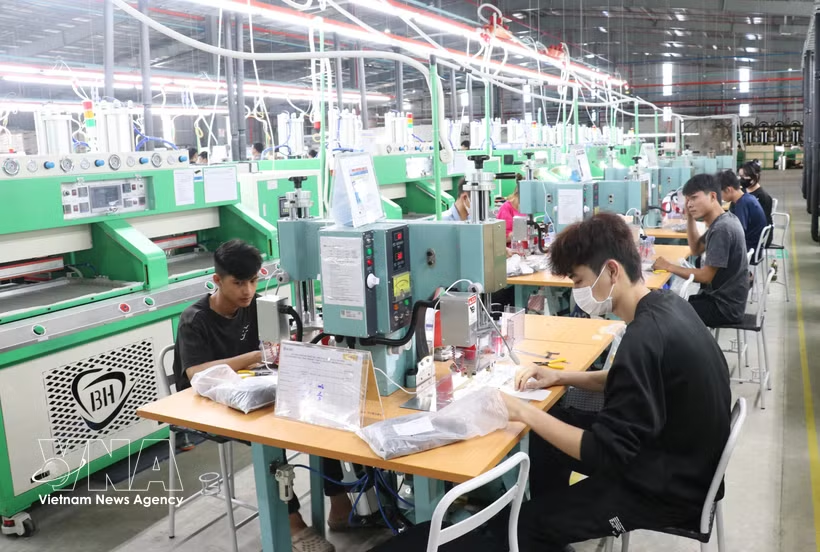
Currently, the participation of Vietnamese enterprises in the electronics and mechanical manufacturing supply chains remains largely concentrated in basic, low-complexity stages. (Photo: VNA)

Hanoi (VNA) – Amid the restructuring of global supply chains, Vietnam has a major opportunity to strengthen its industrial position, but moving beyond low-value processing and assembly will require a shift from attracting FDI through isolated projects towards developing industrial clusters, strengthening corporate governance, digitalising operations through enterprise resource planning (ERP) systems and investing more deeply in precision components to help domestic SMEs enter core value chains.

Breaking out of isolation through industrial clusters

For years, the FDI sector has accounted for a large share of Vietnam’s export turnover, but its spillover effects on domestic businesses have fallen short of expectations. One of the root causes is an approach to investment attraction that has been too fragmented, with disconnected projects lacking spatial and sectoral linkages. As a result, multinational corporations often bring their own networks of satellite suppliers, leaving domestic firms facing significant barriers to becoming Tier 1 or Tier 2 suppliers.

To address this situation, industrial clusters are increasingly seen as a structural solution. Rather than approving isolated investment projects, localities need to plan production zones around integrated value chains, bringing anchor enterprises into close proximity with supporting-industry firms, logistics providers and testing and certification centres.

Such geographical concentration can significantly reduce transport and warehousing costs for SMEs and shorten delivery times. It also creates opportunities for engineers from different companies to interact regularly, accelerating technology transfer.

More importantly, industrial clusters enable small businesses to share infrastructure, including environmental treatment facilities and internationally accredited laboratories for measurement and quality testing, which they would struggle to finance individually.

Commenting on the role of these interconnected production zones, Phan Dang Tuat, Chairman of the Vietnam Association for Supporting Industries (VASI), said Vietnamese businesses are generally small in scale and will find it difficult to meet the requirements of multinational corporations for large volume and consistency if they operated separately.
vnanet_potal-tay-ninh-thuc-day-hoi-nhap-sau-vao-chuoi-gia-tri-toan-cau-8996731.jpg
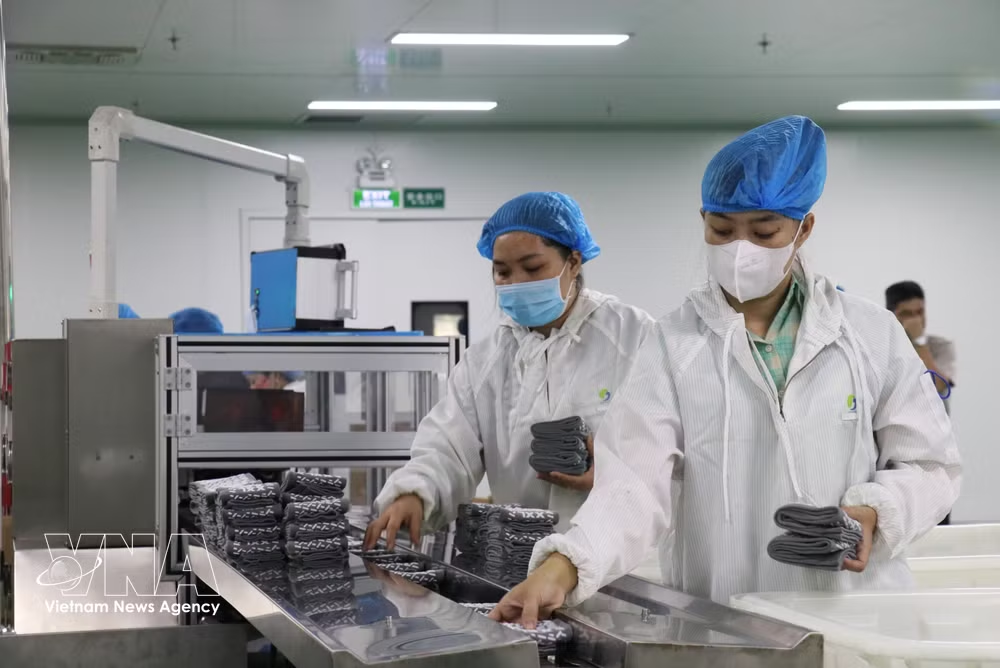
To enter core value chains, the business community must make in-depth investments. (Photo: VNA)

Well-planned industrial clusters led by anchor enterprises are therefore fundamental to helping domestic firms reduce transaction costs and gradually integrate into global manufacturing ecosystems rather than remain on the sidelines, he said.

Improving governance, digitalising operations through ERP

However, while industrial clusters provide the physical infrastructure for connections, the ability to secure and retain orders depends largely on the internal capabilities of individual factories.

Assessments by global manufacturers show that they examine not only product samples but also the management systems behind production lines. Most Vietnamese SMEs still rely heavily on individual experience and manage fragmented data through manual tools. This can lead to inconsistent product quality and make it difficult to trace the source of technical defects immediately when they arise.

For this reason, adopting ERP systems is no longer an issue exclusively for large corporations but has become a prerequisite for businesses in the supporting industries.

By digitalising the entire process, from raw material intake to finished product dispatch, companies can closely monitor material consumption, defect rates and the progress of each production stage in real time. Transparent data also makes it easier for factories to integrate and comply with stringent standards such as ISO and IATF in the automotive industry, as well as carbon emissions traceability requirements under environmental, social and governance (ESG) criteria set by partners in Europe, the US and Japan.

Meanwhile, accurate digital inventory management can directly improve cash flow, reduce working capital tied up in stock and enhance capital efficiency.

Analysing the pressure to transform, Nguyen Van, Vice Chairman of the Hanoi Supporting Industries Business Association (HANSIBA), stressed that FDI partners now impose very high requirements on data transparency and smart production management.

Without proactively investing in digital transformation and standardising their operational processes in line with international practices, Vietnamese supporting-industry firms will find it difficult to pass supplier assessments by major supply chains, even if they have advantages in geographical location or labour costs, he said./.

VNA

See more

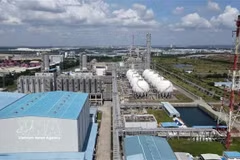
The complex of the Polypropylene (PP) manufacturing plant and the underground liquefied petroleum gas (LPG) storage with a total investment of 1.3 billion USD by Hyosung Vina Chemical Co., Ltd in Cai Mep Industrial Park. (Photo: VNA)

Ho Chi Minh City steps up efforts to attract strategic FDI

With coordinated efforts in institutional reform, project preparation and bottleneck removal, Ho Chi Minh City is positioning itself to attract strategic global investment and strengthen its role as a dynamic economic hub in the new development phase.

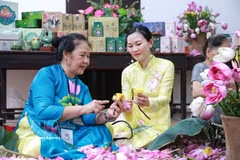
The traditional craft of making lotus-scented tea in Quang An ward, now part of Hanoi’s Tay Ho ward, is not simply a means of livelihood but also a precious cultural value, closely linked to the history, people, and identity of the Tay Ho region (Photo: VNA)

Craft villages preserve cultural identity, create livelihoods

Connecting craft villages with tourist attractions, local cuisine and traditional cultural activities can encourage longer stays and higher visitor spending, generating additional income for residents and resources for heritage preservation. By turning cultural and historical assets into tourism and economic resources, they can preserve traditional occupations and improve local livelihoods at the same time.

Deputy Prime Minister Ho Quoc Dung and Turkish Vice President Cevdet Yilmaz hold talks in Ankara on November 20. (Photo: VNA)

Science, technology - promising pillar of Vietnam-Türkiye cooperation

Briefing his host on Vietnam’s socio-economic development, Deputy Prime Minister Ho Quoc Dung said the country is entering a new development phase, with science and technology, innovation and digital transformation identified as key drivers. He expressed Vietnam’s desire to expand cooperation with trusted partners, including Türkiye.

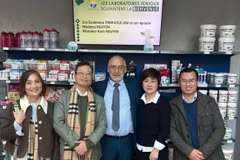
Vietnamese Ambassador to France Trinh Duc Hai ( second, from left) meets with representatives of Laboratoires Fenioux, a Châteauroux-based company established in 1985 that specialises in herbal products, dietary supplements, sports nutrition and natural cosmetics. (Photo: Published by VNA)

Vietnam promotes local cooperation, business connectivity with France

At Châteauroux City Hall, Vietnamese Ambassador to France Trinh Duc Hai met with Mayor Gil Avérous, who is also President of Châteauroux Métropole. The two sides discussed cooperation potential in trade, investment, processing and manufacturing, agriculture, food, pharmaceuticals, healthcare, logistics, green transition and digital transformation.

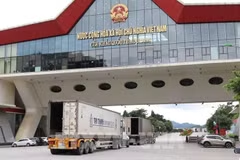
Vehicles transporting imports and exports at Huu Nghi International Border Gate in Lang Son province. (Photo: VNA)

Vietnam names 19 border gates for plant imports

Plants with soil balls attached are only imported through international border gates designated by the ministry from time to time and must undergo phytosanitary inspections in accordance with regulations.

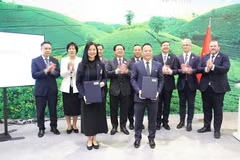
Leaders of Standard Chartered Bank Vietnam sign a memorandum of cooperation with Stavian Group. (Photo: VietnamPlus)

Standard Chartered to arrange 200 million USD in green financing for two Vietnamese firms

Standard Chartered Vietnam has signed two memoranda of understanding (MoUs) with Dai Dung Mechanical Manufacture Construction and Trade Corporation (Dai Dung Corporation) and Stavian Group to explore financing opportunities worth up to 200 million USD combined, supporting sustainable investment, production expansion and the firms’ green transition.

Paola Venturini, APYMEL's export director, said the association is working with Argentine authorities and the country's Embassy in Vietnam to study tariff policies, connect with distributors and promote Argentine dairy products in the Vietnamese market. (Photo: VNA)

Vietnam, Argentina eye expanded food trade ties

Vietnam is not only a promising destination for Argentine products but could also develop into a logistics hub and an important gateway for Argentine goods to reach other Southeast Asian markets.

Le Ngoc Chau, Secretary of the Hai Phong city Party Committee, along with the Hai Phong delegation, visits a facility of Autel Group in Shenzhen, China. (Photo: Published by VNA)

Hai Phong works to attract new wave of Chinese investment

Chinese investors have established a strong presence in Hai Phong, with 823 projects worth more than 13.2 billion USD, accounting for around 26% of the city's total foreign investment. Major Chinese corporations like Biel Crystal, Wolong, GreatStar, Sanhua, Jintian, Shanghuan have chosen Hai Phong as an investment destination and continued to expand their operations.

Production and investment continue to contribute to economic growth. (Photo: thoibaotaichinhvietnam.vn)

Vietnam’s economic growth underpinned by investment, capital flows

FDI also remains an important source of capital. Vu Viet Linh, Deputy Head of the Institutional Client Analysis Department at Maybank Investment Bank Vietnam, highlighted realised FDI as a more reliable indicator of investment performance than newly registered capital, which reflects commitments rather than actual capital inflows.