Craft villages preserve cultural identity, create livelihoods

Connecting craft villages with tourist attractions, local cuisine and traditional cultural activities can encourage longer stays and higher visitor spending, generating additional income for residents and resources for heritage preservation. By turning cultural and historical assets into tourism and economic resources, they can preserve traditional occupations and improve local livelihoods at the same time.

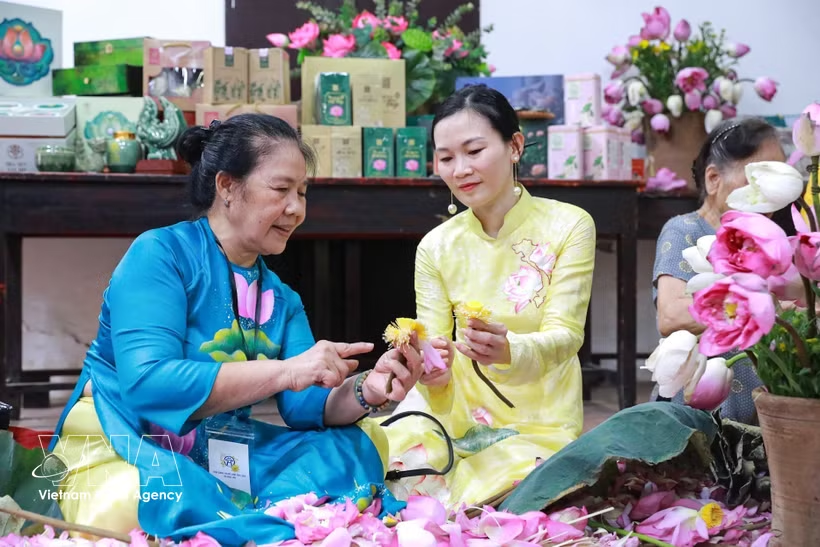
The traditional craft of making lotus-scented tea in Quang An ward, now part of Hanoi’s Tay Ho ward, is not simply a means of livelihood but also a precious cultural value, closely linked to the history, people, and identity of the Tay Ho region (Photo: VNA)

Hanoi (VNA) – Vietnam’s craft villages not only preserve traditional culture but also provide livelihoods for millions of workers, validating the identity of rural communities. Amid changing market demands, however, they need to enhance competitiveness and pursue sustainable development while maintaining traditional craftsmanship and improving local incomes.

Ha Thi Vinh, Vice President of the Vietnam Association of Craft Villages (VICRAFTS) and Chairwoman of the Hanoi Handicraft and Craft Village Association, said craft villages need to embrace digital technology in production, business operations and trade promotion to keep pace with market trends.

While product promotion and sales once relied mainly on traditional trade fairs and exhibitions, producers can now reach wider markets through e-commerce platforms, TikTok Shop, Facebook and other online channels.

VICRAFTS has partnered with TikTok Shop and social media platforms to provide expert support, helping artisans, producers and businesses develop digital skills, create promotional content and establish online sales channels. It is also selecting representative craft villages as pilot models for wider replication.

Bat Trang is among the pioneers in applying digital technology to product promotion and sales, Vinh said. Artisans, household producers and young businesses have introduced products online and livestreamed sales to reach domestic and international customers. The village has also established a digitalisation support community to help develop brands and share skills in product photography and video production.

In Phuong Duc commune, Hanoi, local authorities have likewise joined efforts to develop online sales channels and promote local products.

Vinh stressed that successful online promotion requires more than simply joining digital platforms. Craft villages need to train personnel in content development, communications and video production, while telling stories about product origins, history and cultural significance to help consumers better appreciate traditional craftsmanship.
vnanet-craft3.jpg
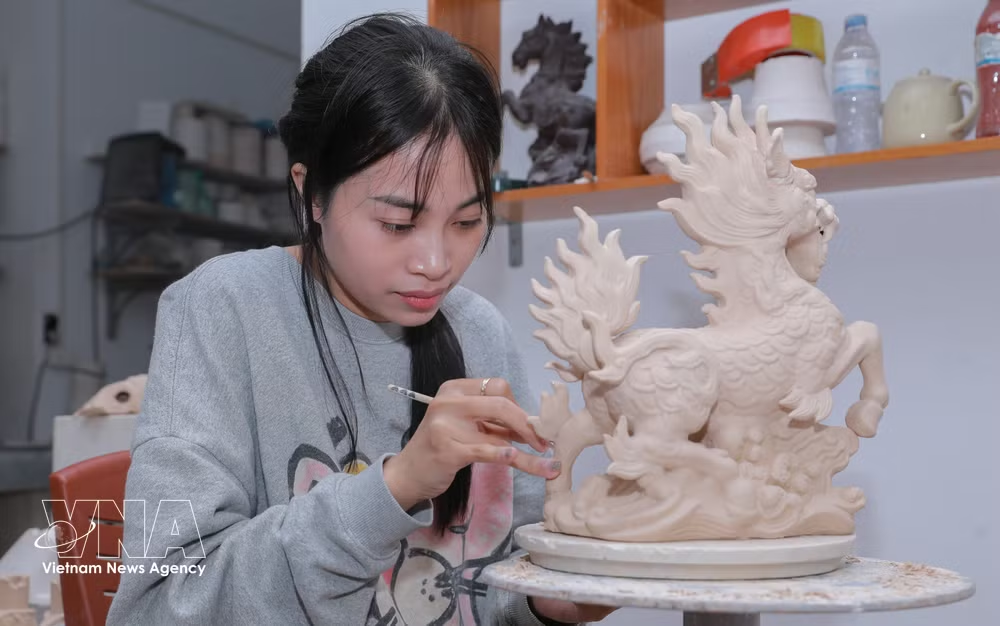
An artisan at a workshop of Vietnam Luxury Gift Group Co.Ltd in Bat Trang ceramic village undertakes tasks that require high-level craftsmanship, sophisticated techniques and precision at every stage (Photo: VNA

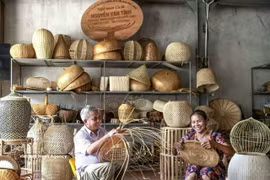
Vietnam currently has around 5,000 craft villages, providing jobs for millions of workers. They play an important role in preserving cultural heritage and contributing to the development of cultural industries.

Hanoi alone has around 1,350 villages with craft activities, including 337 recognised traditional craft villages. These villages not only produce goods for everyday use but also preserve the capital's cultural heritage.

With the Party and State introducing policies on heritage preservation, particularly Resolution No. 80, craft villages are receiving greater attention. The Hanoi Party Committee has also identified them as one of the five pillars of the capital's cultural industries. These policies provide a framework for preserving traditional occupations while encouraging innovation, increasing product value, creating jobs and securing sustainable livelihoods.

Vinh said that over the past years, VICRAFTS, relevant agencies and local authorities have stepped up efforts to preserve traditional occupations and turn cultural assets into economic resources. Stories about the origins, history and distinctive craftsmanship of villages are promoted through various media channels.

Another priority is developing craft village tourism, particularly through hands-on experiences that introduce visitors to traditional occupations, production processes, techniques and local cultural identities.

She held that connecting craft villages with tourist attractions, local cuisine and traditional cultural activities can encourage longer stays and higher visitor spending, generating additional income for residents and resources for heritage preservation.

Visitors can learn about the history of local occupations, observe artisans at work, try traditional production techniques and experience local lifestyles and customs passed down through generations. Such activities give villages distinctive cultural appeal while creating opportunities to increase tourism revenue.

By turning cultural and historical assets into tourism and economic resources, craft villages can preserve traditional occupations and improve local livelihoods at the same time, Vinh said./.


VNA

See more

Vehicles showcased at the Vietnam Mobility Show 2025 (Photo: VNA)

Vietnam Mobility Show 2026 gears up for 40-plus brands

The fourth edition is scaling up, spanning mass-market, electric vehicle (EV), luxury and high-performance segments. Beyond static displays, the show will offer test drives, tech showcases, and ownership and operating solutions.

Travis Mitchell, Executive Director at the American Chamber of Commerce (AmCham) in Ho Chi Minh City. (Photo courtesy of AmCham)

Vietnam well placed to build win-win cooperation in APEC: AmCham

As host of the Asia-Pacific Economic Cooperation (APEC) forum in 2027, Vietnam is well positioned to build consensus among member economies for mutually beneficial economic cooperation, says Travis Mitchell, Executive Director at the American Chamber of Commerce (AmCham) in Ho Chi Minh City.

Vietnam Digital Industry and Trade Summit 2026 to bring together over 700 delegates

Vietnam Digital Industry and Trade Summit 2026 to bring together over 700 delegates

Hosted by the Ministry of Industry and Trade (MoIT), with professional coordination from the Vietnam E-commerce and Digital Economy Agency, the event will bring together representatives of regulatory agencies, localities, international organisations, universities, research institutes and businesses in e-commerce, technology, manufacturing, energy, transport and logistics.

Participants discuss potential business cooperation opportunities between Vietnam and African countries at the workshop. (Photo: VNA)

Vietnam, Africa seek to expand agricultural cooperation

A Vietnamese official stressed the need to move beyond experience-sharing and technical transfers towards comprehensive partnerships linking science and technology with investment, production, processing and market development, enabling businesses from both sides to jointly develop value chains on the basis of equality and mutual benefit.

A worker at a Phu Vinh Hung Co garment factory in Hanoi. (Photo: VNA)

Sustainable production essential for Vietnam's textile and garment industry

Vietnam's textile and garment exports reached 46.2 billion USD in 2025, while shipments in the first 10 months of 2026 rose 4% year on year to approximately 39.8 billion USD, according to the Vietnam Textile and Apparel Association. Vietnam remains among the world's three largest textile and garment exporters.

Dr. Anmol Mukhia of South Asian University in an interview with Vietnam News Agency correspondents in New Delhi. (Photo: VNA)

APEC 2027: Vietnam poised to strengthen role as bridge-builder, consensus facilitator

Speaking to Vietnam News Agency correspondents in New Delhi, Dr. Anmol Mukhia of South Asian University said Vietnam’s third hosting of APEC, following the 2006 and 2017 editions, will take place amid mounting geopolitical tensions, supply chain disruptions, energy crises, conflicts and rapid advances in artificial intelligence (AI). These developments are testing multilateral cooperation mechanisms and making the host economy’s role increasingly important, he noted.

Currently, the participation of Vietnamese enterprises in the electronics and mechanical manufacturing supply chains remains largely concentrated in basic, low-complexity stages. (Photo: VNA)

Paving the way for SMEs to join core value chains

Moving beyond low-value processing and assembly will require a shift from attracting FDI through isolated projects towards developing industrial clusters, strengthening corporate governance, digitalising operations through enterprise resource planning (ERP) systems and investing more deeply in precision components to help domestic SMEs enter core value chains.

The complex of the Polypropylene (PP) manufacturing plant and the underground liquefied petroleum gas (LPG) storage with a total investment of 1.3 billion USD by Hyosung Vina Chemical Co., Ltd in Cai Mep Industrial Park. (Photo: VNA)

Ho Chi Minh City steps up efforts to attract strategic FDI

With coordinated efforts in institutional reform, project preparation and bottleneck removal, Ho Chi Minh City is positioning itself to attract strategic global investment and strengthen its role as a dynamic economic hub in the new development phase.