Craft villages need mentors to keep traditions alive

Trinh Quoc Dat, Chairman of the Vietnam Craft Village Association, said craft hubs with strong production, market access and decent incomes tend to attract young workers. Bat Trang commune draws labour from nearby areas, and some families send children to study ceramics before they return to develop the craft and study new designs and glaze lines.

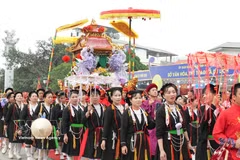
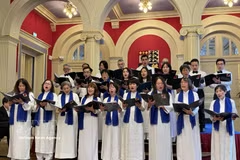
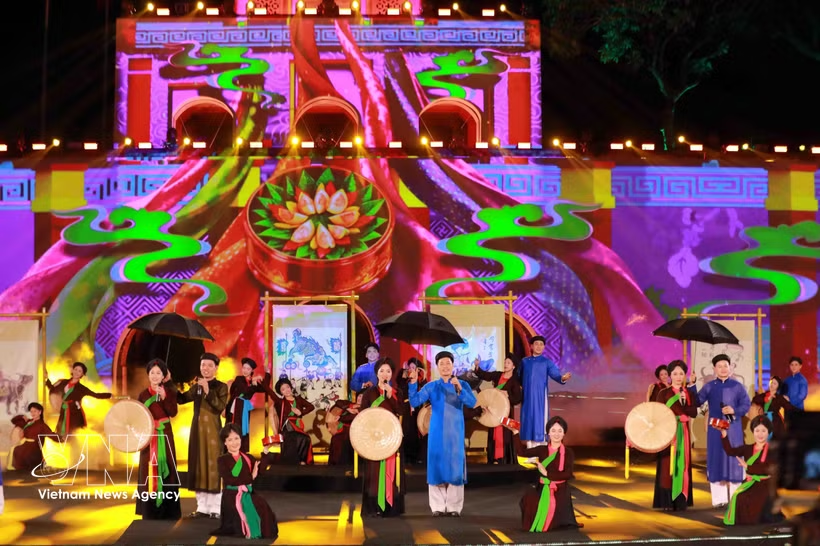
A Quan ho singing performance (Illustrative photo: VNA)

Hanoi (VNA) – Artisan-led classes are keeping folk crafts alive and feeding Hanoi’s cultural industry ambitions, but the model works best when training is tied to income and market demand.

Talent pipeline starts with artisans

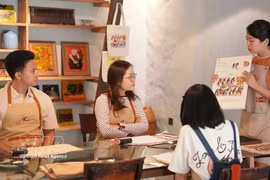
In Duong Lam ancient village, Meritorious Artisan Nguyen Tan Phat has spent years teaching lacquerware, a craft where skilled hands are only part of the job. Products embed generations of knowledge, technique and aesthetic judgment. Students must learn materials and master every step, from building the base and treating the surface to lacquering, polishing and finishing.

“Artisans should not be merely the last ones holding a technique”, Phat said. “They need to be pathfinders so younger generations can keep creating on a traditional foundation”.

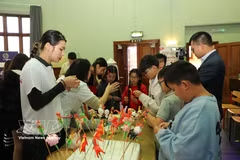
In Xuan La to-he figurine village, Phuong Duc commune, artisan Dang Van Hau teaches by level. Students start with simple shapes and gradually face harder tasks. For children, the first goal is exposure to folk culture; for those aiming to make a career, the goal is mastery of technique and the ability to create new product designs.

The same model extends beyond handicrafts as water puppetry in Dao Thuc village, Thu Lam commune is being carried forward through classes directly led by artisans.

Artisan Nguyen The Nghi said the activity has run for about five years, with at least one session a year and sometimes two. Parents who once saw water puppetry as impractical now sign their children up. Joining the puppet troupe is not a short course as newcomers face a two-year trial, take part in collective activities and follow troupe rules. They learn not only performance technique but also the community’s way of life and spirit.

Training must connect to markets, policy

Trinh Quoc Dat, Chairman of the Vietnam Craft Village Association, said craft hubs with strong production, market access and decent incomes tend to attract young workers. Bat Trang commune draws labour from nearby areas, and some families send children to study ceramics before they return to develop the craft and study new designs and glaze lines. By contrast, low-income crafts with unstable outlets struggle to retain young people.
vnanet-x.jpg
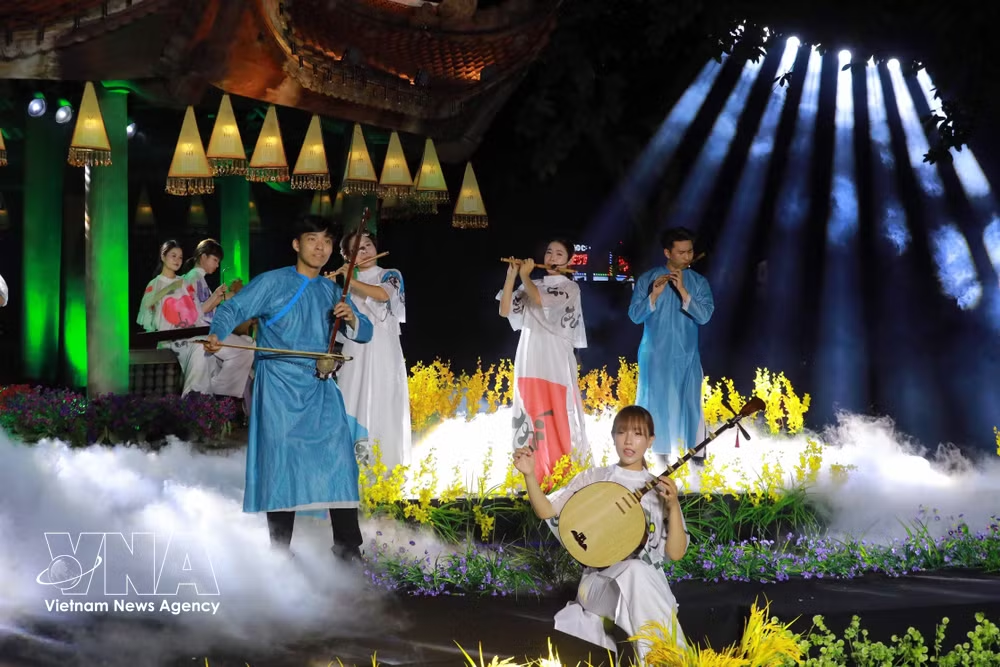
A performance of traditional musical instruments (Photo: VNA)

To create a long-term career path, Phat proposed stronger links among artisans, training facilities, businesses and cultural tourism spaces. That will let learners move from exposure to practice, product creation and job search. He said short-term experiential activities must be clearly separated from deep training for those who truly choose the craft as a long-term career.

The issue also belongs to cultural industry policy. According to the draft Law on Cultural Industry Development submitted to the 16th National Assembly’s second session, the Government suggested a workforce competency framework by job position; policies to attract artists, artisans and experts into training; and support for learners through scholarships, tuition waivers, living cost support and credit.

Dat also stressed that formal training must be tied to artisans and real production. Training facilities should build suitable curricula, artisans should teach techniques directly, authorities should support mechanisms and resources, and associations and businesses should connect production with markets./.
VNA

See more

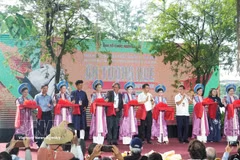
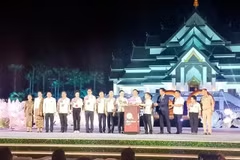
The opening ceremony of the Hue International Sculpture Camp 2026 on November 5 (Photo: VNA)

Hue International Sculpture Camp opens

Running until November 15, the event is a meaningful cultural and artistic activity celebrating Vietnam Culture Day (November 24), contributing to the promotion of national cultural values and inspiring creativity in contemporary art.

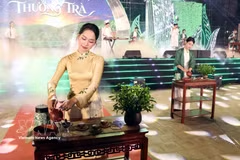
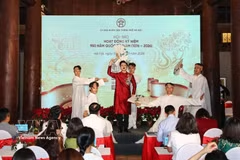
Tea-making performance at the tea appreciation night in Thai Nguyen province on November 4, 2026.(Photo: VNA)

Vietnamese, international tea cultures shine at cultural night

The programme was elaborately staged, combining music, dance, traditional art performances and modern stage technology to offer participants an insight into the cultural values of Vietnamese tea and the tea appreciation traditions of several East Asian countries.

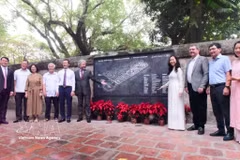
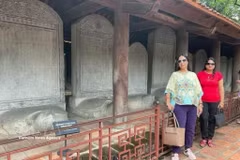
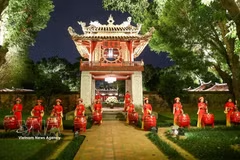
Delegates at the launch of the new visitor map and guide leaflet at the Van Mieu – Quoc Tu Giam Special National Relic Site (Photo: VNA)

950th anniversary of Quoc Tu Giam marked with new visitor guides

The new overall map presents the Van Mieu-Quoc Tu Giam Special National Relic Site's spatial layout, the locations of its structures and key attractions, enabling visitors to plan their own routes. The leaflet provides an overview of the site's history, architecture, historical figures and outstanding cultural and educational values.

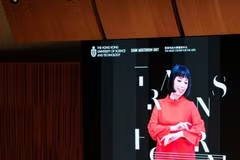
Pianist Bich Tra performs at a concert in Hong Kong, China. (Photo published by VNA)

Pianist Bich Tra brings Vietnamese music to the world

Ahead of Great National Unity Day (November 18) and Vietnam Cultural Day (November 24), pianist Bich Tra, who is now living in Hong Kong (China), shared her artistic journey and aspirations for Vietnam's cultural development.

Children are taught how to make traditional to he figurines at the charity cultural event. (Photo: VNA)

Vietnamese culture and power of solidarity: A story from the UK

Dao Kim Thu, the foundation's founder and initiator of the programme, told the Vietnam News Agency’s correspondents in London that its mission is not only to support disadvantaged women, children and communities in Vietnam, but also to connect overseas Vietnamese, promote Vietnamese culture internationally and nurture younger generations' attachment to their roots.

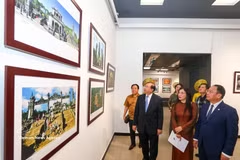
The photo exhibition “Vietnam’s World Heritage Sites” features 100 photos showcasing 30 heritage sites recognised by UNESCO. (Photo: VNA)

Localities work to enrich vitality of Vietnamese culture

Guided by the Politburo's Resolution No. 80-NQ/TW on Vietnamese cultural development, a range of cultural activities held nationwide over the past week have highlighted efforts to preserve and promote national identity while encouraging creativity and expanding public access to culture.

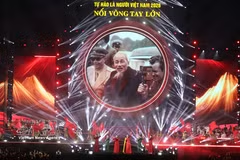
A performance at the “Proud to Be Vietnamese 2026” concert. (Photo: VNA)

“Proud to Be Vietnamese 2026” concert celebrates national unity

Concluding with a spectacular fireworks display, the the “Proud to Be Vietnamese 2026” concert in Thai Nguyen province brought together tens of thousands of people at the stadium and millions of viewers watching through screens. It also served as a reminder of the tradition of gratitude to previous generations and helped reinforce national pride and solidarity.

The digital art programme “Tinh hoa dao hoc” (Essence of Education) at the Van Mieu – Quoc Tu Giam (Temple of Literature - National University) special national relic site in Hanoi on November 1 (Photo: VNA)

Vietnamese cultural digital map platform promotes love for nation: Minister

Beyond serving as a location-search tool, the CMAP is designed as a comprehensive digital information channel covering cultural, sports and tourism infrastructure. It enables real-time updates on arts and cultural events, traditional festivals, mass sports competitions and heritage tourism itineraries, bringing diverse cultural data together in an integrated ecosystem.

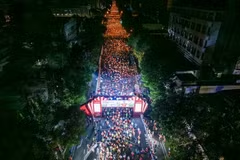
The Techcombank Ho Chi Minh City International Marathon 2026 will be held on December 4-6 and is expecting a record 24,000 runners. (Photos courtesy of SEV)

Techcombank Ho Chi Minh City International Marathon to be held in December

As an iconic marathon bearing the city's name, the event has established itself as one of Vietnam's largest and most influential community sporting events, contributing to the growth of sports tourism, stimulating the local service economy and attracting an increasing number of international visitors to Ho Chi Minh City.