Vietnam, Africa seek to expand agricultural cooperation

A Vietnamese official stressed the need to move beyond experience-sharing and technical transfers towards comprehensive partnerships linking science and technology with investment, production, processing and market development, enabling businesses from both sides to jointly develop value chains on the basis of equality and mutual benefit.

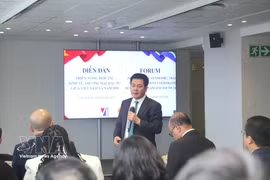
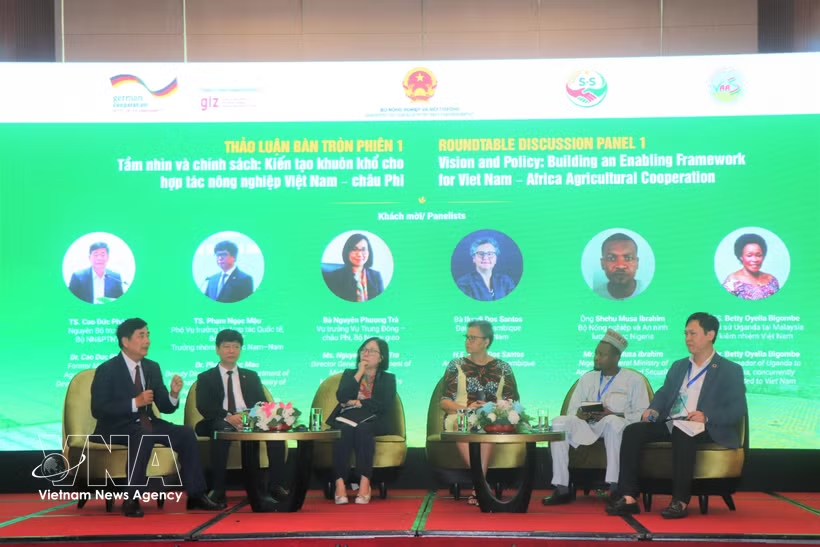
Participants discuss potential business cooperation opportunities between Vietnam and African countries at the workshop. (Photo: VNA)

Can Tho (VNA) – Agriculture could serve as a pioneering sector in strengthening Vietnam–Africa cooperation and paving the way for Vietnamese businesses to enter African markets in other economic sectors, said Pham Ngoc Mau, Deputy Director of the Department of International Cooperation under the Ministry of Agriculture and Environment.

He made the remarks at a workshop on promoting private sector cooperation in agriculture between Vietnam and Africa, held in Can Tho city on November 23. It took place under the Carbon Offsetting Rice Emission Reduction (CORE) project, funded by Germany's Federal Ministry for Economic Cooperation and Development (BMZ).

Mau, who also heads the working group on South–South Cooperation in agriculture, said Africa holds considerable potential in land, natural resources, labour and market size, and many countries on the continent prioritised agricultural development, food security and foreign investment attraction. Meanwhile, Vietnam has accumulated extensive agricultural experience, technological expertise and growing business capacity.

He stressed the need to move beyond experience-sharing and technical transfers towards comprehensive partnerships linking science and technology with investment, production, processing and market development, enabling businesses from both sides to jointly develop value chains on the basis of equality and mutual benefit.

He highlighted the role of businesses as the driving force behind sustainable South–South Cooperation while State agencies, research institutes and international development organisations provide connections and institutional support.

The Ministry of Agriculture and Environment established the working group on South–South Cooperation in agriculture under Decision No. 3786, dated September 16, 2025. The group facilitates two-way information exchange through government-to-business (G2B) and business-to-business (B2B) channels to address information gaps and support Vietnamese enterprises seeking investment opportunities in Africa.

It has identified three areas of Vietnam's agricultural expertise for exchange with international partners: low-cost farming techniques and production processes; agricultural inputs and tools; and policy and management experience, including the transition towards new-style cooperatives and measures for overcoming trade barriers to bring agricultural products into international markets.

The group also seeks to connect Vietnamese businesses in processing, energy, telecommunications, mining, infrastructure and logistics with African partners. Combining investment projects in these sectors with agricultural initiatives and human resources training could help strengthen ties with local authorities and communities, Mau said.
vnanet-hoi-thao2.jpg
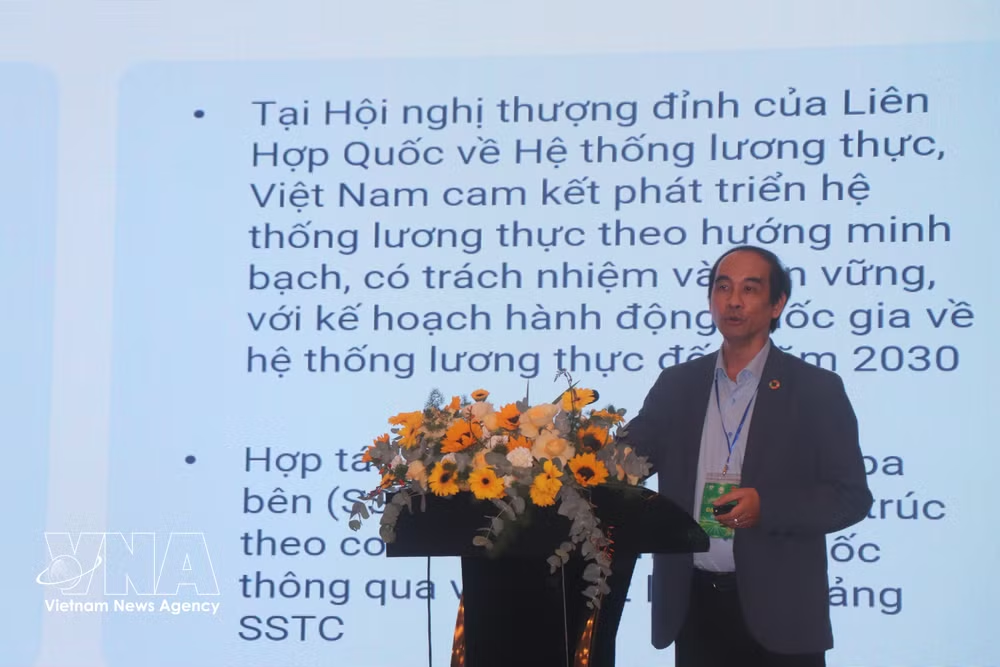
Dao The Anh, President of the Vietnam Rural Development Science Association, briefs participants on the South-South strategic cooperation framework on sustainable rice development between Vietnam and five African countries. (Photo: VNA)

Meanwhile, Dr Dao The Anh, President of the Vietnam Rural Development Science Association, presented an initial draft of the 2026–2035 South–South Strategic Cooperation Framework between Vietnam and five African countries – Nigeria, Senegal, Uganda, Zambia and Angola. The countries have signed memoranda of understanding on sustainable, low-emission rice sector development.

The framework looks to establish a partnership on sustainable and low-emission rice farming systems as the first initiative.

Anh noted that although rice is cultivated in 43 of the 54 African countries, the continent imports around 17 million tonnes annually, a figure that could double by 2030 amid rising demand. Average rice yields remain at only 2–3 tonnes per hectare.

By comparison, Vietnam produces around 27 million tonnes of milled rice annually, equivalent to the combined output of African countries. Its unmilled rice productivity is approximately three times the African average, partly thanks to improved varieties, farming techniques and multiple cropping.

However, he added, future cooperation should address several challenges, including excessive reliance on technical assistance, limited private sector participation, difficulties in banking and payment connectivity, and the need for more flexible financing mechanisms backed by reliable data.

Oemar Idoe, Deputy Country Director of the German Agency for International Cooperation (GIZ) in Vietnam, praised Vietnam's experience in improving rice productivity, organising farmers and promoting sustainable farming.

He said climate change, declining natural resources and food security pressures are shared challenges requiring collective efforts and two-way learning. South–South Cooperation could help countries share successful models and adapt them to local conditions.

Participants at the workshop discussed recommendations to finalise the framework and action plan for cooperation between Vietnam and the five African countries in developing sustainable and low-emission rice production. Vietnamese businesses also shared difficulties in accessing markets, finding partners and mobilising investment in Africa./.


VNA

See more

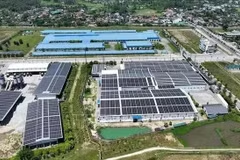
A rooftop solar power system installed at a factory in the Duc Tho Industrial Cluster, Duc Tho commune, Ha Tinh province. (Photo: VNA)

Government approves programme to drive North Central region's development

Deputy Prime Minister Pham Gia Tuc signed a decision on November 23 approving a programme to implement the North Central region's master plan for 2021-2030, with a vision to 2050, aiming to turn the region into a dynamic and sustainable growth hub, with science, technology and innovation serving as key economic drivers.

Quang Tri allocates over 50 billion VND for trade promotion in 2026-2030, supporting OCOP entities in market expansion and brand development (Photo: VNA)

E-commerce expands market access for OCOP products

Rather than relying on traditional outlets, cooperatives, businesses and household producers are increasingly using short videos, livestreams and e-commerce platforms to introduce their products, origins and production processes and distinctive values. These tools help bring producers closer to consumers and expand their reach beyond local markets.

Vietnam Expo HCMC 2026 features 986 booths showcasing products from 825 businesses. (Photo: bnews.vn)

Vietnam Expo 2026 to feature 986 booths, 825 exhibitors

The 24th Vietnam International Trade Fair (Vietnam Expo 2026) will feature 986 booths and 825 enterprises, trade promotion bodies and industry associations from 18 countries and territories, including Vietnam, India, Belarus, the Republic of Korea, Malaysia, China and Taiwan (China)

Processing octopus for export to the Japanese market at Huy Nam Company, An Giang (Photo: VNA)

Vietnam shifts focus towards import-export quality, efficiency

Speaking at a consultation workshop on the strategy for merchandise exports and imports, recently held by the Ministry of Industry and Trade (MOIT), Deputy Minister of Industry and Trade Luong Hoang Thai said rising export turnover did not necessarily reflect a corresponding improvement in the economy's endogenous capacity.

Delegates at the event (Photo: SGGP)

Asia Nuclear Business Platform makes Vietnam debut

The 11th Asia Nuclear Business Platform, taking place in Hanoi on November 25-26, offers Vietnam an opportunity to strengthen ties with international partners, gain access to advanced technologies and experience, and promote cooperation while enhancing national capacity, laying the groundwork for safe, secure and sustainable nuclear power development.

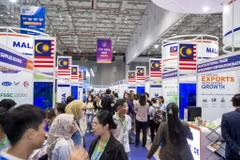
Domestic and international businesses engage in trade networking at the exhibition. (Photo: VNA)

VINAMAC EXPO 2026 spotlights industrial machinery, technologies

Exhibitors are showcasing a wide range of products, machinery, equipment and advanced solutions in mechanical engineering, metalworking, welding and cutting technologies, metallurgy, control and automation, industrial robotics, electromechanics, industrial equipment and supporting industries.

Vehicles showcased at the Vietnam Mobility Show 2025 (Photo: VNA)

Vietnam Mobility Show 2026 gears up for 40-plus brands

The fourth edition is scaling up, spanning mass-market, electric vehicle (EV), luxury and high-performance segments. Beyond static displays, the show will offer test drives, tech showcases, and ownership and operating solutions.

Travis Mitchell, Executive Director at the American Chamber of Commerce (AmCham) in Ho Chi Minh City. (Photo courtesy of AmCham)

Vietnam well placed to build win-win cooperation in APEC: AmCham

As host of the Asia-Pacific Economic Cooperation (APEC) forum in 2027, Vietnam is well positioned to build consensus among member economies for mutually beneficial economic cooperation, says Travis Mitchell, Executive Director at the American Chamber of Commerce (AmCham) in Ho Chi Minh City.

Vietnam Digital Industry and Trade Summit 2026 to bring together over 700 delegates

Vietnam Digital Industry and Trade Summit 2026 to bring together over 700 delegates

Hosted by the Ministry of Industry and Trade (MoIT), with professional coordination from the Vietnam E-commerce and Digital Economy Agency, the event will bring together representatives of regulatory agencies, localities, international organisations, universities, research institutes and businesses in e-commerce, technology, manufacturing, energy, transport and logistics.