From lab to factory: Driving self-reliance in materials technology

By 2035, Vietnam is expected to have a workforce and corporate base with financial capacity, technology ownership and markets, according to Assoc. Prof. Vu Viet Hung, Chairman of the Canadian Vietnamese Scientists and Experts Association (CVSEA).

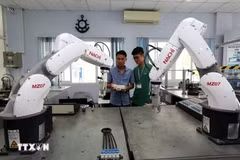
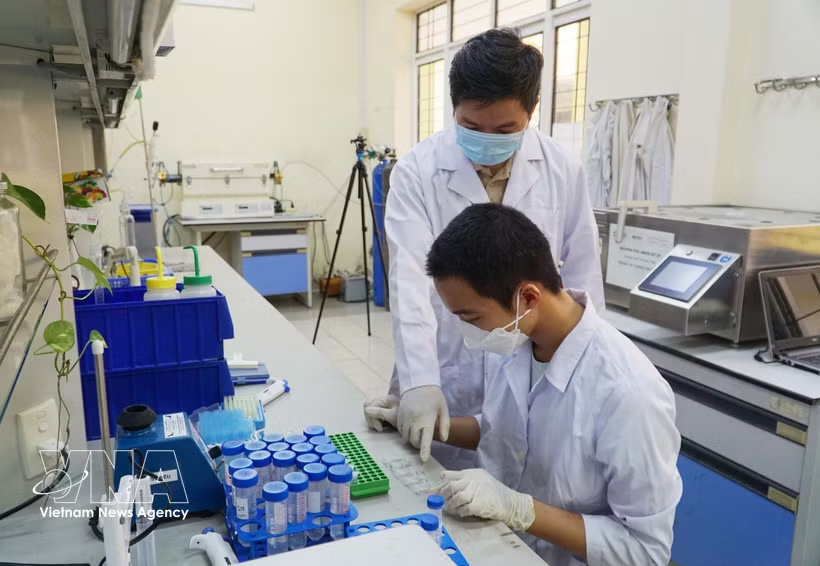
At the Advanced Materials Technology Institute of Vietnam National University, Ho Chi Minh City (Photo: VNA)

Ottawa (VNA) – Vietnam’s push for technology self-reliance will hinge on linking advanced materials research with talent training and factory demand, Assoc. Prof. Vu Viet Hung, Chairman of the Canadian Vietnamese Scientists and Experts Association (CVSEA), told Vietnam News Agency reporters in Ottawa.

He said specialised research teams with stable funding and long-term corporate ties should be central to following the Politburo’s Resolution 57-NQ/TW on science, technology, innovation and national digital transformation.

According to him, materials underpin everything from semiconductor chips to aircraft engines. Research, manufacturing and application capacity therefore determine how much technology Vietnam can actually master. Investment in materials must come with those who can absorb, improve and create technology.

Hung pointed to Canada’s Industrial Research Chair model: a professor runs a lab, signs a 5–10 year research agreement with a company, uses university infrastructure and corporate cash, and leverages that to seek Government funding.

The model spreads the benefits. Universities gain research capacity and postgraduates; labs funding to support scholarships, upgrade equipment and carry out research projects; companies obtain research results, trained manpower and products with commercialisation potential.

Trust and mutual understanding between scientists and companies are decisive, along with finance, tax and technology transfer policies. Corporate resources can anchor further funding and keep research tied to real applications.

For Vietnam, Hung proposed strengthening basic research at the Institute of Materials Sciences under the Vietnam Academy of Science and Technology and building applied research labs and chair positions at tech universities. These units need coordination in expertise, training and transfer, linked to local and corporate resources.
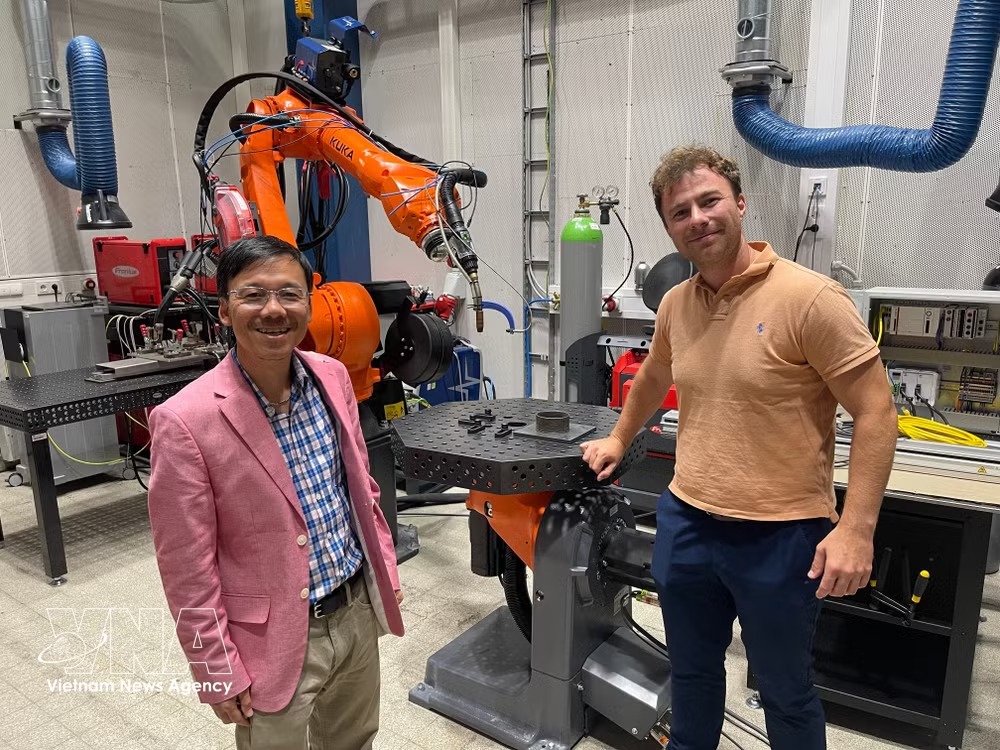
vnanet-hjung.jpg
Assoc. Prof. Vu Viet Hung (left) visits a robot-assisted 3D printing facility (Photo: VNA)

Priorities should follow strategic need, domestic research capacity and industrial application. Hung flagged materials for semiconductors, energy, robotics, automation and aerospace, with specialised teams in design, manufacturing or processing.

On titanium and titanium alloys, Vietnam needs deeper processing and eventually internationally standard blanks for manufacturing. The route is taking technology transfer from trusted partners, pairing it with domestic research, and building production and upgrade capacity in parallel.

He recommended 4–5 labs and applied research chairs for titanium and titanium alloys in aerospace, medical, industrial and national defence-security fields. Work would cover conventional machining, additive manufacturing and component and equipment design.

On funding, he suggested 20–30 national-level labs and research chairs over five years for selected advanced materials groups at leading universities.

He called for a coordinated funding scheme across science and education agencies and the National Foundation for Science and Technology Development (NAFOSTED) to back postgraduate training, overseas internships and practical skills. For each selected materials group, he targets 300–500 skilled engineers and technicians in five years and 4–5 companies investing in technology.

The expert also advocated using Vietnamese scientists abroad for short-term teaching, lab supervision and research cooperation, plus scholarships for Vietnamese doctoral students to intern in international labs. The work should be tied to specific group tasks so knowledge transfers and the domestic workforce keeps building technology.

By 2035, Hung expects Vietnam to have a workforce and corporate base with financial capacity, technology ownership and markets. By 2045, he wants mastery of selected technologies and products that can compete with imports on quality and cost. Studies must end in manufacturing, application and real production muscle./.
VNA

See more

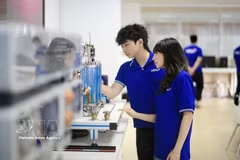
USTH students access modern equipment (Photo: VNA)

Vietnam’s AI ambition runs into talent wall

AI is becoming a foundational technology, cutting across industrial production, healthcare, education, finance, governance and public service delivery. But turning technological potential into practical value requires a workforce able to study, master and apply AI to Vietnam’s real-world problems.

Trainees practise programming and operating robots at the Ho Chi Minh City High-Tech Park Training Centre. (Photo: VNA)

Vietnam, Malaysia hold potential for cooperation in robotics industry

Businesses from both countries should lead joint research and field-testing projects in areas such as electronic component inspection, warehouse transport, agricultural monitoring and medical logistics, said Samirul Ariff Othman, a policy, economic and business analyst at Global Asia Consulting and visiting lecturer at Universiti Teknologi PETRONAS.

Illustrative image (Photo: SGGP)

Ericsson establishes R&D capability in Vietnam

This initiative builds on Ericsson’s growing software engineering and testing capabilities in the country, and will further strengthen Vietnam’s contribution to Ericsson’s global technology development.

An AI-powered robot at the 2026 Seoul AI Conference. (Photo: VNA)

RoK’s AI robotics drive opens cooperation opportunities with Vietnam

Dao Tuan Hung, President of the Business Association of Vietnamese in Korea (BAVIK), said Vietnam should adopt a practical approach by prioritising specialised robots, including autonomous mobile robots (AMR/AGV), collaborative robots and machine vision systems, in sectors such as agro-fishery processing, textiles and garments, electronics and logistics.

Russian survey vessel Akademik M.A. Lavrentyev (Photo: VNA)

Russian survey vessel docks in Hai Phong

This is the third joint marine scientific survey in Vietnamese waters, running from November 4 - December 12, and one of the opening field activities under the Vietnam–Russia roadmap for marine scientific research cooperation for 2026-2035.

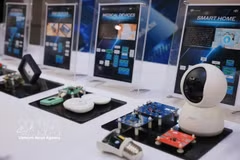
Smart products, chips and semiconductor materials are displayed at the launch ceremony of the national semiconductor chip prototyping support centre in Hanoi on June 26, 2026. (Photo: VNA)

Vietnam-Japan semiconductor cooperation paves the way for high-tech investment

The two countries are implementing five semiconductor research projects involving leading universities, with funding agreements signed in July. The projects cover three-dimensional integrated circuits, advanced semiconductor materials, secure artificial intelligence (AI) chips and power electronic components.

An exhibition space at the “Da Nang Semiconductors and High-Tech 2026” conference, organised by the Da Nang People’s Committee. (Illustrative photo: VNA)

Mobilising international resources to drive Vietnam’s technology development

Vietnam previously focused mainly on attracting overseas experts and intellectuals to work in the country over the long term, but this approach encountered certain difficulties. Cooperation methods are now shifting towards greater flexibility, allowing experts to take part in conferences and scientific seminars, contribute to addressing major national challenges, or participate in short-term training and research programmes.

Assoc. Prof. Dr. Dinh Ngoc Thach, lecturer and researcher in automatic control theory and robotics at the French National Conservatory of Arts and Crafts (Cnam) (Photo: VNA)

Core technologies key to sustainable robotics development in Vietnam: expert

Vietnam should select suitable robotic platforms and gradually build capacity in core technologies, including sensing, environmental perception, positioning, state estimation, AI, control and system integration. This will help develop technologies applicable across multiple sectors while avoiding fragmented investment and dependence on a single product category.

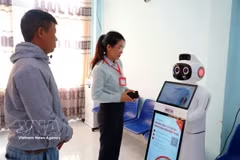
AI robots have become effective assistants in providing administrative services and reducing the workload of officials in Lam Dong province (Photo: VNA)

AI robots help streamline administrative procedures

Operating around the clock, AI robots provide information on administrative procedures, required documents, processing times, fees and relevant regulations, complementing assistance from civil servants.

High prospects for Vietnam-Italy cooperation in robotics industry

High prospects for Vietnam-Italy cooperation in robotics industry

Vietnam and Italy have highly complementary strengths in this robotics field. Italy has experience in machinery manufacturing, industrial robotics applications and an established business network, while Vietnam has a dynamic market, strong demand for production modernisation and a promising young engineering workforce.

General Secretary of the Communist Party of Vietnam (CPV) Central Committee and President To Lam and the foreign ambassadors at the meeting (Photo: VNA)

Top leader receives new foreign ambassadors

Vietnam wishes to step up cooperation with the countries in such areas as economy, trade and investment; cutting-edge science and technology applications, semiconductors, artificial intelligence, new materials, digital transformation, sustainable agriculture, the environment, energy and renewable energy, the marine economy and maritime transport.

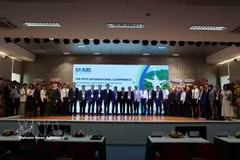
Delegates at the event (Photo: VNA)

Over 400 scientists attend international material conference

Discussions focus on six key areas, including advanced materials and their applications for sustainable development; environmentally friendly material processing technologies; product lifecycle engineering; sustainable machine design; low-carbon industries and the circular economy; and artificial intelligence and digital transformation in material and mechanical engineering.