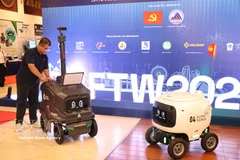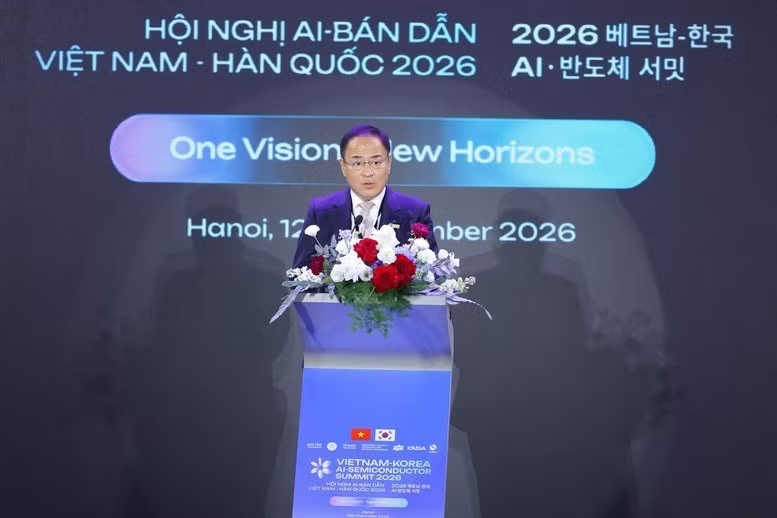
Hanoi (VNA) – The first Vietnam–Korea AI-Semiconductor Summit 2026 (VKAISS) took place in Hanoi on November 12 under the theme "One Vision - New Horisions", aiming to strengthen bilateral cooperation in semiconductor technology development, human resources training and supply chains.
The event, jointly organised by the Department of Digital Technology and Artificial Intelligence under the Ministry of Science and Technology, FPT Corporation, the Korea AI Semiconductor Fabless Association (KAISA), and VINASA’s Semiconductor Industry Development Committee, brought together more than 400 delegates, representing over 50 semiconductor companies, as well as research institutes, universities and localities from both countries.
In his speech, Vietnamese Deputy Minister of Science and Technology Tran Trung Tinh stressed that the Politburo's Resolution No. 57-NQ/TW identifies science and technology, innovation and digital transformation as leading breakthroughs and key drivers of rapid and sustainable development. Semiconductors and artificial intelligence (AI) are among the strategic technologies prioritised for development.
He noted that Vietnam has largely established a comprehensive institutional and policy framework for these sectors. The Law on Digital Technology Industry, which took effect on January 1, 2026, includes specific provisions on semiconductor industry development, while the Law on Artificial Intelligence, effective from March 1, 2026, makes Vietnam one of the few countries to have a dedicated and comprehensive legal framework for AI. These laws are complemented by the Government's sector-specific development strategies.
According to the Deputy Minister, AI and semiconductors are closely interconnected and play an important role in the country's strategy to achieve technological self-reliance. Vietnam's ambition extends beyond attracting investment to gradually mastering technologies and participating more deeply in global value chains.
Against this backdrop, he outlined three key directions for cooperation with the Republic of Korea (RoK): shifting from investment and manufacturing cooperation towards joint research, design and product development; making high-quality human resources training a long-term pillar; and jointly building an open, safe and trusted AI and semiconductor ecosystem.
To translate these orientations into reality, Tinh called on relevant agencies, research institutes, universities and businesses of both countries to develop programmes and projects with clear objectives and implementation roadmaps, while strengthening coordination in monitoring the implementation of signed agreements.
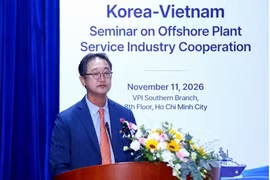
Speaking at the summit, Kim Dong-jun, Counsellor at the Korean Embassy in Vietnam, said AI and semiconductors are two strategic sectors offering new opportunities for cooperation between the two countries in developing high-tech industries.
He noted that the high-tech development policies pursued by both countries are creating favourable conditions for businesses, universities and research institutes to expand cooperation and enhance their competitiveness in international markets.
To capitalise on these opportunities, Kim proposed three measures to strengthen bilateral cooperation in AI and semiconductors, including promoting joint research, development and testing projects for AI-specific semiconductor chips; intensifying semiconductor workforce training and exchanges through joint research, internship programmes and university-business partnerships; and expanding business cooperation, particularly in developing digital infrastructure and AI data centres.
At a high-level panel discussion, representatives from regulatory agencies, businesses and technology organisations of both countries discussed challenges, enabling conditions and support mechanisms for Vietnamese enterprises seeking to enter the semiconductor market.
Discussions also covered the transition from chip design to commercial product development, the capabilities and standards required to participate in supply chains, and mechanisms to help businesses connect with international partners.
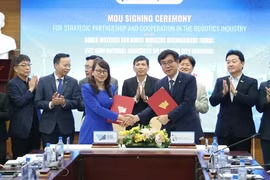
At VKAISS 2026, Vietnamese and Korean businesses, associations and educational institutions signed eight cooperation agreements focusing on three key areas - business and semiconductor supply chain connectivity, technology development, and human resources training./.