Viettel expands mobile coverage to remote areas ahead of schedule

By October 31, Viettel had activated all 1,337 BTS stations, eliminating 1,856 mobile signal dead zones, including 788 villages and hamlets and 1,068 residential clusters with at least 50 residents each.

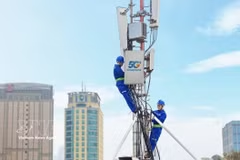
Workers strive to overcome challenges to expand mobile network coverage to local communities. (AI-generated design using actual photos provided by Viettel)

Hanoi (VNA) – The Military Industry and Telecoms Group (Viettel) is pushing ahead with a nationwide campaign to expand mobile coverage to villages, hamlets and signal-dead zones in remote, mountainous and border areas.

The campaign lasts more than 220 days, from March 23 to October 31.

Vu Khanh Duy, Deputy General Director of Viettel Networks Corporation (VTNet), said that all 1,337 base transceiver stations (BTS) are located in mountainous areas with rugged terrain and harsh weather, posing significant challenges to construction and installation.

Viettel has shifted from routine operations to a campaign-based approach, with unified direction from headquarters to local units.

VTNet coordinated infrastructure readiness, installation, integration and activation, while Viettel Telecom Corporation (VTT) directed its 23 provincial and municipal branches to work with contractors to complete construction and put stations into operation.

Viettel Construction Corporation (VCC) and local branches handled equipment transportation, construction, installation, power supply and transmission lines, coordinating with technical teams to activate stations immediately after installation.

Nearly 500 personnel have been mobilised for leadership, management and problem-solving support. At peak periods, 170 construction teams comprising around 1,700 workers operated simultaneously across 23 provinces and cities.

Support from Ministry of National Defence leaders, military agencies, ministries, Vietnam Electricity and local authorities have helped resolve obstacles and accelerate implementation, Duy said.

By October 31, Viettel had activated all 1,337 BTS stations, eliminating 1,856 mobile signal dead zones, including 788 villages and hamlets and 1,068 residential clusters with at least 50 residents each. The task was completed two months ahead of the December 31 deadline, bringing telecommunications services to around 130,000 people.

The achievement stemmed from early preparation, simultaneous implementation, flexible solutions, decisive management, experienced personnel at difficult sites and coordinated efforts involving Viettel, authorities and local residents.

In C5 hamlet of Muong Nha commune, Dien Bien province, where more than 25 Mong ethnic minority households live on mountainsides, residents had long faced limited electricity access and difficult transport conditions. Engineers travelled half a day by car from the commune centre before walking more than two kilometres through forest to reach the installation site.

Thao A Di, the hamlet head, said mobile coverage has made life easier, allowing residents to access information and contact healthcare facilities. His family has offered land for the station free of charge.

In Khau Lang hamlet of Kien Thiet commune, Tuyen Quang province, the new station, operational since October 29, has improved connectivity for 31 households with 125 residents across more than 1,000 hectares. Children can now access online learning materials while residents use online public services and entertainment content.

Duy said each additional BTS station provides more than mobile connectivity, serving as essential infrastructure for online education, healthcare, digital public services and emergency communications, including search and rescue during natural disasters./.


VNA

See more

The signing and implementation ceremony for the Vietnam–Thailand–Singapore submarine cable project on November 26, 2026 (Photo: VNA)

Vietnam–Thailand–Singapore submarine cable project launched

Designed with eight fibre pairs, the system will employ next-generation wavelength-division multiplexing (WDM) technology and an open-cable architecture. It is expected to deliver a round-trip data latency of just 12 milliseconds, about 50% lower than the current average.

Deputy Prime Minister Ho Quoc Dung, together with Government leaders, representatives of the Ministry of Science and Technology and CMC Technology Group, performs the official launch ceremony of the Clex legal AI platform. (Photo courtesy of the company)

Vietnamese-made legal AI platform Clex launched

Clex was researched and developed by CMC based on a large language model specialising in Vietnamese law, which was trained and fine-tuned on a knowledge base comprising more than two million legal documents.

The VGC v1.0 security chip, designed and developed by Vietnam (Photo: VNA)

Vietnam builds initial semiconductor foundation

Experts said the first step is not another broad strategy but a hard-headed audit of what Vietnam can actually do and a clear-eyed map of its advantages, technology gaps and opportunities in the global value chain.

The inauguration ceremony of the ASEAN-China Health Exchange and Cooperation Centre in Chongqing. (Photo: VNA)

Vietnam proposes stronger ASEAN-China cooperation in AI

For Vietnam, AI-driven transformation is both a strategic opportunity and an inevitable requirement for development. Science, technology and innovation are becoming key drivers of growth, productivity and competitiveness, said Deputy Minister of Foreign Affairs Nguyen Manh Cuong.

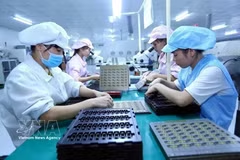
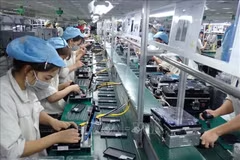
Assembling electronic components on the production line of Bao Sen Co., Ltd in Bac Ninh City. (Photo: VNA)

Vietnam builds technological capacity in digital era

As science, technology and digital transformation become increasingly integrated into production, governance and daily life, they can help create new drivers of growth and advance the development goals set out in the resolution.

The beauty of Dong Van Karst Plateau (Photo: VNA)

Vietnam tourism’s competitive future runs on digitalisation

The Vietnam National Authority of Tourism (VNAT) reported that Vietnam drew about 19.5 million foreign arrivals in the first 10 months of 2026, up 13.8% from a year earlier. That growth, along with changing consumer behavior, is forcing travel companies to rethink sales, service quality and how they mine customer data.

Visitors at the exhibtion held within the framework of the 16th Business of IP Asia Forum. (Photo: VNA)

Vietnam promotes innovation links at Hong Kong Entrepreneur Day 2026

Van expressed her hope that the NIC would serve as a bridge to encourage businesses and major corporations from the GBA to invest in Vietnam and transfer innovative technologies, particularly in artificial intelligence (AI), green transition and financial technology (FinTech).

Karnataka Chief Minister D.K. Shivakumar speaks positively about cooperation prospects and expresses hope that more Vietnamese businesses will invest in the Indian state. (Photo: VNA)

Vietnam, India's Karnataka boost science, technology cooperation

The ambassador highlighted the complementary strengths of Vietnam and the Indian state, home to the country's Silicon Valley, and significant potential for cooperation in artificial intelligence (AI), semiconductors, digital technology, and research and development.

Delegates pose for a group photo at the Bengaluru Tech Summit 2026 in Karnataka, India (Photo: VNA)

Vietnam attends annual int’l tech summit in India

Vietnam's growing focus on science and technology, digital transformation and innovation as new drivers of development made India a natural partner in achieving its development and digital transformation goals. Cooperation potential between the two countries remains substantial, spanning both hardware and software.

Vietnamese Deputy Minister of Science and Technology Tran Trung Tinh speaks at the event. (Photo: Published by VNA)

Vietnam, RoK seek to expand cooperation in AI and semiconductor sectors

Vietnamese Deputy Minister of Science and Technology Tran Trung Tinh stressed that the Politburo's Resolution No. 57-NQ/TW identifies science and technology, innovation and digital transformation as leading breakthroughs and key drivers of rapid and sustainable development. Semiconductors and artificial intelligence (AI) are among the strategic technologies prioritised for development.

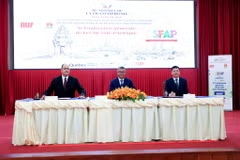
Representatives of Cambodia’s Ministry of Education, Youth and Sport (MoEYS), the Agence Universitaire de la Francophonie (AUF) and Viettel Cambodia (Metfone) sign a tripartite agreement to strengthen cooperation and accelerate digital transformation in Cambodia’s higher education sector. (Photo: khmertimeskh.com)

Vietnamese company joins Cambodia’s digital transformation efforts

The agreement establishes a cooperation framework to modernise higher education through digital governance, digital learning, artificial intelligence (AI) applications, and capacity building through training and knowledge sharing. It also aims to expand internship, employment and scholarship opportunities for students.

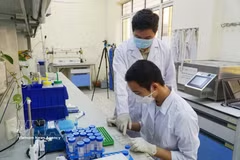
USTH students access modern equipment (Photo: VNA)

Vietnam’s AI ambition runs into talent wall

AI is becoming a foundational technology, cutting across industrial production, healthcare, education, finance, governance and public service delivery. But turning technological potential into practical value requires a workforce able to study, master and apply AI to Vietnam’s real-world problems.