Hanoi (VNA) - Politburo member and Standing Member of the Communist Party of Vietnam Central Committee's Secretariat Tran Cam Tu has called for steady digital transformation among Party agencies, which should be based on practical requirements and the ability to control data.
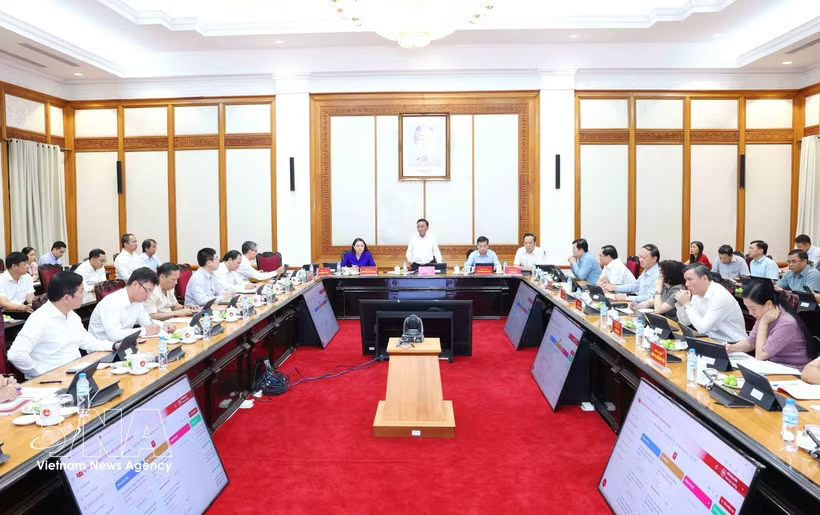
Tu, who is also Secretary of the Party Committee of Central Party Agencies, made the call while chairing a meeting in Hanoi on September 23 with the Party Central Committee's Office to hear reports on the Intelligent Operations Centre (IOC) system and the digital work management and personnel evaluation system.
Nguyen Thi Thu Ha, Member of the Party Central Committee and Standing Deputy Chief of the Party Central Committee's Office, reported that the IOC system has now taken initial shape and is being used to assess seven core groups of information.
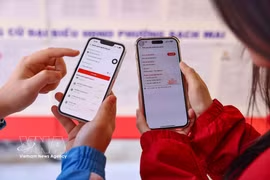
Meanwhile, the pilot implementation of the digital work management and personnel evaluation system has shown its feasibility and high effectiveness.
Notably, the new solution offers two practical benefits. It enables transparent and rigorous work management, with clear task assignments, easy progress monitoring and timely identification of delayed or overlooked tasks. It also supports objective personnel evaluation by establishing a scientific and accurate database and evidence base for personnel classification and assessment, Ha said.
The Standing Member of the Secretariat said that the initial encouraging result provides a basis for further improving the systems and putting them into practical and effective use.
Highlighting the important role of the Party Central Committee's Office, he emphasised that the two systems must directly serve to improve the quality of policy advice, information provision and discipline in task implementation.
He asked the Party Committee of Central Party Agencies and the Party Central Committee's commissions and Office to take the lead in implementation.
Welcoming the proactive piloting and application of new technologies, he called for careful and robust implementation that is practical and ensures absolute safety and compliance with requirements.
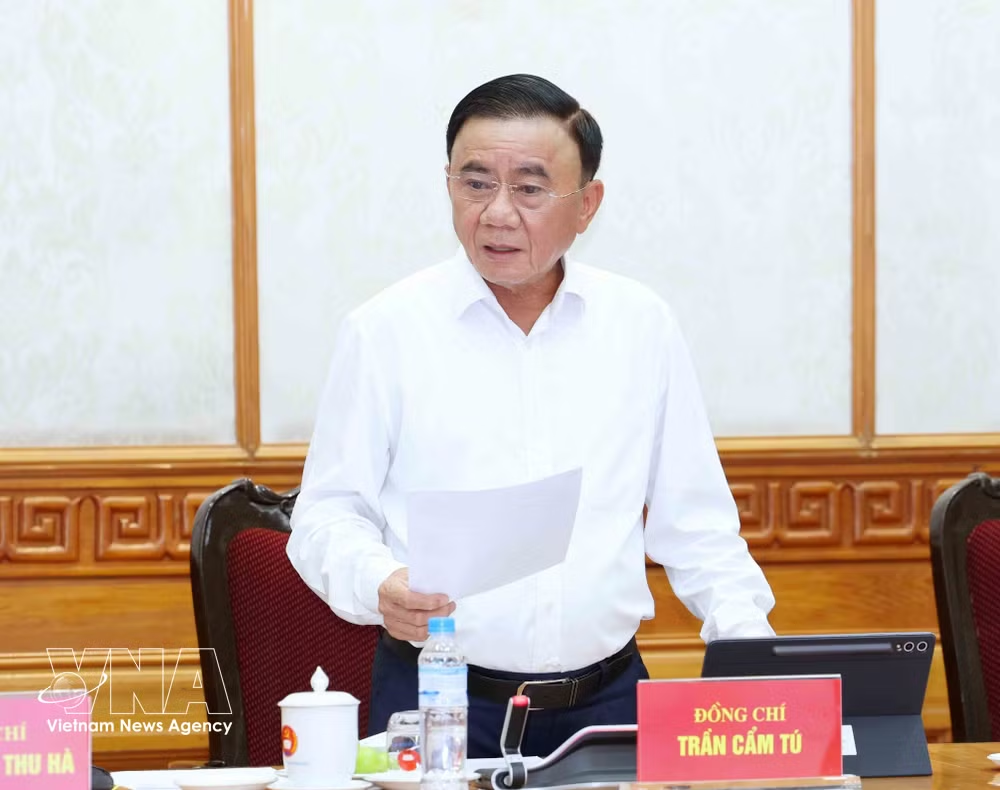
Looking ahead, Standing Member of the Secretariat Tu pointed to the need to focus on three areas, starting with clearly defining the practical value of each system.
The IOC should gradually become a reliable source of reference information, helping leaders quickly grasp the situation, identify issues requiring attention and monitor the implementation of assigned tasks. Information uploaded to the IOC must be focused, have clear sources and be verified, he asked.
The system should highlight notable developments, newly emerging issues, delayed tasks and matters requiring guidance. Alerts must be linked to the agency responsible for handling them and the status of handling, avoiding a situation in which numerous alerts are generated without clear responsibility for resolving them.
Regarding the digital work management and personnel evaluation system, he said the first priority is to strictly manage the process of assigning tasks, carrying them out and confirming results. Tasks must be assigned within the proper authority, with clear responsibility, deadlines, deliverables and confirmation mechanisms.
Data on the system should serve as information and evidence to support personnel evaluation, rather than replace assessments and decisions by collectives, heads of agencies or competent authorities. Personnel must not be evaluated mechanically based on the number of tasks, software usage or automated system statuses, he added.
The key Party leader stressed that the two systems have different functions but need to be closely connected. Data on tasks, progress and work results is an important source of information for the IOC's synthesis and analysis and for supporting leadership and management.
He made clear that from now until the end of 2026, following the pilot phase, an objective assessment must be made of the suitability of the processes, criteria and scoring results. User feedback should be collected and timely adjustments made before wider deployment is considered.
He particularly stressed that products must be developed based on practical conditions and the functions and tasks of each agency and unit, taking into account their specific professional characteristics and responsibilities./.