Lawmakers debate expressway network under planning

The projects are also pitched as infrastructure bottleneck relief, completing the planned expressway network, narrowing regional development gaps and reducing poverty in mountainous areas.

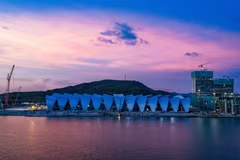
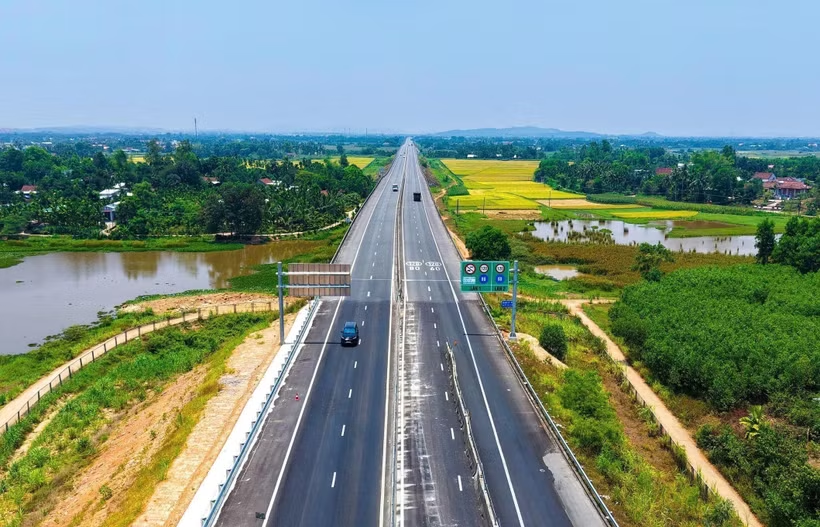
Quang Ngai - Hoai Nhon Expressway (Photo published by VNA)

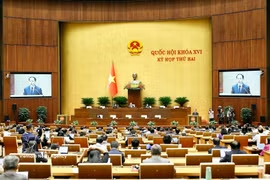
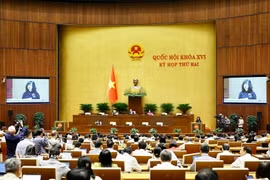
Hanoi (VNA) – The 16th National Assembly (NA) on November 10 debated several bills in plenary in Hanoi on November 10, as part of its ongoing second session.

The bill package spans the draft Law on Cultural Industry Development; the Law on amendments and supplements to several articles of the Law on Physical Training and Sports, the Law on Tourism, the Law on Libraries, the Law on Cinema, the Law on Cultural Heritage, and the Law on Advertising; the Press Law; the Law on Legal Documents; and progress under the NA’s Resolution 206/2025/QH15 on special mechanisms to clear legal bottlenecks.

Lawmakers also took up a Government report on fallout from organisational restructuring, stronger decentralisation and delegation of authority, and legal obstacles, plus investment policy for Bao Ha - Tan Phong section of Bao Ha - Lai Chau expressway, Quang Ngai - Kon Tum expressway, and Moc Chau - Son La - Dien Bien expressway, within Son La province.

According to the report, the projects aim to turn Party policy on strategic transport infrastructure into action and meet rising transport demand. Existing national highways linking Son La, Lai Chau and Quang Ngai to regional economic hubs are small, low-standard and prone to landslides in the rainy season, disrupting connectivity and goods flows. Expressways will cut travel time by roughly 50-60%, helping draw investment and unlock local potential.

The projects are also pitched as infrastructure bottleneck relief, completing the planned expressway network, narrowing regional development gaps and reducing poverty in mountainous areas. Son La’s poverty rate is 9.37%, the fifth highest in Vietnam; and Lai Chau’s is 17.24%, the second highest. The routes also carry national defence, security, border protection and emergency response value.

The three routes total about 430.5 km: Moc Chau - Son La - Dien Bien at 179.5 km, Bao Ha - Lai Chau 119 km and Quang Ngai - Kon Tum 132 km. They are planned as four-lane roads with designed speeds of 80-120 km/h. The projects are expected to deploy modern technology and build interchanges, smart transport systems, traffic control centres and rest stops.

The Government wants all three funded with public investment, with a preliminary total of about 162.39 trillion VND (6.24 billion USD). Preparation is slated for 2026-2027, with compensation, resettlement and construction starting in 2027, and the roads basically completed in 2030 and entering operation from 2031.

To speed up delivery, the Government is seeking special mechanisms similar to those used for NA-approved national key projects. The five policy groups cover authority to adjust investment policy; compensation, support and resettlement; designated bidding; planning adjustments, and construction solid-waste disposal sites./.
VNA

See more

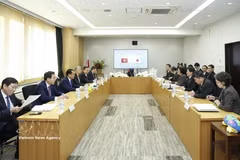
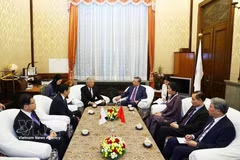
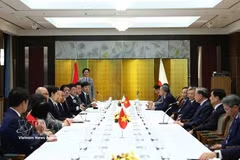
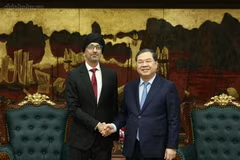
At the talks between Vietnamese Minister of Agriculture and Environment Trinh Viet Hung and Japanese Minister of the Environment Sasagawa Hiroyoshi (Photo: VNA)

Vietnam, Japan fortify cooperation in environment, agriculture, marine economy

The Vietnamese and Chinese environment ministries will run policy dialogues, expert exchanges, human resources training, feasibility studies and technology transfer, aiming to pull companies and research institutes from both countries into environmental projects, particularly in areas where Vietnam needs capital and technology.

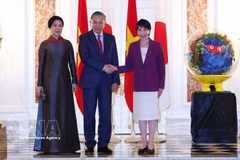
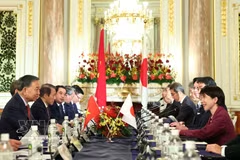
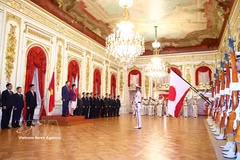
Japanese Prime Minister Takaichi Sanae hosts a welcome ceremony for General Secretary of the Communist Party of Vietnam Central Committee and President To Lam and his spouse in Tokyo on November 9. (Photo: VNA)

Vietnam, Japan issue Joint Vision Statement

The leaders of Vietnam and Japan affirmed that bilateral cooperation in areas including defence, security, the economy, economic security, energy resources, trade, investment, science, technology, agriculture, the environment, ocean management, education and training, labour, culture, sports, tourism, law and justice, locality cooperation and people-to-people exchanges has developed substantially and has continued to strengthen and broaden.

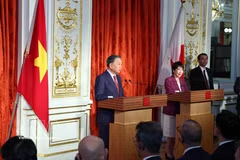
General Secretary of the Communist Party of Vietnam Central Committee and President To Lam and Japanese Prime Minister Takaichi Sanae meet the press in Tokyo on November 9 evening (local time) (Photo: VNA)

Top Vietnamese leader, Japanese PM meet the press after talks

The two sides agreed to issue the Vietnam–Japan Joint Vision Statement, lifting the Comprehensive Strategic Partnership to a new height as equal partners that accompany and co-create together on mutual benefit, for quality growth, strategic autonomy and self-reliance.

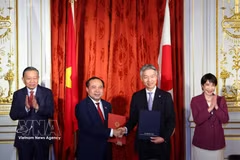
General Secretary of the Communist Party of Vietnam Central Committee and President To Lam and Japanese Prime Minister Takaichi Sanae witness the exchange of cooperation documents (Photo: VNA)

Vietnamese, Japanese leaders witness exchange of cooperation deals

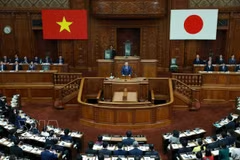
General Secretary of the Communist Party of Vietnam Central Committee and President To Lam and Japanese Prime Minister Takaichi Sanae witnessed the exchange of nine cooperation documents out of 11 signed in total in Tokyo on November 9 evening (local time), as part of the top Vietnamese leader’s official Japan visit.

At the welcome ceremony for General Secretary of the Communist Party of Vietnam Central Committee and President To Lam (Photo: VNA)

Top Vietnamese leader welcomed in Japan on official visit

The visit is expected to turn agreements and commitments reached by high-ranking leaders into practical cooperation schemes and projects across various fields, and make positive contributions to each country’s development goals as well as global and regional peace, cooperation and development.

Vietnamese leaders extend congratulations on Cambodia’s 73rd Independence Day

Vietnamese leaders extend congratulations on Cambodia’s 73rd Independence Day

In its congratulatory message, the CPV Central Committee warmly congratulated Cambodia on its major achievements over the past 73 years. It expressed its confidence that under the wise reign of King Norodom Sihamoni and the leadership of the Senate, National Assembly, and Government, with the CPP led by President Hun Sen, playing a central role, Cambodia will continue to achieve new and more comprehensive successes.

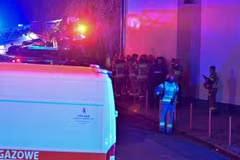
Security forces and police are deployed outside the home of a shooting suspect in the town of Ostrowiec Świętokrzyski, Poland, on November 8. (Photo: PAP)

Vietnamese leaders send condolences over shooting in Poland

General Secretary of the Communist Party of Vietnam Central Committee and President To Lam and Prime Minister Le Minh Hung on November 9 sent messages of condolences to Polish President Karol Nawrocki and Prime Minister Donald Tusk over a recent mass shooting in the city of Krakow.

☕ Afternoon briefing on November 9

☕ Afternoon briefing on November 9

The Vietnam-Japan Public-Private Forum on Economic, Science and Technology Cooperation, the 2027 state budget plan approved, and the 9th Vietnam–Australia defence policy dialogue are among news highlights on November 9.

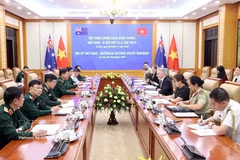
The 9th Vietnam–Australia defence policy dialogue in Hanoi on November 9, 2026 (Photo: VNA)

Vietnam, Australia hold 9th defence policy dialogue

The two sides agreed to effectively implement the common perceptions reached by the two countries' senior leaders and defence ministries, as reflected in the joint statement on deepening the Vietnam–Australia Comprehensive Strategic Partnership and the updated joint vision statement on further defence cooperation between the Australian Department of Defence and the Vietnamese Ministry of National Defence.

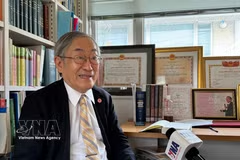
Prof. Furuta Motoo, former Rector of the Vietnam–Japan University (Photo: VNA)

President Ho Chi Minh’s 1946 diplomacy combines steadfastness, flexibility: Japanese expert

In 1946, as President of the Democratic Republic of Vietnam, Ho Chi Minh pursued efforts to ease tensions through both official and informal channels. In addition to official diplomatic negotiations with French government leaders, he met leaders of political parties and forces across the political spectrum, held press conferences, gave interviews, and engaged with the French public.