NA approves 2027 central budget allocation plan

The National Assembly (NA) on November 9 adopted a resolution on the allocation of the 2027 central budget, with all 469 deputies present voting in favour. Under the resolution, total central budget revenue in 2027 is estimated at more than 1.7 quadrillion VND (66.62 billion USD), while total expenditure is projected at over 2.3 quadrillion VND.

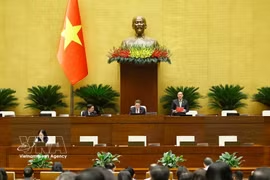
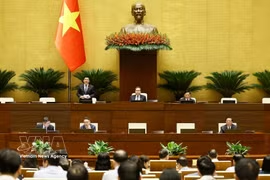
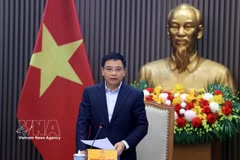
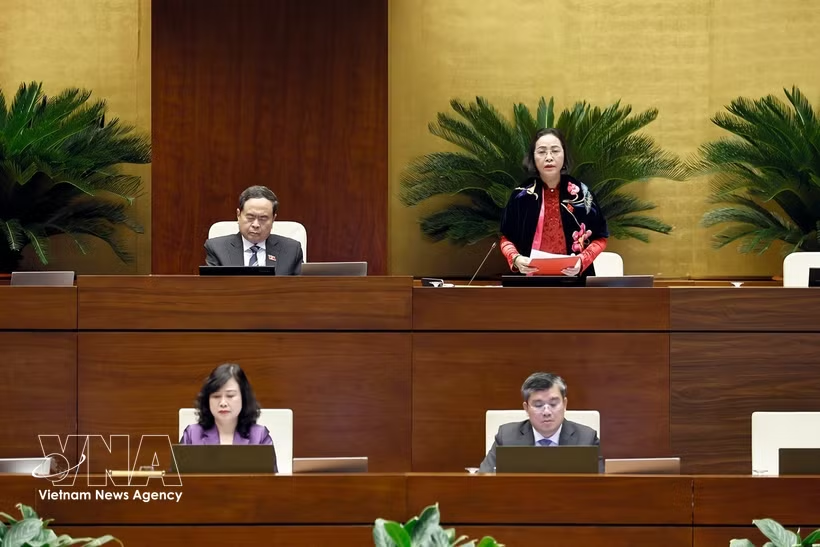
Vice President of the National Assembly Nguyen Thi Thanh speaks at the NA agenda on November 9. (Photo: VNA)

Hanoi (VNA) – The National Assembly (NA) on November 9 adopted a resolution on the allocation of the 2027 central budget, with all 469 deputies present voting in favour.

Under the resolution, total central budget revenue in 2027 is estimated at more than 1.7 quadrillion VND (66.62 billion USD), while total expenditure is projected at over 2.3 quadrillion VND.

Of the expenditure, more than 408 trillion VND will be allocated to supplement the budget balances of localities, while over 311 trillion VND will be provided as targeted transfers to local budgets.

The resolution sets out specific provisions on central budget allocations, balancing transfers and targeted transfers from the central budget to local budgets, as well as local government borrowing limits to cover budget deficits and repay principal debt.

It also stipulates funding arrangements for salary policies and additional income for certain agencies and units; the allocation of revenue from administrative fines for road traffic order and safety violations, as well as road-use fees collected through motor vehicles, to support road traffic safety and order, and road management and maintenance.|

Notably, the NA will earmark 30 trillion VND as a contingency reserve to safeguard national financial security in the event of socio-economic fluctuations or state budget revenue falling short of estimates.

The Government is tasked with proactively managing this reserve to minimise the impact on expenditure commitments already approved in the budget and ensure national financial safety.

The legislature also talks the Government with organising the allocation of the state budget and assigning revenue and expenditure targets, as well as central budget allocations to each ministry, central agency and locality, in accordance with regulations.

It also directs ministries, central agencies and localities to allocate state budget investment capital in a focused and prioritised manner, ensuring compliance with the conditions and order of priority set out in the Law on State Budget, the Law on Public Investment, and resolutions of the National Assembly and its Standing Committee.

Priority must be given to ensuring sufficient funding, in accordance with approved schedules, for special and urgent public investment projects, national target programmes and nationally important projects. Funding must also be arranged to repay any advance capital, complete projects that have been handed over but have yet to receive sufficient funding, and implement programmes and projects using official development assistance (ODA) and foreign concessional loans, including counterpart funds.

The allocation must also cover the State's capital contributions to public-private partnership (PPP) projects, ongoing projects carried forward into the 2026–2030 period, investment preparation and planning tasks, and outstanding basic construction debts in accordance with the law.
Other priorities include interest-rate subsidies for preferential credit programmes, management fees, charter capital for policy banks and off-budget State financial funds, as well as investment support for other beneficiaries as decided by the Government or Prime Minister.

The Government will also require ministries, central agencies and localities to review their 2027 public investment plans after receiving allocations, ensuring that detailed funding arrangements for programmes, tasks and projects are consistent with the 2026–2030 medium-term public investment plan approved by the Prime Minister and comply with relevant regulations./.

VNA

See more

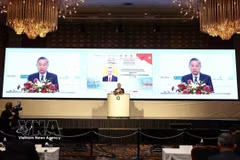
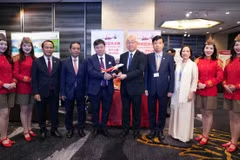
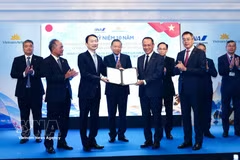
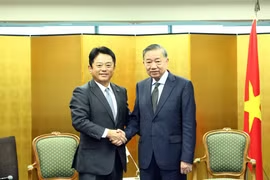
General Secretary of the Communist Party of Vietnam Central Committee and President To Lam attends the Vietnam-Japan Public-Private Forum on Economic, Science and Technology Cooperation in Tokyo on November 9, as part of his official visit to Japan. (Photo: VNA)

Vietnam-Japan relations evolve amid changing economic landscape: Nikkei Asia

Vietnam and Japan are seeking to improve the quality and added value of cooperation. During Party General Secretary and President Lam’s visit, they are expected to promote collaboration in artificial intelligence (AI), small modular reactor (SMR) technology, nuclear power and human resource training, Nikkei Asia reported.

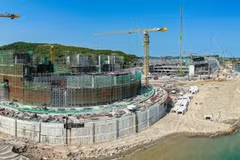
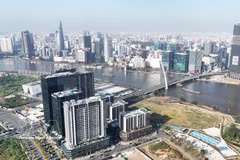
The APEC Convention Centre and related facilities are taking shape on Phu Quoc special zone, An Giang province. (Photo published by VNA)

Phu Quoc special zone envisioned as new growth engine

For 2026–2030, the Phu Quoc special economic zone will focus on high-value-added services, marine ecotourism and the digital economy. Total investment across society is expected to surpass 195 trillion VND.

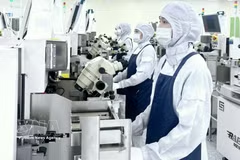
Production line at Hana Micron Vina Co., Ltd in Bac Ninh city (Photo: VNA)

Processing and manufacturing continue to drive industrial growth

The sector’s industrial production index (IIP) rose 13% year on year, contributing 10.2 percentage points to overall industrial growth. Mining increased 7.1%, adding 1.1 percentage points, while electricity generation and distribution grew 10.6%, contributing one percentage point. Water supply, waste and wastewater management and treatment expanded 9.2%.

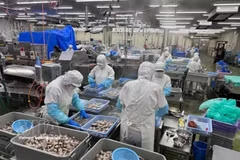
Vietnamese workers at a Japanese oyster processing factory (Photo: VNA)

Vietnam-Japan trade machine has room to run

Economic, trade and investment cooperation remains the core pillar and the main engine of comprehensive, sustainable bilateral ties. General Secretary of the Communist Party of Vietnam Central Committee and President To Lam’s official visit to Japan is therefore a key moment to reinforce political trust, deepen the Comprehensive Strategic Partnership and open new cooperation opportunities in the next growth phase.

Prof. Kenichi Ohno from Japan’s National Graduate Institute for Policy Studies (GRIPS) (Photo: vietnamfinance.vn)

Vietnam, Japan poised to shape new economic partnership: Japanese expert

Vietnam's progress in income levels and technological capabilities has opened up a new phase in economic ties with Japan, with both countries shifting from a model centred on Japanese support for Vietnam to one of jointly developing and operating business activities, he said, noting that this shift reflected Vietnam's development achievement.

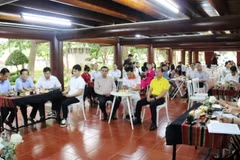
The forum provides a platform for businesses from both countries to exchange market information, seek partners and explore concrete trade and investment opportunities. (Photo: VNA)

Vietnamese goods eye greater access to Australian market

Participants at the Vietnam-Western Australia Business Forum 2026 in Perth city on November 6 highlighted strong prospects for Vietnamese rice, agricultural produce and food products in the Australian market as local businesses seek to diversify supply chains.

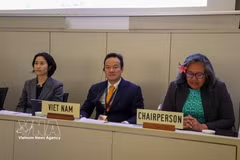
Ambassador Mai Phan Dung (centre), Permanent Representative of Vietnam to the United Nations, the WTO and other international organisations in Geneva at Vietnam’s third Trade Policy Review (Photo: VNA)

Vietnam highlights integration achievements at WTO

Vietnam views the Trade Policy Review not merely as a transparency obligation but also as an opportunity to objectively assess its achievements, listen to other members’ views and identify areas for improvement.

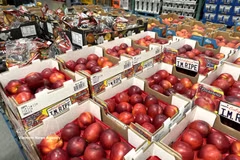
Nectarines from California are on sale at a supermarket in Washington, D.C (Photo: VNA)

US to send largest-ever agricultural trade mission to Vietnam

The USDA’s statistics show that Vietnam was the seventh-largest export market for American agricultural and related products in 2025, with import turnover of nearly 5.6 billion USD. The US’s 2025 agricultural exports to Vietnam increased 38% from 2024.

At the opening of the Food Expo Vietnam 2025 (Photo: VNA)

Vietnam Food Forum 2026 to take place soon

Vietnam Food Forum 2026 is scheduled for November 11 in Ho Chi Minh City as one of a series of specialised activities designed to help Vietnamese food businesses keep abreast of policy developments, improve their ability to meet international standards and expand opportunities to participate in global supply chains.

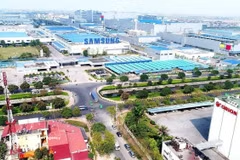
Many foreign-invested enterprises have chosen Yen Phong Industrial Park in Bac Ninh city as a destination for their manufacturing and business operations. (Photo: VNA)

Bac Ninh seeks to attract high-quality investment, create fresh appeal

Bac Ninh aims to attract projects that participate in global production and supply chains, apply advanced and green technologies, and support industries. Priority sectors include semiconductors, artificial intelligence, digital technology, robotics, new materials and renewable energy.