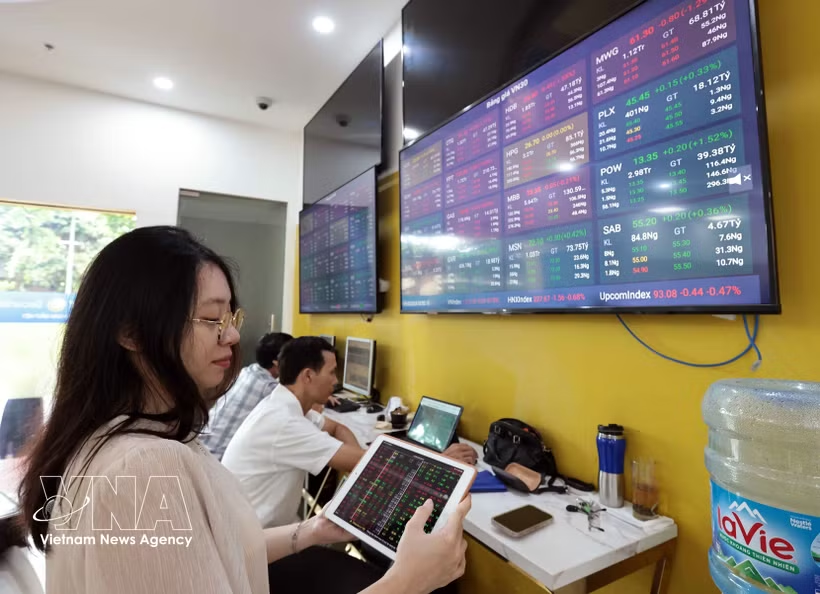
Hanoi (VNA) – Accelerating state-owned enterprise (SOE) equitisation, streamlining listing procedures and removing persistent legal bottlenecks are expected to expand the supply of high-quality assets and strengthen the attractiveness of Vietnam’s stock market to global investors, said insiders.
Higher-quality firms key to attracting foreign capital
As Vietnam pursues higher-quality growth and stronger integration into global capital flows, improving the capital market has become a central economic priority.
According to Tyler Nguyen Manh Dung, Senior Director of Market Strategy Research at Ho Chi Minh City Securities Corporation (HSC), foreign capital inflows ultimately depend on fundamental investor criteria, with corporate quality playing a decisive role. Companies with strong fundamentals, stable operating history and solid asset bases are naturally more attractive to both domestic and foreign investors.
Profitability and growth potential remain important, but foreign investors today place increasing emphasis on governance and risk management, particularly legal and regulatory risks. Continued efforts to refine Vietnam’s legal framework and enforcement mechanisms would significantly enhance market attractiveness, he noted.
The expert said SOEs remain a key source of investable assets. Many are large-scale enterprises operating in strategic sectors with stable business records and strong asset foundations, making them appealing to institutional investors.
However, Dung noted that challenges persist in valuation mechanisms and legal risk management during the process of equitisation and divestment. He stressed that greater transparency in pricing methods and auction procedures is essential to reduce risks and improve investors' confidence. Addressing these issues will significantly enhance the appeal of SOEs to foreign capital.
Equitisation to expand market scale and liquidity
If equitisation and divestment are implemented more effectively, and enterprises meet requirements on free-float ratios and foreign ownership limits, Vietnam’s stock market will be better positioned to attract international capital. The listing of more large and high-quality firms is also expected to expand market scale and improve asset quality.
Vu Thi Chan Phuong, Chairwoman of the State Securities Commission of Vietnam, said developing the capital market in general and the security market in particular is a key priority as the economy enters a new phase requiring faster and more sustainable growth. She noted that major policy directions have been issued to strengthen the financial system and enhance the role of SOEs.
Notably, the Politburo's Resolution No. 79-NQ/TW calls for SOEs to operate efficiently under market mechanisms, improve competitiveness, and adopt modern and transparent governance standards.
As Vietnam’s stock market moves closer to a potential upgrade by FTSE Russell to secondary emerging market status, the role of listed SOEs becomes even more important due to their large capitalisation and presence in key sectors.
Removing barriers for FDI enterprises
Alongside equitisation, foreign direct investment (FDI) continued to stand out as a key highlight of the economy in the early months of this year. In the first four months of 2026, newly registered FDI capital reached about 18.24 billion USD, up 32% year-on-year, according to the National Statistics Office (NSO), reflecting sustained investor confidence despite ongoing global economic uncertainties.
However, FDI enterprises remain underrepresented on the stock market.
According to Dung, Vietnam has implemented a series of important reforms over the past two years to improve its capital market and create more favourable conditions for listed companies. Notably, Decree 245/2025/ND-CP has shortened the share listing process from around 90 days to 30 days and streamlined intermediary procedures, making listings more convenient.
In the bond market, regulations have also been adjusted, with minimum bond maturity reduced from 10 years to 5 years, giving companies greater flexibility in structuring issuance plans and accessing funding sources.
Despite these improvements, fewer than 20 FDI firms with more than 50% foreign ownership are currently listed in Vietnam. Many do not need external funding due to strong parent-company backing, while others face technical barriers.
Differences between International Financial Reporting Standards (IFRS) and Vietnam’s Accounting Standards (VAS) complicate listing preparation and increase compliance costs. Complex ownership structures and potential tax liabilities arising from restructuring also remain obstacles.
Dung said Vietnam should continue regulatory reforms while introducing more tailored support for FDI firms. He stressed that if issues related to accounting standards, ownership structures and tax treatment are addressed effectively, FDI enterprises' listings could increase significantly in the coming period./.