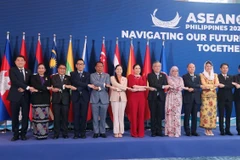
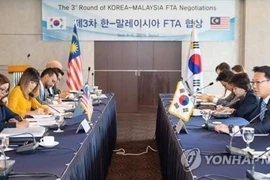
Kuala Lumpur (VNA) – Malaysia and the Republic of Korea (RoK) signed a joint statement on the conclusion of talks on a bilateral free trade agreement (MKFTA) on October 27, on the sidelines of the 47th ASEAN Summit in Kuala Lumpur.
The MKFTA encompasses a wide range of areas, including trade in goods and services, investment, customs facilitation, digital trade, the green and bioeconomy, and economic cooperation. A key feature of the pact is its Economic Cooperation and Capacity Building Chapter, which Malaysia described as a “paramount” component that will drive sectoral development and strengthen industry capabilities.
Once the agreement takes effect, Malaysian exporters will enjoy long-term duty-free access for several key product categories, particularly in food and agriculture, herbal products and extracts, commodities such as palm oil and cocoa, chemical and petrochemical products, as well as tropical timber and plywood.
In tandem with the trade pact, both countries also signed a memorandum of understanding (MoU) on strategic cooperation in supply chains, aimed at enhancing resilience and economic security. The MoU underscores the growing importance of secure and diversified supply networks amid global disruptions.
Malaysian Minister of Investment, Trade and Industry Tengku Zafrul Aziz described the FTA as “timely” given the scale of bilateral trade and investment between Malaysia and the RoK.
He noted there are many opportunities to deepen cooperation with the RoK in areas such as industrial development, trade, and investment. He added that both sides will look into emerging sectors including the green economy, digitalisation, and bioeconomy to enhance the partnership’s value and support businesses, particularly SMEs, in both countries.
The MKFTA marks Malaysia’s 19th FTA, reflecting the country’s ongoing efforts to diversify export markets and reinforce its commitment to an open and rules-based multilateral trading system under the World Trade Organisation (WTO).
The RoK remains one of Malaysia’s top 10 trading partner, with bilateral trade reaching 24.01 billion USD in 2024./.
![Former RoK's President Moon Jae-in and former Prime Minister of Malaysia Mahathir Mohamad hold a summit at the Blue House on Nov. 28, 2019. (Photo: koreajoongangdaily]](https://mediaen.vietnamplus.vn/images/5184e82901547b7c6ac2fd1ce6abd756a1d2cef65705d2eca831b2877c69a766eea2c1dfb5ad2b131e5094303e92ea88e8e9c290bcffcacb538c77afc7d59b0bfd292d26c0e5b5fb560b7ed5484737c7f32500572d5a393f2056428865789af7/screenshot-8-4-2025-153918-koreajoongangdailyjoinscom.jpg.webp)