Malaysia to launch smart supply chain management system

Abdul Aziz said that the system will include eight key sectors - pharmaceutical, medical devices, personal protective equipment, electrical and electronics, automotive, as well as food and beverage for livestock, aquaculture and agriculture. It is expected to help the government more accurately identify which emerging industries should be prioritised to ensure that the supply chain was resilient.

Kuala Lumpur (VNA) - The Supply Chain Intelligent Management System (SCIMS), an initiative by the Ministry of Investment, Trade and Industry (MITI), is set to be launched in this December, according to MITI Minister, Tengku Datuk Seri Zafrul Abdul Aziz.

Abdul Aziz said that the system will include eight key sectors - pharmaceutical, medical devices, personal protective equipment, electrical and electronics, automotive, as well as food and beverage for livestock, aquaculture and agriculture. It is expected to help the government more accurately identify which emerging industries should be prioritised to ensure that the supply chain was resilient.

The idea of SCIMS has actually started since the outbreak of the COVID-19 pandemic to map out key sectors of the country, thus helping Malaysia better position itself to respond to external shocks, from pandemics and tariffs to the restructuring of global supply chains.

SCIMS is also part of the 2030 New Industrial Master Plan, which focuses on developing strategic industrial clusters and reducing dependence on imports. Additionally, through its role as ASEAN Chair in 2025, Malaysia supports policies that promote resilience and better regional supply chain integration.

The initiative demonstrates Malaysia’s strong shift from reliance on imports toward strengthening domestic capabilities, while also enabling businesses to integrate more deeply into the global value chain./.

VNA

See more

Malaysia’s job losses surge 47% in the first quarter of 2026 (Photo: AFP)

Malaysia's layoffs rise 47% in first quarter

The report, based on figures from Malaysia’s Social Security Organisation, showed layoffs peaked in January with around 10,700 cases before easing to 7,500 in February and 5,900 in March. Despite the slowdown toward the end of the quarter, the total remained significantly higher than the roughly 16,500 layoffs recorded in the same period of 2025.

People take part in the Songkran Festival in Bangkok, Thailand, on April 13, 2026. (Photo: Xinhua/VNA)

Thailand's tourism sector enjoys windfall during Songkran Festival 2026

TAT estimated that around 500,000 foreign tourists visited Thailand during the April 11–15 period, generating about 8.1 billion THB, a 2% year-on-year increase. Domestic travel is projected at 5.96 million trips, up 7%, contributing about 22.25 billion THB, an annual rise of 8%.

The sixth ASEAN Digital Ministers’ Meeting (ADGMIN) approves the Hanoi Declaration on digital cooperation, reaffirming the bloc’s goals and principles as outlined in the 1967 Bangkok Declaration and the ASEAN Charter. (Photo: ASEAN/Facebook)

ASEAN, Japan envision joint AI development

Amid intensifying US–China rivalry and deepening technological fragmentation, ASEAN and Japan have strong potential to collaborate in developing more inclusive and comprehensive artificial intelligence (AI) models, according to an article published on fulcrum.sg on April 14.

At the video conference (Photo: Nation Thailand)

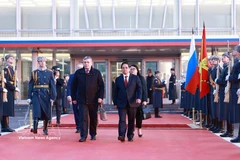
Thailand backs Japan’s push for energy security

At the summit, Japan announced a new initiative to support AZEC member countries through low-interest loans for the procurement of crude oil, refined fuel and essential goods, alongside broader fiscal support measures.

Indonesia steps up local currency use to reduce reliance on USD

Indonesia steps up local currency use to reduce reliance on USD

According to the Indonesian government data, total LCT transaction value reached 8.45 billion USD in January and February, a sharp increase from 3.21 billion USD in the same period last year. User participation has also risen significantly, surpassing 14,600 by February, with monthly averages exceeding 16,000, well above 2025 levels.

SMEs are the backbone of the Malaysian economy. (Photo: thestar.com.my)

Malaysia rolls out low-interest financing package for SMEs

The latest funding forms part of the government’s broader PowerUp10K campaign, a year-long initiative aimed at strengthening SMEs at different stages of growth. Under the programme, the ministry is targeting total disbursements of up to 15 billion MYR in low-cost financing, higher than the previously allocated 10 billion MYR.