Malaysia’s economy faces growing pressure from supply chain disruptions

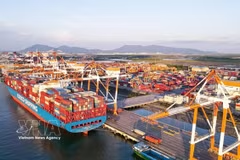
According to a report by the Southeast Asian Futures Initiative Centre (Seafic), a total of 106 types of Malaysian imports pass through this strategic maritime chokepoint, ranging from essential energy supplies to manufacturing inputs and consumer food products.

Kuala Lumpur (VNA) – Supply disruptions caused by the closure of the Strait of Hormuz are emerging as a direct and immediate threat to Malaysia’s economy.

According to a report by the Southeast Asian Futures Initiative Centre (Seafic), a total of 106 types of Malaysian imports pass through this strategic maritime chokepoint, ranging from essential energy supplies to manufacturing inputs and consumer food products.

Experts warn that if disruptions persist, supply chain bottlenecks could trigger sharp price increases and significantly alter consumer spending patterns.

Among the most vulnerable products are petroleum sulphonates, a key ingredient used in the production of engine lubricants and industrial additives. Malaysia relies on the Strait of Hormuz for 97.9% of its imports of this commodity, primarily sourced from Kuwait, leaving the country exposed to severe shortages should supplies be interrupted.

Liquefied propane and butane, both major components of liquefied petroleum gas (LPG), are also classified as high-risk imports, with dependency rates on the route standing at 83.9% and 54.8%, respectively. Any disruption in the supply of these energy products would have an immediate impact on operating costs for food outlets and small eateries, which are not covered by the gas subsidy schemes available to Malaysian households.

The impact of the crisis is also spreading across the petrochemical and packaging industries. Plastics such as high-density polyethylene (HDPE) and low-density polyethylene (LDPE), which are widely used in the production of milk bottles, plastic bags and food packaging, are facing steep price increases rather than outright shortages.

The price of polyethylene terephthalate (PET) has reportedly doubled within the first month of the disruption, driving production costs for plastic manufacturers up by between 15% and 40%. The surge in costs has prompted a wave of packaging material substitutions, with dairy producer Farm Fresh among the firms shifting from plastic bottles to paper-based cartons.

In response to these challenges, businesses and manufacturers in Malaysia are being advised to diversify their sourcing strategies by seeking alternative suppliers from different regions./.

VNA

See more

Indonesia tightens control over e-cigarettes

Indonesia tightens control over e-cigarettes

The head of Indonesia's Food and Drug Agency (BPOM), Taruna Ikrar, warned that the country is facing an "emergency" related to youth smoking and e-cigarette use. According to the agency, the smoking rate among children and adolescents has reached 7.4%, equivalent to more than 5 million minors nationwide.

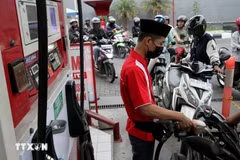
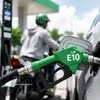
Motorcyclists wait to have their vehicles refilled at a petrol station in Surakarta city, Central Java province, Indonesia. (Photo: Xinhua/VNA)

Indonesia maintains fuel subsidies until late 2026

Indonesia will maintain its fuel subsidy policy to keep domestic fuel prices stable through the end of this year, despite rising fiscal pressure caused by currency fluctuations, according to Indonesian Deputy Minister of Energy and Mineral Resources Yuliot Tanjung.

The logo of social media platform X (Illustrative photo: AFP/VNA)

Malaysia bans social media accounts for children under 16

Under the new rules, social media platforms are required to implement age-verification systems and prevent users under 16 from creating accounts. The regulations apply to platforms with at least eight million users in Malaysia, including Facebook, Instagram, TikTok and YouTube.

Singapore economy remains resilient amid global uncertainties

Singapore economy remains resilient amid global uncertainties

Singapore is also pursuing a long-term economic strategy centred on AI and advanced technologies. The country aims to position itself as a trusted hub for developing, testing and deploying AI solutions at scale, while focusing on practical applications to improve productivity and create new industries.

RoK to pilot AI-driven telemedicine in Indonesia (Photo: healthcareitnews.com)

Indonesia, RoK advance AI-powered healthcare cooperation

The RoK government said it will continue exchanges with Indonesia through joint public-private seminars and discussions involving university hospitals, major technology firms and educational institutions to further develop cooperation frameworks.

Singapore steps up AI adoption among SMEs

Singapore steps up AI adoption among SMEs

According to a joint statement by Enterprise Singapore and the Infocomm Media Development Authority (IMDA), the updated plan is expected to support more than 2,000 SME retailers in strengthening their competitiveness and resilience.

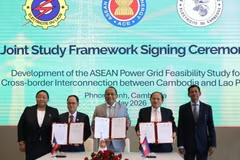
Laos and Cambodia sign an agreement to study a cross-border power grid connection under ASEAN’s regional energy integration plan on May 25, 2026. (Phot: EDL)

Laos, Cambodia advance ASEAN energy cooperation plan

By focusing on cross-border power transmission system integration between Laos and Cambodia, the project will increase capacity for clean energy exchange between the two nations and optimise energy resource management efficiently for Laos.

Cambodia urges vigilance over new SARS-CoV-2 variant

Cambodia urges vigilance over new SARS-CoV-2 variant

Cambodia's Ministry of Health has called on the public to remain vigilant and continue observing preventive measures against influenza and all forms of COVID-19, advising citizens to wear masks and wash hands frequently with soap or alcohol-based sanitiser.

Malaysia rolls out measures to support agricultural sector amid rising costs

Malaysia rolls out measures to support agricultural sector amid rising costs

To protect small business households, the Indonesian government has implemented a series of mitigation measures, including the implementation of targeted cash assistance programmes and the centralised bulk procurement of fertilisers and pesticides through government agencies to secure lower prices for farmers.