Mekong–Lancang Ministerial Meeting promotes water information sharing

Minister of Agriculture and Environment Trinh Viet Hung noted that amid climate change, natural disasters and growing water demand, cooperation among the six Mekong–Lancang countries has become increasingly important. This calls for stronger information sharing, coordinated action and joint efforts towards the sustainable management and use of water resources throughout the basin.

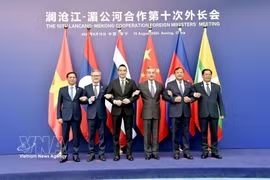
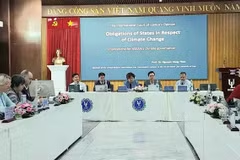
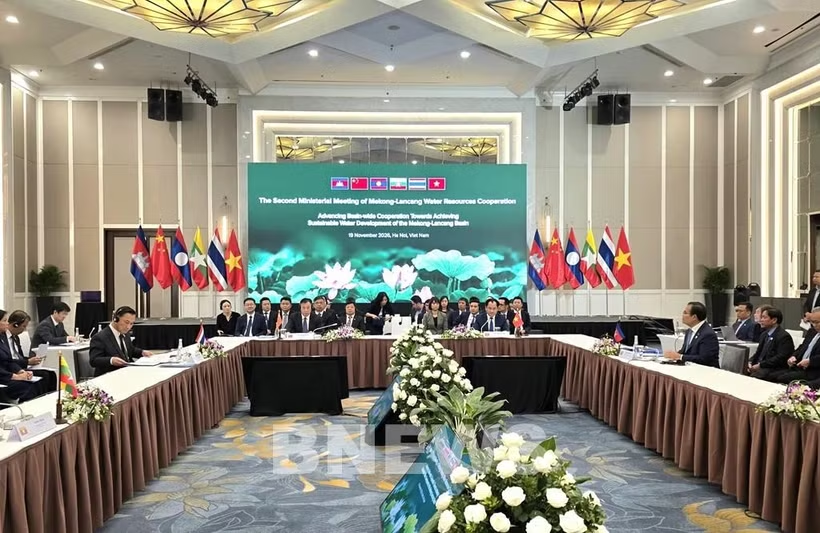
The second Ministerial Meeting of Mekong–Lancang Water Resources Cooperation takes place in Hanoi on November 19, 2026. (Photo: VNA)

Hanoi (VNA) – The second Ministerial Meeting of Mekong–Lancang Water Resources Cooperation was held in Hanoi on November 19, with the participation of the six member countries, namely Vietnam, China, Cambodia, Laos, Myanmar and Thailand.

The meeting was co-chaired by Vietnamese Minister of Agriculture and Environment Trinh Viet Hung and Chinese Vice Minister of Water Resources Liu Dongshun. It coincided with the 10th anniversary of the Mekong–Lancang Cooperation mechanism.

In his opening remarks, Hung noted that amid climate change, natural disasters and growing water demand, cooperation among the six Mekong–Lancang countries has become increasingly important. This calls for stronger information sharing, coordinated action and joint efforts towards the sustainable management and use of water resources throughout the basin.

More than 70 projects funded by the Lancang–Mekong Cooperation Special Fund have been implemented in areas such as rural water supply, small-basin management, dam safety monitoring and hydrological observation. Timely notifications and coordinated operations during major natural disasters in recent years have also helped ease flood prevention and control pressures in downstream areas.

Despite these achievements, member countries have continued to face growing demand for water and energy, climate change, extreme weather events and water-related environmental challenges.

In response, Vietnam proposed three priority areas, including implementing the memorandum of understanding and expanding information sharing, particularly data on reservoir operations and advance notifications of water releases or impoundment. Another priority is strengthening coordination between the Mekong–Lancang Cooperation mechanism, the Mekong River Commission (MRC), ASEAN and other sub-regional mechanisms, while promoting research and the application of science and technology. Besides, priority should be given to projects that support livelihoods and enhance communities' resilience to floods, droughts and saltwater intrusion.

Liu affirmed that China's Ministry of Water Resources wishes to further advance cooperation and strengthen connectivity among countries in the region. It stands ready to work with all parties to ensure sustainable water resources development and build a better future for the region.

At the meeting, heads of the six countries' working groups on Mekong–Lancang water resources cooperation signed a memorandum of understanding on hydrological information sharing in the Mekong–Lancang River basin.

Under the agreement, the countries will share information from 24 key hydrological stations, including two in China, seven in Cambodia, six in Laos, one in Myanmar, six in Thailand and two in Vietnam, located in Tan Chau and Chau Doc.

This marks an important step forward in expanding the shared database to include all six countries, supporting basin-wide water monitoring and management.

The heads of delegation also adopted a joint statement, reaffirming their commitment to strengthening the management, development and sustainable use of water resources, while linking socio-economic development with environmental protection.

The meeting also announced the list of projects under the Mekong–Lancang Water Resources Plan for the benefit of local communities.

In his closing remarks, Hung highlighted three key messages for cooperation. He underlined that trust and transparency must serve as its foundation, with timely and comprehensive sharing of hydrological information and data playing a practical role in helping countries proactively respond to floods and droughts and protect people's livelihoods.

He stated that cooperation should put people at its centre, directing programmes and projects towards tangible benefits and helping communities across the basin strengthen their adaptive capacity. Above all, commitments must be translated into concrete action to ensure effective cooperation.

The minister asked the working group to promptly draw up a plan to implement the meeting's outcomes, continue carrying out the 2023–2027 Action Plan and prepare the next five-year plan./.

VNA
See more

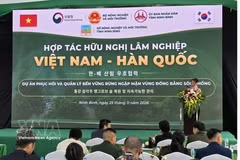
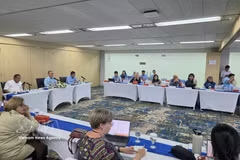
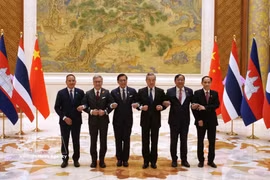
Delegates at the event (Photo: VNA)

Vietnam, RoK wrap up mangrove restoration project

According to the Forestry Project Management Board under the ministry, the project planted 170 ha of new mangroves and restored or supplemented another 80 ha, meeting its approved targets. It also completed a three-hectare mangrove nursery, handed over to local authorities in 2024 to ensure a steady supply of seedlings.

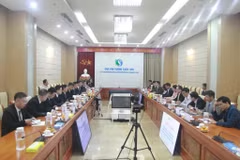
An overview of the working session (Photo: VNMHA)

Vietnam, China step up hydrological information sharing, early disaster warnings

The two sides signed the Minutes of Meeting on an emergency information-sharing mechanism for transboundary rivers. The document formalised key technical agreements reached by experts from the two countries, notably the conditions for activating emergency information provision at two critical locations in the river basins.

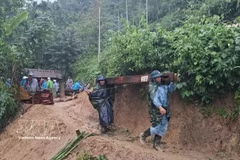
Authorities in Mang But commune, Quang Ngai province, assist residents whose homes have been affected by floods and landslides (Photo: VNA)

Heavy rain causes widespread damage across central Vietnam

According to the Vietnam Disaster and Dyke Management Authority under the Ministry of Agriculture and Environment, as of 5pm on November 11, the downpours injured two people in Hue city, and damaged or unroofed 38 houses in Quang Tri, Hue, Quang Ngai and Dak Lak.

Representatives of the People’s Committee of Ninh Bình province present the decision to establish the Kim Bang Delacour's Langur Species and Habitat Conservation Area. (Photo: VNA)

Ninh Binh establishes world's largest Delacour's langur sanctuary

The establishment of the Kim Bang Delacour's Langur Species and Habitat Conservation Area in Ninh Binh province provides a solid legal and scientific foundation for completing the dossier to seek UNESCO recognition of the Van Long–Kim Bang–Tam Chuc Cultural and Ecological Landscape Complex as a World Heritage Site.

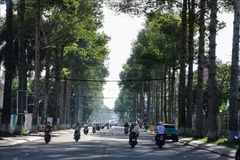
Trees planted along Vo Truong Toan street in Cao Lanh ward, Dong Thap province. Urban tree species capable of reducing fine particulate matter will be planted to reduce air pollution. (Photo: VNA)

Urban trees capable of reducing fine dust to be planted

The Forestry and Forest Protection Department (FFPD) will lead the component on identifying crop and planting structures that help reduce air pollution, while also participating in the design of urban public-space landscapes.

Professor Yucheng Lin, an Assistant Professor at City University of Hong Kong (CityUHK). (Photo: VNA)

Hong Kong expert offers solutions to help Vietnam tackle sea-level rise

In an interview with the Vietnam News Agency’s correspondents in Hong Kong (China), Lin, an expert specialising in sea-level change and climate risk assessment, said Vietnam shared global drivers of sea-level rise with China’s coastal regions, but local conditions could lead to significant differences in the overall risks.

Typhoon Yagi caused severe losses in many provinces in Vietnam in 2024. (Photo: VNA)

Vietnam could face super typhoon like Yagi every seven years

If global average temperatures rise by two degrees Celsius, Vietnam could experience such a super typhoon once every 13 years on average. The frequency would increase to once every nine years under the three-degree warming scenario and once every seven years if temperatures rise by four degrees.

Six of the newly recorded species are of conservation significance, representing four orders and five families. (Photo published by VNA)

Dakrong Nature Reserve records 35 new bird species

Dakrong Nature Reserve in the central province of Quang Tri has recorded 35 bird species not previously documented, including several endangered and rare species listed on the International Union for Conservation of Nature (IUCN) Red List.

An overview of Soc Son waste-to-energy plant in the Nam Son Waste Treatment Complex, in Hanoi (Photo: VNA)

Hanoi targets collection and treatment of all industrial solid waste

Hanoi aims to ensure that all industrial solid waste from its hi-tech parks, industrial parks and industrial clusters is collected and treated in line with regulations under a new plan to strengthen waste management and tighten control on scrap collection, storage and recycling facilities across the capital.

UNICEF Representative in Vietnam Silvia Danailov (first, right) honours first winners of the teaching materials competition. (Photo: VNA)

Deputy minister urges early action on disaster risks

Rapidly shifting climate conditions and increasingly overlapping hazards mean disaster risk reduction can no longer stand alone; it must sit at the heart of sustainable development, tightly integrated with climate response, water security, social welfare and economic growth.