Biodiversity conservation underpins Da Nang’s ambition to become ecological coastal city

The city’s master plan prioritises development that respects natural ecosystems, preserves ecological corridors, protects flood-storage areas and limits urban expansion in environmentally sensitive and disaster-prone zones.

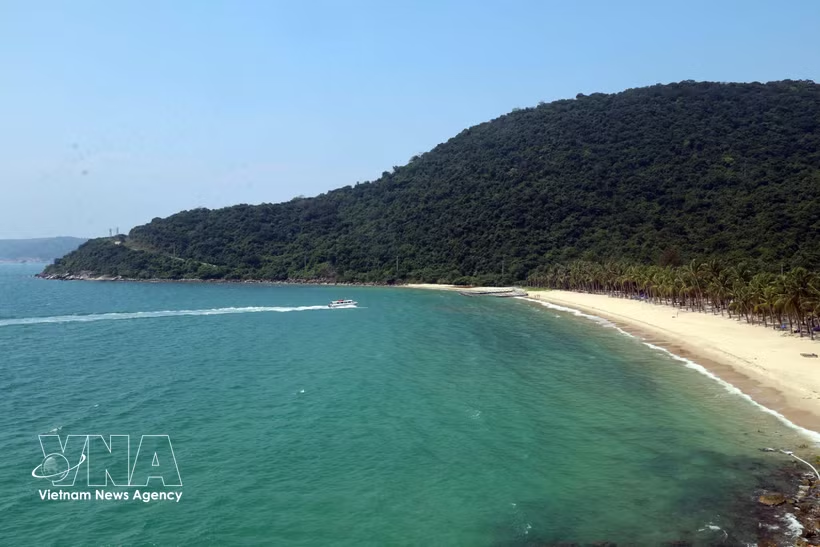
Cu Lao Cham Island in Da Nang city (Photo: VNA)

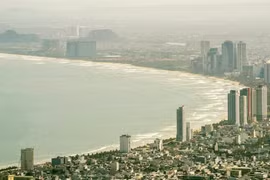
Da Nang (VNA) – The central city of Da Nang’s diverse ecosystems, ranging from forests in the Truong Son Range and nature reserves to wetlands and a UNESCO biosphere reserve, provide a vital foundation for sustainable development as the central city seeks to become an internationally recognised ecological coastal city.

Diverse ecosystems

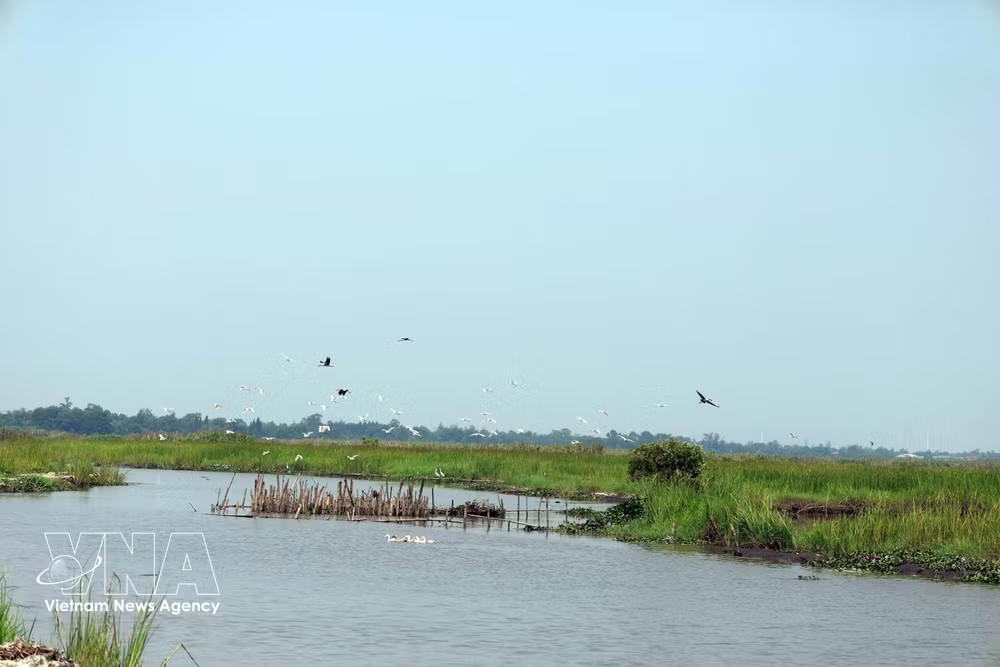
Located in the city’s southern area, the Bai Say-Song Dam wetland, covering about 200 hectares, serves as a “green lung” and a habitat for numerous bird species, including the rare Asian openbill listed in Vietnam’s Red Data Book.

Local fisherman Nguyen Phuc said dozens of bird species appeared seasonally. Residents complied with conservation rules, refraining from hunting or trapping birds and using electric fishing equipment, helping wild birds return in increasing numbers.

Recognising the wetland’s distinctive south-central coastal ecosystem, Da Nang is planning to establish a new nature reserve there. Local authorities have worked with conservation organisations to mobilise resources for research, protection and restoration, including releasing fish and planting vegetation. Ecotourism activities are also being developed.
vnanet-da-nang.jpg
Flocks of migratory birds, including the Asian Openbill — a species listed in the Vietnam Red Data Book, frequently appear in the Song Dam area in April. (Photo: VNA)

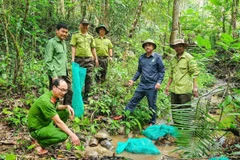
Covering nearly 12,000 sq.km, Da Nang lies within the central Truong Son ecological core, where northern and southern flora converge. Its conservation areas include Song Thanh National Park, part of Bach Ma National Park, the Sao La and Elephant Species and Habitat Conservation Areas, Ngoc Linh and Ba Na-Nui Chua nature reserves, Son Tra Peninsula Nature Reserve and Cu Lao Cham World Biosphere Reserve.

Nearly a decade after establishing the Elephant Species and Habitat Conservation Area, authorities released images of nine wild elephants, including two calves. Wildlife experts consider them a rare Asian elephant population in Vietnam, with the calves offering encouraging signs of natural reproduction amid declining numbers.

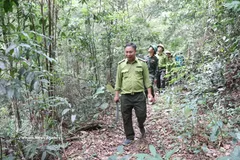
According to the Da Nang Forest Protection Sub-department, local forests also support endangered species such as the Sao La, Golden-winged Laughingthrush and Douc Langurs, alongside valuable medicinal and other plant species.

By 2030, the city plans to establish additional protected areas for Pomu, Green Langurs and Grey-shanked Douc Langurs in Tam My, as well as landscape protection areas in Nui Thanh and Nam Tra My.

Biodiversity shapes urban identity

Da Nang is promoting controlled ecotourism in national parks and nature reserves. At Song Thanh National Park, plans are being studied for ecotourism, resorts and recreation around Khe Vinh Reservoir and the Song Thanh-Khe Lung area, to diversify tourism offerings and highlight local cultural identity.

Offshore, Cu Lao Cham in Tan Hiep Island commune attracts international visitors with its natural landscapes and rich marine and terrestrial biodiversity. Hundreds of hectares of natural coral reefs surround the island cluster, while more than 90% of its area is covered by a primary forest. The islands also support diverse wildlife, including Long-tailed Macaques and Swiftlets listed in Vietnam’s Red Data Book.

Tan Hiep People’s Committee Vice Chairman Dinh Ngoc Luc said community-led environmental protection and tourism were helping ensure the sustainable use of the biosphere reserve’s biodiversity.

Forests safeguard water supplies, prevent erosion, absorb carbon and mitigate climate change, while rivers, wetlands, coral reefs and seagrass beds maintain ecological balance and support coastal livelihoods.

The city’s master plan prioritises development that respects natural ecosystems, preserves ecological corridors, protects flood-storage areas and limits urban expansion in environmentally sensitive and disaster-prone zones. It also identifies Son Tra, Cu Lao Cham and Ba Na as potential national tourism areas, with safeguards for forests, marine ecosystems and rare species, particularly the red-shanked douc langur.

Da Nang aims to become an ecological, modern and smart coastal city by 2050, with a strong cultural identity, safety, a high quality of life, and international appeal and standing. Looking ahead to 2075, the city envisions itself as an ecological, modern and smart coastal city with global connectivity, among Asia’s leading cities in terms of distinctive identity, and gradually meeting the criteria for a special-class urban area./.
VNA

See more

Professor Yucheng Lin, an Assistant Professor at City University of Hong Kong (CityUHK). (Photo: VNA)

Hong Kong expert offers solutions to help Vietnam tackle sea-level rise

In an interview with the Vietnam News Agency’s correspondents in Hong Kong (China), Lin, an expert specialising in sea-level change and climate risk assessment, said Vietnam shared global drivers of sea-level rise with China’s coastal regions, but local conditions could lead to significant differences in the overall risks.

Typhoon Yagi caused severe losses in many provinces in Vietnam in 2024. (Photo: VNA)

Vietnam could face super typhoon like Yagi every seven years

If global average temperatures rise by two degrees Celsius, Vietnam could experience such a super typhoon once every 13 years on average. The frequency would increase to once every nine years under the three-degree warming scenario and once every seven years if temperatures rise by four degrees.

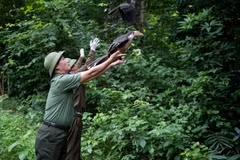
Six of the newly recorded species are of conservation significance, representing four orders and five families. (Photo published by VNA)

Dakrong Nature Reserve records 35 new bird species

Dakrong Nature Reserve in the central province of Quang Tri has recorded 35 bird species not previously documented, including several endangered and rare species listed on the International Union for Conservation of Nature (IUCN) Red List.

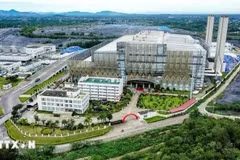
An overview of Soc Son waste-to-energy plant in the Nam Son Waste Treatment Complex, in Hanoi (Photo: VNA)

Hanoi targets collection and treatment of all industrial solid waste

Hanoi aims to ensure that all industrial solid waste from its hi-tech parks, industrial parks and industrial clusters is collected and treated in line with regulations under a new plan to strengthen waste management and tighten control on scrap collection, storage and recycling facilities across the capital.

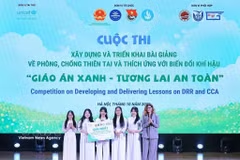
UNICEF Representative in Vietnam Silvia Danailov (first, right) honours first winners of the teaching materials competition. (Photo: VNA)

Deputy minister urges early action on disaster risks

Rapidly shifting climate conditions and increasingly overlapping hazards mean disaster risk reduction can no longer stand alone; it must sit at the heart of sustainable development, tightly integrated with climate response, water security, social welfare and economic growth.

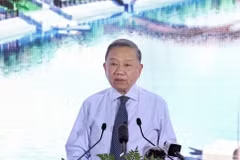
General Secretary of the Communist Party of Vietnam Central Committee and President To Lam speaks at the groundbreaking ceremony for a project to upgrade the Bac Hung Hai irrigation system. (Photo: VNA)

Hung Yen: Project to modernise Bac Hung Hai irrigation system launched

General Secretary of the Communist Party of Vietnam Central Committee and President To Lam stressed that the development of Bac Hung Hai must be integrated into broader efforts to ensure water security, protect the environment and promote sustainable development in the Red River Delta.

Illustrative image (Source: VNA)

Northern region to experience cold spell

The cold air is forecast to reach northeastern Vietnam from the evening and night of October 4 before spreading to other parts of the north and the area from Thanh Hoa to Hue. Winds will shift to the northeast at levels 2-3 inland and levels 3-4 along coastal areas.

Deputy Minister of Industry and Trade Truong Thanh Hoai and CEO of GWEC Ben Backwell chairs a offshore wind development workshop in Hamburg on September 24, 2026. (Photo: VNA)

Vietnam, Germany promote cooperation in offshore wind development, supply chains

At the discussion session, representatives of the ministry, offshore wind developers, equipment manufacturers and international financial institutions, including CIP, Siemens and KfW, discussed Vietnam’s offshore wind investment potential and the Vietnamese Government’s plans to achieve an offshore wind capacity target of 17GW by 2035, including measures to attract international investment to the country.