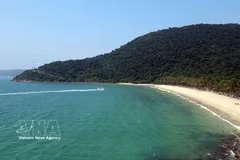
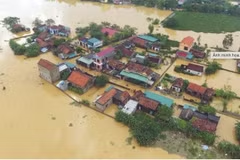
Hanoi (VNA) – Vietnam’s coastal and marine areas, endowed with abundant natural resources, provide livelihoods for millions of people. However, climate change is making these areas increasingly vulnerable to extreme natural disasters, including storms, sea-level rise, high tides, rough seas and saltwater intrusion, whose patterns are becoming more complex and unpredictable.
Disaster risks are also rising amid rapid urbanisation, growing economic development demands and climate change. In this context, the application of science and technology, combined with international cooperation, is essential to strengthening marine forecasting capacity, enabling more proactive disaster prevention and mitigation while safeguarding coastal communities’ livelihoods in a sustainable manner.
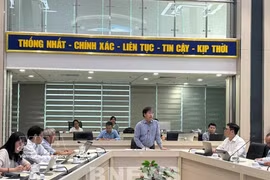
According to Dr. Nguyen Ba Thuy, Deputy Director of the National Centre for Hydro-Meteorological Forecasting, operational marine forecasts now cover all major oceanographic parameters, including tides, sea waves, ocean currents and storm- and monsoon-induced surges.
Advanced technologies are being applied to improve forecast quality, with data from numerical models, satellites, radars and observation systems integrated into forecasting operations. The OpenGeoWeb online platform also provides forecasters with useful tools, enhancing accuracy and proactiveness in issuing warnings for coastal and marine disasters.
Thanks to these technological applications, forecast lead times have been extended. Wave and ocean-current forecasts now cover up to 10 days, while storm- and monsoon-induced surges can be forecast three days in advance. Tide forecasts and high-tide warnings are also provided in greater detail for coastal and island observation stations and key locations, including river mouths, ports and major coastal economic zones.
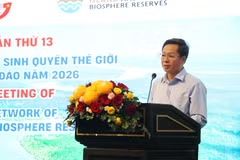
Storm and tropical depression forecasting is another area where technology plays a crucial role. Dr. Hoang Duc Cuong, Deputy Director in charge of the Vietnam Meteorological and Hydrological Administration (VNMHA), said that early warnings are particularly important for marine hazards, with lead times measured in hours rather than days, as with many other types of natural disasters.
This will allow vessels to leave dangerous areas promptly or reach safe shelters in time. Forecasts must also provide reliable and timely information on storm location, intensity, direction of movement, strong-wind areas and high waves so that authorities and vessel operators can make appropriate safety decisions.
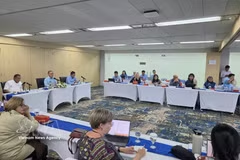
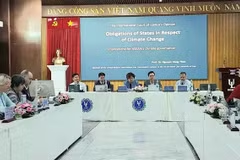
International cooperation is equally important to improving marine forecasting. VNMHA Deputy Director Dang Thanh Mai said that over the past decade, collaboration between Vietnamese and Norwegian agencies has been maintained through technical exchanges, joint research and hands-on training courses.
These activities have enabled Vietnamese forecasters and scientists to access marine forecasting technologies, operational tools and professional expertise, helping strengthen capacity at forecasting agencies from central to local levels.
Vietnam is frequently affected by dangerous marine phenomena, including storms, strong offshore winds, high waves and storm surges, which threaten coastal communities, maritime safety and infrastructure, she noted. Therefore, marine forecasts must be accurate, timely and location-specific to support disaster response, risk reduction and the development of the marine economy.
Marianne Rabe Knævelsrud, First Secretary of the Norwegian Embassy in Vietnam, said safe and sustainable marine economic activities require a better understanding of ocean conditions and closer cooperation in forecasting.
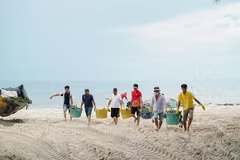
The impacts of storms, storm surges and coastal flooding in Vietnam highlight the need for timely forecasts and warnings. Early warnings give communities more time to prepare, while reliable forecasts help people working at sea decide when to set out or return, directly affecting their safety and livelihoods, she added.
Despite these advances, marine forecasting still faces limitations in forecast lead times, reliability and the dissemination of information to different user groups, partly due to sparse marine observation networks. Many forecasting tasks also require substantial computing capacity, which remains insufficient to provide detailed forecasts for key areas such as shipping channels, tourist sites and seaports, as well as detailed coastal flood forecasts.
Cuong stressed that improving hydro-meteorological and oceanographic forecasting and warning capacity is an urgent priority. This requires a clear roadmap and coordinated solutions, particularly investment in expanding marine observation networks in terms of station density, equipment and data transmission technologies.
The sector also needs to invest in research and modern forecasting technologies, especially studies into the causes and mechanisms of unusual and dangerous oceanographic phenomena, more detailed forecasting based on available observation data, and longer forecast lead times. Greater computing capacity and stronger professional skills among forecasters are also essential.
At the same time, international cooperation should be expanded to facilitate the sharing of forecasting technologies, observation equipment, data transmission systems and expertise from countries in the region and around the world, he added./.
VNA