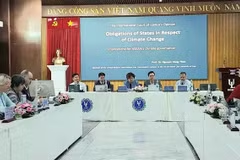
Hanoi (VNA) – The World Meteorological Organisation (WMO) Advisory Group on Hazardous Weather Forecasting will meet in Hanoi from September 21 to 24.
The meeting is expected to bring together around 30 leading scientists and experts to discuss solutions to complex climate and weather challenges.
The event will be organised by the Vietnam Meteorological and Hydrological Administration under the Ministry of Agriculture and Environment. The WMO’s decision to select Vietnam as the host country for its 2026 meeting reflects the growing standing, credibility and active contributions of the country’s meteorological and hydrological sector internationally.
The meeting comes as an El Niño event has officially developed and is forecast to reach very strong intensity, raising the risk of record-breaking heatwaves and extreme weather events worldwide.
Assoc. Prof. and Dr. Mai Van Khiem, Director of the National Centre for Hydro-Meteorological Forecasting, said El Niño is currently approaching strong intensity.
Sea surface temperatures in the NINO3.4 region are 1.8 degrees Celsius above the long-term average in the first week of September 2026.
El Niño is almost certain to remain strong to very strong between October and December 2026, with a 98% probability of reaching very strong intensity, up five percentage points from the forecast issued in August.
“Notably, very strong El Niño conditions may persist through the main period of the 2026–2027 winter, with a probability of around 40–75%. The phenomenon is then expected to gradually weaken, but will likely continue into the first half of 2027,” Khiem said.
According to a report by the Ministry of Agriculture and Environment assessing water shortage risks caused by El Niño and proposing response measures for 2027, the rapid development of the phenomenon will pose major challenges to water, food and energy security, as well as public safety.
These risks underline the need to improve the accuracy and effectiveness of forecasting and early warning systems. The goal is to shift from reactive responses to proactive risk management, with prevention and preparedness measures taken well in advance.
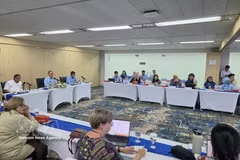
Against this backdrop, the WMO meeting is expected to bring together 30 leading scientists and experts, including 16 international representatives from the WMO Secretariat and representatives of meteorological and hydrological agencies from 13 countries across different continents. These include the United States, France, Russia, South Africa, India, New Zealand, Indonesia, Senegal, Kenya, Tanzania, Cameroon, Costa Rica, and Bosnia and Herzegovina.
Over four days, participants will discuss technical priorities and global coordination mechanisms to improve severe weather forecasting services. A key focus will be reviewing and expanding the WMO’s Severe Weather Forecasting Programme (SWFP).
The programme directly supports the UN and WMO-led Early Warnings for All (EW4All) initiative, which aims to ensure that everyone worldwide is protected by early warning systems against hazardous weather and other natural disasters.
Discussions are also expected to help shape how countries coordinate, share data and support one another during emergencies. In addition to conventional forecasting methods, the meeting will provide a forum for experts to share advances in artificial intelligence (AI), digital transformation and the development of global numerical weather prediction models.
As part of the meeting, Vietnam will arrange field visits to several key meteorological and hydrological stations in Hanoi. International delegates will learn about the country’s observation systems, technical infrastructure and technologies, as well as procedures for collecting, processing and using data for weather forecasting and disaster warnings.
Through technical discussions and field visits, the meeting is expected to strengthen scientific exchanges and expand cooperation between Vietnam, the WMO and meteorological and hydrological agencies worldwide. It will also provide an opportunity for Vietnam to share its experience in modernising observation networks, advancing digital transformation and applying new technologies in the sector./.