Overseas artists help amplify Vietnam’s cultural soft power

Minh Ha Patmore, an artist from the Vietnam-Australia Cultural Exchange Organisation (VACEO), said overseas Vietnamese artists can serve as natural “cultural ambassadors”, connecting Vietnam with international friends through art.

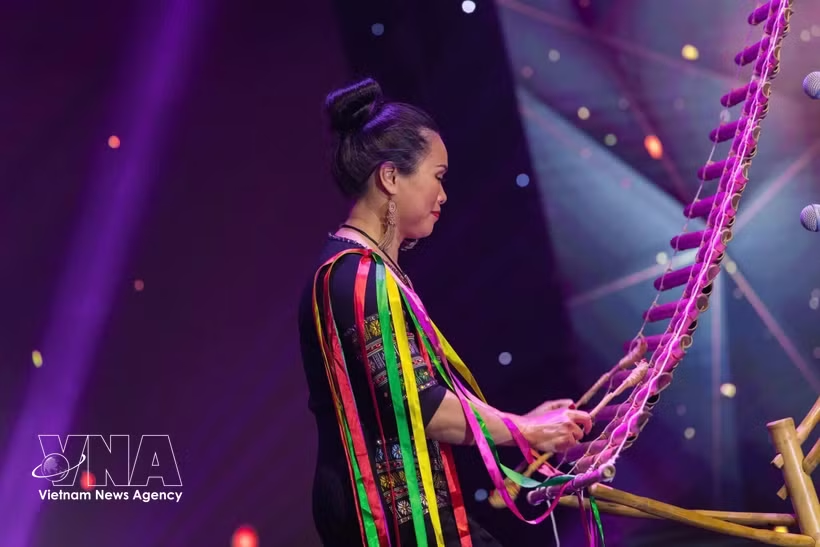
Minh Ha Patmore, an artist from the Vietnam-Australia Cultural Exchange Organisation (VACEO), performs at an event in Australia. (Photo: VNA)

Sydney (VNA) – As Vietnam focuses more on promoting cultural soft power and drawing on the talents of its overseas community, Vietnamese artists abroad are becoming vital bridges that bring the nation’s cultural identity closer to audiences around the world.

Minh Ha Patmore, an artist from the Vietnam-Australia Cultural Exchange Organisation (VACEO), said overseas Vietnamese artists can serve as natural “cultural ambassadors”, connecting Vietnam with international friends through art.

Speaking to Vietnam News Agency correspondents in Sydney, Ha highlighted their advantage of understanding both their homeland’s culture and the cultural environment of their host countries. Living in multicultural Australia enables them to understand the tastes and ways of thinking of local audiences, helping them present Vietnamese values in forms that foreign audiences can appreciate.

Politburo Resolution No. 80-NQ/TW on Vietnamese cultural development identifies culture as a foundation, an endogenous resource and a source of national soft power, while stressing the need to promote national culture abroad and encourage artists to preserve and spread Vietnamese values.

Drawing on her experience performing and teaching in Australia, Ha said traditional Vietnamese music has considerable appeal among multicultural audiences. The distinctive sounds of the dan tranh (zither), bamboo flute and other traditional instruments often arouse curiosity among first-time listeners. In her view, when music plays, language barriers are partly diminished, making way for emotional resonance. For this reason, art can serve as one of the most direct ways for international friends to gain a deeper understanding of the Vietnamese people, history and cultural identity.

For Vietnamese communities abroad, traditional music also helps maintain connections between generations and their homeland. This aligns with Resolution No. 23-NQ/TW on overseas Vietnamese affairs, which focuses on building a strong community that preserves the Vietnamese language and cultural identity while serving as “ambassadors” for the country and its people.

Traditional instrument classes organised by Ha and her colleagues in Australia provide young Vietnamese, particularly those born and raised there, with opportunities to explore Vietnamese heritage and develop pride in their national identity.

However, Ha said promoting traditional arts overseas faces challenges, including generational cultural gaps, limited resources and competition from global cultural trends.

If traditional music is presented only through conventional methods, attracting younger audiences will become increasingly difficult, she said.

Ha said turning the orientations of Resolutions 80 and 23 into tangible results requires concrete support mechanisms, including stronger connections between domestic cultural agencies and overseas Vietnamese artists and organisations.

She called for support in the form of instruments, digital teaching materials, training programmes and assistance in organising regular performances and cultural exhibitions, while urging Vietnamese representative missions abroad to promote such activities.

Ha also suggested combining traditional instruments with contemporary styles such as world music and fusion to engage younger audiences while preserving the core identity of Vietnamese music.

According to Ha, the overseas Vietnamese community holds significant cultural resources. With better connections, support, and opportunities, overseas Vietnamese artists can contribute more effectively to promoting Vietnam and its people while helping younger generations maintain strong ties with their cultural roots and homeland./.

VNA

See more

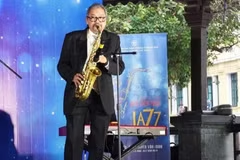
Saxophonist Quyen Van Minh is the brand ambassador of Hanoi Jazztival 2026. (Photo courtesy of the artist)

Hanoi Jazztival 2026 seeks to expand space for Vietnamese jazz

A festival of this scale can provide more performance opportunities while enabling Vietnamese and international musicians and artists from different generations to meet, learn and connect. It can also bring jazz closer to audiences who may regard it as difficult to appreciate or suited only to a niche audience.

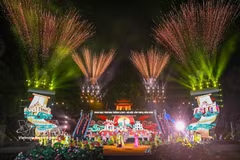
A spectacular fireworks display at the event. (Photo: VNA)

Thang Long – Hanoi Festival 2026 opens

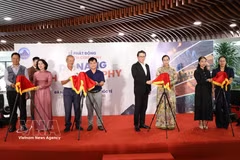
The second Thang Long – Hanoi Festival 2026, themed “Heritage Flow,” kicked off on the night of September 11. It aims to bring traditional cultural values ​​closer to the public, expand international exchange, and contribute to the development of Hanoi's cultural industries.

Delegates at the launch ceremony of the photography contest “Global Eyes on Da Nang” at APEC Park on September 10 (Photo: VNA.)

Photo contest highlights Da Nang through international eyes

Speaking at the launch ceremony, Nguyen Thi Anh Thi, Vice Chairwoman of the municipal People’s Committee and head of the contest’s organising committee, said the competition aims to showcase diverse perspectives from the foreign community, diplomatic missions, international organisations, press agencies, professional and amateur photographers, and visitors.

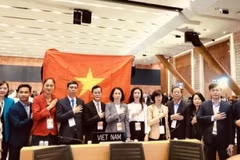
The Vietnamese delegation attends the 46th session of the World Heritage Committee in July 2024. (Photo: VNA)

Hanoi to host Asia-Pacific dialogue on heritage, authenticity

The event aims to provide an international scientific forum for further research, exchanges and discussions on authenticity in world heritage conservation, in close connection with the outstanding universal value, integrity and cultural values of heritage elements.

Materials on President Ho Chi Minh are on display as part of the series of events honouring President Ho Chi Minh in Kunming, China (Photo published by VNA)

President Ho Chi Minh relic site opens exhibition in China marking 76 years of diplomatic ties

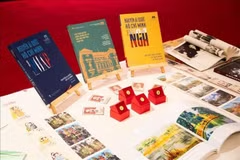
The centerpiece exhibition features more than 100 documents, materials and photos, some made public for the first time. It highlights President Ho Chi Minh’s life, career and revolutionary activities in China and his close ties with Chinese revolutionaries, intellectuals and people, underscoring the formation, cultivation and continuation of Vietnam-China friendship across periods.

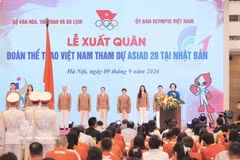
Deputy Prime Minister Pham Thi Thanh Tra delivers a speech at the ceremony in Hanoi on September 9 to see off the Vietnamese sports delegation to the 20th Asian Games (ASIAD 20) in Japan. (Photo: VNA)

Vietnamese sports delegation leaves for ASIAD 20 in Japan

The Vietnamese delegation comprises 496 members, including athletes, coaches, experts, officials, doctors and medical staff. The teams will depart in several groups depending on their competition schedules, with the largest group expected to leave on September 16. The squad has set a target of winning at least four gold medals at ASIAD 20.

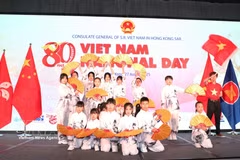
A performance by the Ruby’s Dance Crew at a celebration of Vietnam's National Day in Hong Kong (Photo: VNA)

Artist helps Vietnamese culture shine in Hong Kong

Teaching traditional dance and songs to children growing up overseas has never been easy. Differences in living environments and ways of thinking, together with pronunciation influenced by the local language, mean that the children need more time to grasp rhythms and pronounce Vietnamese correctly.