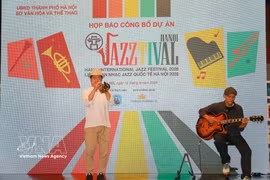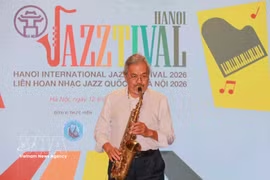
Hanoi (VNA) – Bringing together seven international bands and eight leading Vietnamese groups, the the Hanoi International Jazz Festival 2026 (Hanoi Jazztival 2026), scheduled for September 17-19, will feature major concerts and diverse cultural activities, creating more space for Vietnamese jazz to develop.
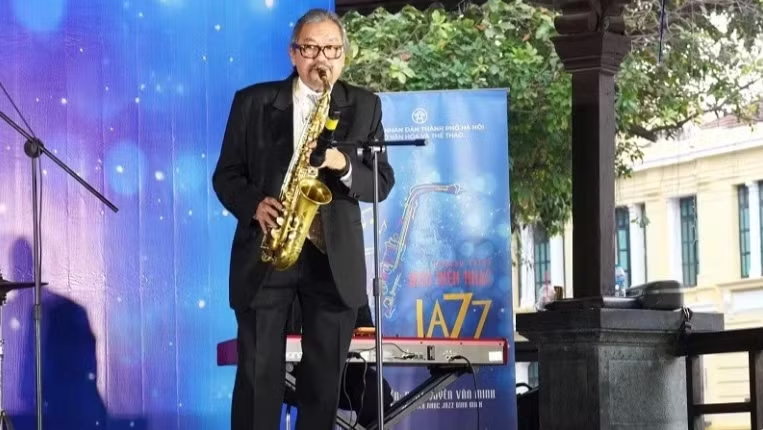
For Meritorious Artist Quyen Van Minh, brand ambassador of Hanoi Jazztival 2026, the festival is a long-awaited milestone.
“Many countries around the world have organised jazz festivals for years. We may not have had sufficient conditions before, so it is encouraging that Hanoi can now organise such a festival,” he said.
Saxophonist Tung Sax said the event is good news for both musicians and audiences, as jazz needs live performance spaces where artists can interact, improvise and share energy with listeners.
A festival of this scale can provide more performance opportunities while enabling Vietnamese and international musicians and artists from different generations to meet, learn and connect. It can also bring jazz closer to audiences who may regard it as difficult to appreciate or suited only to a niche audience.
“I believe a professionally organised festival will help jazz move beyond clubs, bars and hotels and bring it closer to the public,” Tung Sax said.
For Vietnamese jazz musicians, the festival also offers a platform to develop and express the identity of Vietnamese jazz. After decades of development, a new generation of artists has emerged with strong technical skills, familiarity with contemporary trends and a desire to express Vietnamese culture through music.
Vietnam has abundant musical materials, from folk and traditional music to contemporary life, Tung Sax noted. If explored with understanding and respect, these materials can help create a distinctive Vietnamese voice in jazz.
Building an ecosystem for Vietnamese jazz
Young audiences are increasingly open to different genres and see fewer boundaries between jazz, pop, R&B, soul and electronic music, creating opportunities for jazz to reach new listeners while retaining its core values of freedom, improvisation and dialogue.
However, public interest alone cannot ensure sustainable development. Tung Sax said jazz musicians spend years studying and developing their own voices, but performance opportunities remain limited.
He stressed that the issue concerns the entire jazz ecosystem. Jazz relies on live performance and audiences having time to develop appreciation, while the fast-moving music market tends to favour products that quickly reach large audiences.
Vietnam also lacks stable performance venues, specialised communications and long-term investment mechanisms for jazz, he said.
Since Hanoi's first jazz club was established in 1997, the genre has gradually become part of the capital's cultural life, particularly among young people.
Minh said the three-day festival could show that outdoor spaces can become stages for jazz and attract wider audiences. For lasting impact, however, activities should continue beyond the festival through regular programmes.
Tung Sax hopes Hanoi Jazztival will develop into a long-term platform featuring workshops, masterclasses, professional talks, student programmes and collaborations between Vietnamese and international artists.
A festival cannot transform the jazz scene overnight, he said, but regular, well-organised events supported by artists, audiences, media and cultural investors could create a new generation of listeners and open a new chapter for Vietnamese jazz./.