PM urges France to share expertise in railway development

Visiting the SNCF, Prime Minister Pham Minh Chinh and his entourage learnt about the company's models, approaches, and experiences in investing in, constructing, and operating railway projects in many countries, particularly high-speed rail systems.

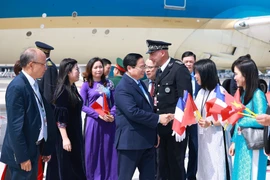
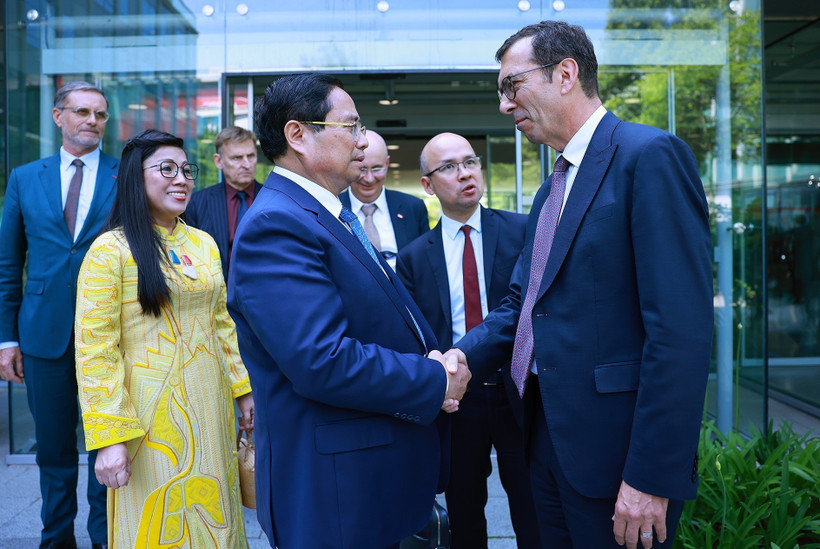
PM Pham Minh Chinh visits the French National Railway Company (SNCF) in Paris on June 11. (Photo: VNA)

Paris (VNA) - Prime Minister Pham Minh Chinh called on the French side to share experience and support Vietnam in developing railway industry during his working session with representatives of the French National Railway Company (SNCF) in Paris on June 11 as part of his bilateral activities in France.

Visiting the SNCF, Chinh and his entourage learnt about the company's models, approaches, and experiences in investing in, constructing, and operating railway projects in many countries, particularly high-speed rail systems.

The SNCF is France’s state-owned national railway company and one of the world’s leading railway operators and managers, with over 80 years of experience. Established in 1938 through the merger of the five largest private railway companies of France, the SNCF has since grown into a huge corporation. It not only operates France’s national rail network but also expands its services globally in logistics and public transportation.

In Vietnam, Vietnam Airlines has had a cooperation agreement with SNCF since 2012. Under this agreement, passengers flying with Vietnam Airlines to France, especially to Charles de Gaulle International Airport, can easily connect to domestic destinations across France via the SNCF’s high-speed TGV trains. This combined air-rail ticketing service offers greater convenience for travellers continuing their journey within France after arriving by air.

France and its SNCF expressed strong interest and readiness to support Vietnam's railway infrastructure development, particularly high-speed rail projects.

On March 21, the French Embassy in Vietnam and Vietnam's Ministry of Construction (MoC) organised a seminar on high-speed railways, creating opportunities for agencies and enterprises from both countries to explore future cooperation.

During French President Emmanuel Macron's official visit to Vietnam in May, the MoC, the French Development Agency (AFD), and SNCF International signed a Memorandum of Understanding (MoU) to enhance capacity building for the ministry’s railway management officials. France also showed interest in the modernisation project of the Hanoi-Hai Phong railway.

PM Chinh spoke highly of the SNCF’s capacity, experience and contributions to railway transport and high-speed rail lines globally, as well as the company's active cooperation with Vietnamese partners. The leader suggested France and SNCF continue their collaboration and effectively implement the MoU signed with the MoC, share experiences, transfer technology, and provide capital support and human resources training to help build and develop Vietnam's railway industry.
vna-potal-thu-tuong-va-phu-nhan-sang-tham-chinh-thuc-thuy-dien-8086565-1.jpg
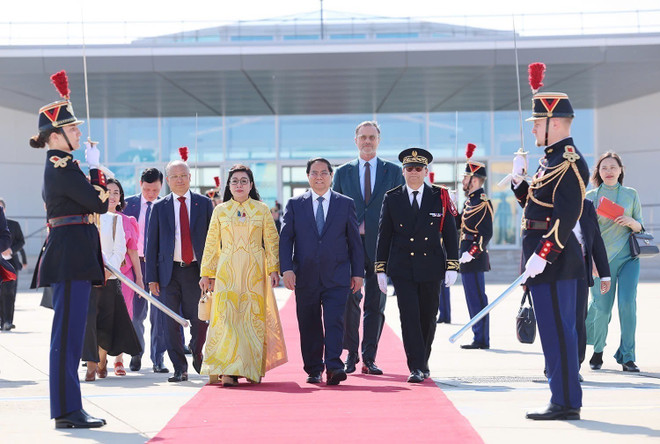
PM Chinh, his spouse and the high-ranking Vietnamese delegation then leave for an official visit to Sweden from June 11 to 14. (Photo: VNA)

This was the last activity of PM Chinh’s five-day trip to France to attend the third UN Ocean Conference (UNOC 3) and conduct bilateral activities there at invitations from UN Secretary-General Antonio Guterres and French President Emmanuel Macron.

PM Chinh, his spouse and the high-ranking Vietnamese delegation then left for an official visit to Sweden from June 11 to 14 at the invitation of Swedish PM Ulf Kristersson./.
VNA

See more

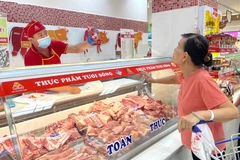
Chili peppers are on the list of essential goods in Indonesia (Photo: VNA)

Indonesia reduces imports of strategic food commodities

In 2026, Indonesia is expected to have approximately 12 million tonnes of rice carried over from the previous year, supported by annual production of around 34.7 million tonnes. With projected consumption of 31.1 million tonnes, national rice reserves could reach approximately 16 million tonnes by the end of the year.

Hanoi’s roadmap to implement low-emission zones from July is providing a strong boost to the electric two-wheeler market (Photo: VNA)

Low-emission zone roadmap drives electric two-wheeler boom in Hanoi

From July 1, Hanoi will introduce time-based or area-based restrictions on petrol-powered motorcycles within Ring Road 1, with plans to expand coverage across the entire zone by 2028 and extend to areas within Ring Road 3 by 2030. The policy is expected to reshape travel habits for millions of urban residents.

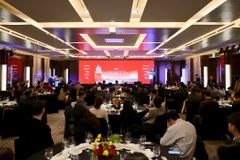
Delegates at the opening ceremony of the Made in Da Nang Expo 2026 (Photo: VNA)

Nearly 300 firms join Made in Da Nang Expo 2026

Speaking at the opening ceremony, Vice Chairman of the Da Nang People’s Committee Tran Chi Cuong said the exhibition is a large-scale trade promotion event aimed at showcasing products, connecting markets, and helping businesses enhance competitiveness while expanding domestic and export markets.

 Green production, standardised value chains key to fruit, vegetable sector growth

Green production, standardised value chains key to fruit, vegetable sector growth

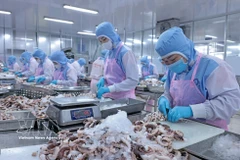
Facing mounting pressure from increasingly stringent domestic and international standards, Vietnam’s fruit and vegetable sector is accelerating its shift toward green, safe, and sustainable production models. Beyond changing farming practices, localities and businesses are stepping up efforts to standardise value chains and build brands to achieve growth targets for 2026.

Hiep Phuoc Industrial Park in Ho Chi Minh City. (Photo: VNA)

Southern industrial real estate enters strategic growth phase

Key industrial hubs in the south, including Ho Chi Minh City, Dong Nai and Tay Ninh, are transitioning from a period driven largely by supply expansion and rising land prices to a more refined growth model. This new phase is shaped by infrastructure upgrades, supply chain restructuring, product improvement and greater emphasis on operational performance.