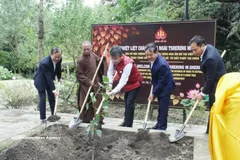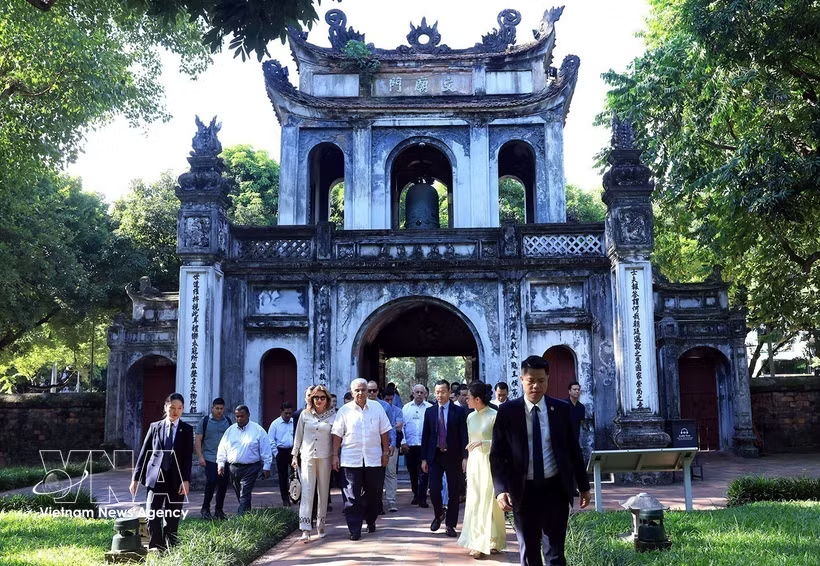
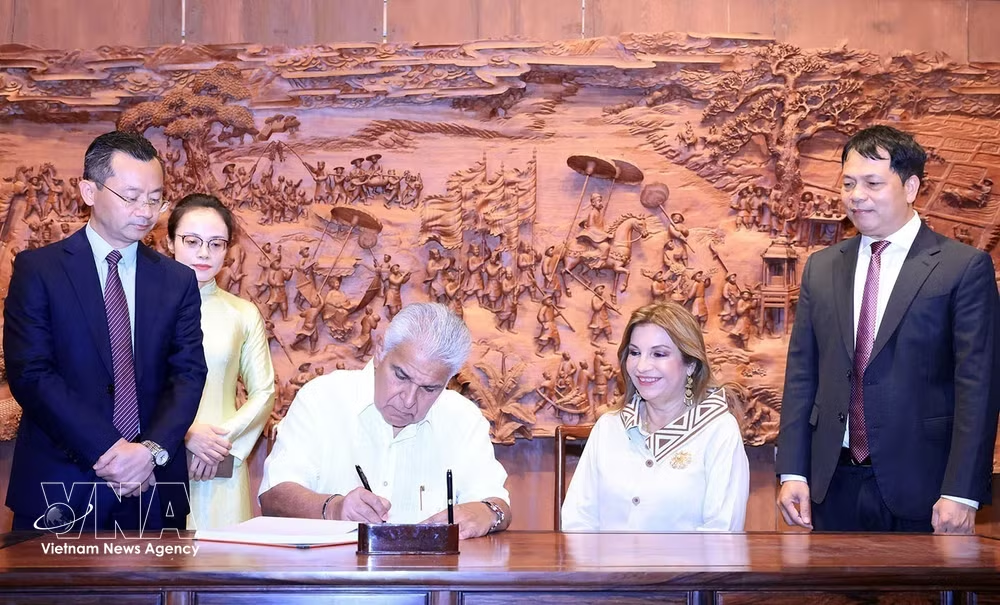
Hanoi (VNA) – Panamanian President José Raúl Mulino used the guestbook at the Van Mieu – Quoc Tu Giam (Temple of Literature – Imperial Academy) in Hanoi on October 6 to call the relic site a product of Vietnam’s cultural and educational values, saying he was “immensely proud” to visit as State leader during his official trip.
Prime Minister of Liechtenstein Brigitte Haas followed on October 19, calling the site a symbol of Vietnam’s education tradition and respect for brainpower.
956 years since King Ly Thanh Tong built the Temple of Literature and 950 years since King Ly Nhan Tong founded Quoc Tu Giam, the special national relic site preserves exam history and now functions as a cultural-diplomacy venue where Vietnam’s soft power is told through knowledge, talent and identity.
Historical depth as the draw
Quoc Tu Giam dates to 1076. Its garden holds 82 stelae naming 1,304 doctoral laureates from the Le and Mac dynasties. UNESCO added the collection to the Memory of the World Register in 2011. The stelae are exam-history data and a window into ancestors’ views on education, training and talent. German President Frank-Walter Steinmeier, a doctor of law and political science, got a briefing on monarchical Vietnam’s doctoral exams during his January 2024 state visit.
The second draw is universal: learning, respect for knowledge, talent and teachers travel across cultures. Panamanian President Mulino was shown “Vinh Quy Bai To,” a painting of Confucian students studying, sitting exams, passing and returning home - a story that lands with anyone who values education. UNESCO Representative to Vietnam Jonathan Wallace Baker said Vietnam’s standout is deep, durable respect for education, learning and scholarship. Quoc Tu Giam, he said, shows how knowledge, talent and ethical responsibility have long been linked in Vietnamese society.
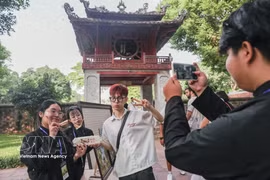
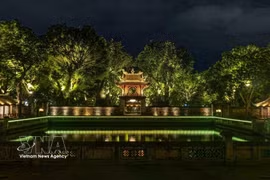
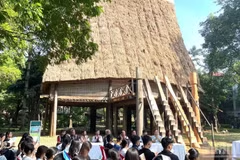
The third draw is format. The site’s green, quiet, ancient space lets visits run slow and informal, giving leaders room to feel, ask and react which are hard to do in ceremonial diplomacy. Liechtenstein PM Brigitte Haas repeatedly flagged the old architecture, trees and historical stories fused into one cultural space.
Baker said the 82 stelae tell a bigger cultural exchange story: Confucian education was adapted and developed in Vietnam. That makes the relic site a reference point for Vietnam’s historical ties to other East Asian cultures and for its own identity.
Vietnam tells its story through cultural symbols
Though high-ranking delegations and international organisations visit the same site, host Vietnam always offers different receptions with distinctive cultural stories.
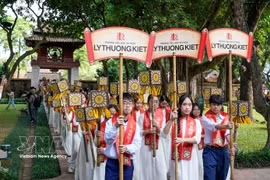
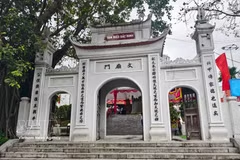
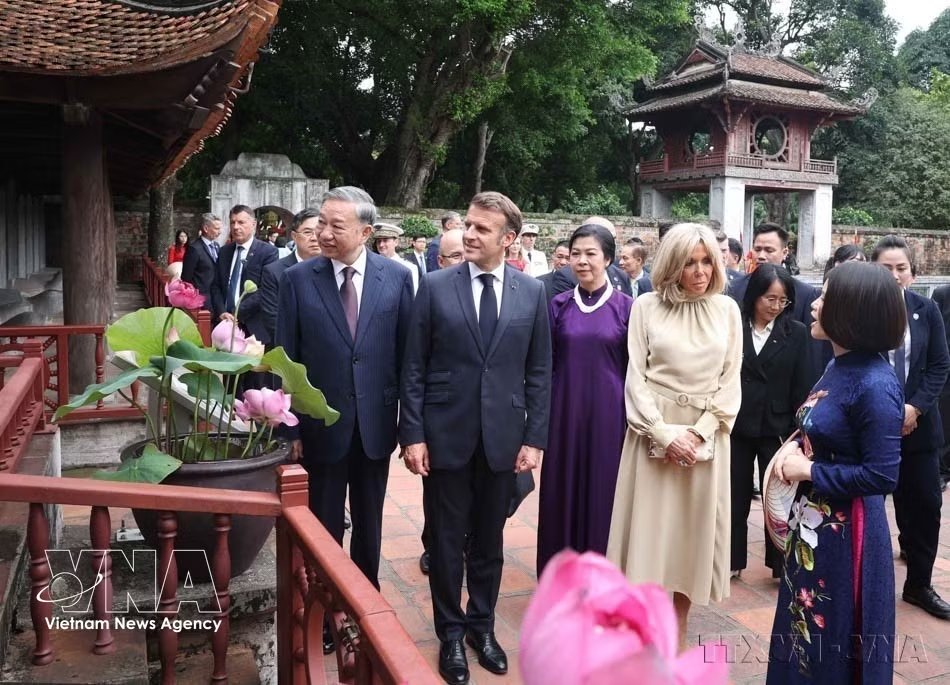
On May 26, 2025, General Secretary of the Communist Party of Vietnam Central Committee To Lam and his spouse hosted French President Emmanuel Macron and his spouse. From the main gate, Hue royal court music sounded in welcome; the two leaders passed Van Mieu Gate, Dai Trung Gate, Khue Van Cac (Pavilion of the Constellation of Literary) - the symbol of Hanoi, Thien Quang Well and the Doctorate Stelae garden, then enjoyed an excerpt of Hue royal court music - an Intangible Cultural Heritage of Humanity. To close, General Secretary Lam invited President Macron to beat the drum at Thai Hoc, built in 2000 on the old Quoc Tu Giam foundation, as a knowledge-opening gesture and a signal of enduring friendship.
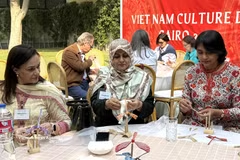
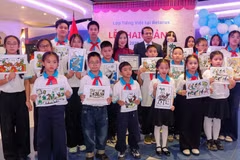
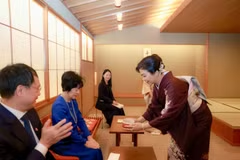
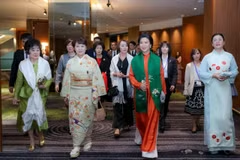
On the ASEAN Future Forum sidelines on June 8, 2026, Dao Thi Bich Thuy, spouse of Prime Minister Le Minh Hung, and spouses of the Laos, Cambodia and Thailand PMs toured the “Si Tu” exhibition at Thai Hoc, including “Vuon Trang Nguyen,” which showcases nearly 950 study stories from students nationwide. Bamboo, “do” paper, conical hats and rattan carry a forward message: perseverance and belief in knowledge. The ladies tried conical-hat painting, hand embroidery and silk weaving.
Spouse of the Panamanian President Maricel Cohen de Mulino wrote in the guestbook: “Sincere thanks for the thoughtful reception and meaningful sharing. Vietnam is always in our hearts”.
From a “soft message” to the responsibility to carry it forward
In a fragmented world, Vietnam is using cultural diplomacy to signal cooperation rooted in tradition, sovereignty and cultural self-respect. The Temple of Literature, built around brainpower, talent and learning, fits a knowledge-and-education growth strategy that Vietnam can present as sustainable and independent.
For visiting leaders, the venue itself changes the tone. Receiving guests in Vietnam’s most sacred cultural-educational space, not just a residence or hall, adds values and spiritual depth to strategic ties. President Macron’s visit signals an Asia approach built on respect and dialogue. PM Haas’s wish that the site keep “inspiring, nurturing brainpower and the spirit of learning for future generations” shows the visit’s reach beyond protocol.
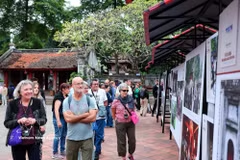
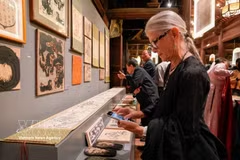
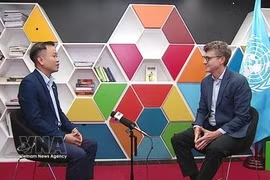
At the November 11 photo exhibition “From Heritage to Cultural Diplomacy” co-hosted by Vietnam News Agency and the Van Mieu - Quoc Tu Giam Centre for Cultural and Scientific Activities, Baker said the site is a symbol of Vietnam's culture and education and a regular pick for high-ranking leaders and politicians. That lifts it from national heritage to a valuable platform for promoting cultural diplomacy and showcasing Vietnam's cultural soft power, helping to convey the country's image and cultural identity to the international community.
2026 stacks three milestones: 950 years of Quoc Tu Giam, 80 years since the first National Conference on Culture and 50 years of UNESCO–Vietnam cooperation. Baker said Vietnam is a responsible partner that increasingly shapes UNESCO’s global and regional agenda and feeds experience into global cultural talks, including the 2026 Asia-Pacific Dialogue on Heritage and Authenticity. Vietnam’s push for an International Decade of Culture for Sustainable Development (2027–2036) adds multilateral weight. Bilateral visits and multilateral initiatives reinforce each other.
Baker pointed to the 2025 Law on Teachers, Politburo Resolution 71-NQ/TW on breakthroughs in education and training, tuition-free public schools and expanded two-session-per-day schooling. Vietnam has six cities in UNESCO’s Global Network of Learning Cities and its first UNESCO Chair at VinUni. These show Vietnam’s commitment to teachers, quality education access, lifelong learning and international academic cooperation, meaning Quoc Tu Giam’s spirit of valuing learning and talent is being realised in a new context.
The UNESCO Representative believed that a site like Quoc Tu Giam is not just a stop for guests and students, but also a place to read history, learn from tradition and add new perspectives and creativity./.