Hanoi (VNA) — Short and AI-generated films are becoming increasingly popular on digital platforms, requiring stronger responsibility from those distributing films and more effective management of film content in cyberspace.
These films have met demand for quick entertainment while opening up new creative opportunities for filmmakers. However, alongside engaging and creative works, many films have revealed shortcomings in content quality, character development and behaviour, and some even contain inappropriate content that could affect public perceptions and tastes, particularly among children and young people.
When short films become “fast food” online
Hong Nhung, a small trader at Thach Ban Market in Hanoi, said she often browses social media when business is slow and has consequently become a regular viewer of short films on social media platforms. At first, she watched only a few short clips, but gradually found herself becoming “addicted”. More and more films would appear on her feed. Sometimes she intended to watch for only a few minutes, but ended up unable to stop and spent several hours watching.
Nhung acknowledged that while many short films have engaging storylines, many others are unrealistic, with characters displaying inappropriate or distorted behaviour that can make viewers uncomfortable and frustrated.
Minh Hang, a civil servant residing in Hanoi, said she often watches short films on Facebook, TikTok or YouTube in her free time, either to pass the time or relax after work. According to her, the appeal of short films lies in their fast-paced storytelling and the limited time required to follow them. Viewers do not have to wait long for new developments, while episodes often end at a point that leaves them eager to find out what happens next.
Not only adults but also many pupils and university students are being drawn into short films on social media. Nguyen Thu Phuong, a university student in Hanoi, said that she sometimes intended to watch for just a few minutes before going to bed, but became so absorbed in the content that she moved from one film to another, sometimes watching all night. As a result, she was too tired to get up the following morning and had to miss classes.
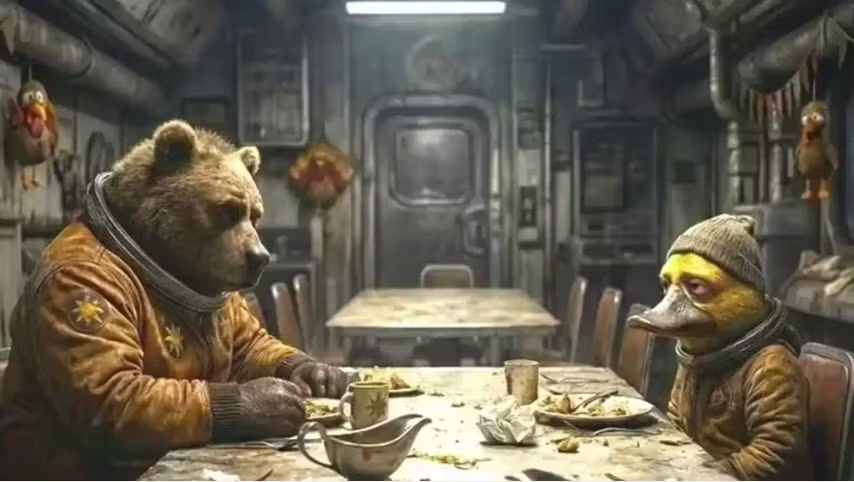
The situation has raised concerns that continuously consuming short and AI-generated films featuring eye-catching visuals but sensational and illogical scripts could have a considerable impact on viewers.
Experts say a valuable work of art should aspire to truth, goodness and beauty, faithfully reflect life and people, nurture positive values, confront wrongdoing and help audiences appreciate beauty. If viewers are regularly exposed only to vulgar, violent or even harmful content, shared cultural values can also be negatively affected, particularly among young people.
Ha Van Lau, former Chief Inspector of the Ministry of Culture, Sports and Tourism, said the impact of cyberspace varies from person to person, but the most important factor remains each individual's ability to filter information. Without sufficient skills, awareness and resilience to filter information, they can easily be influenced by negative online content, affecting their studies, psychological well-being and personality development.
Lau stressed that alongside individual awareness, the role of competent authorities in managing cyberspace is crucial.
No regulatory gaps allowed in cyberspace
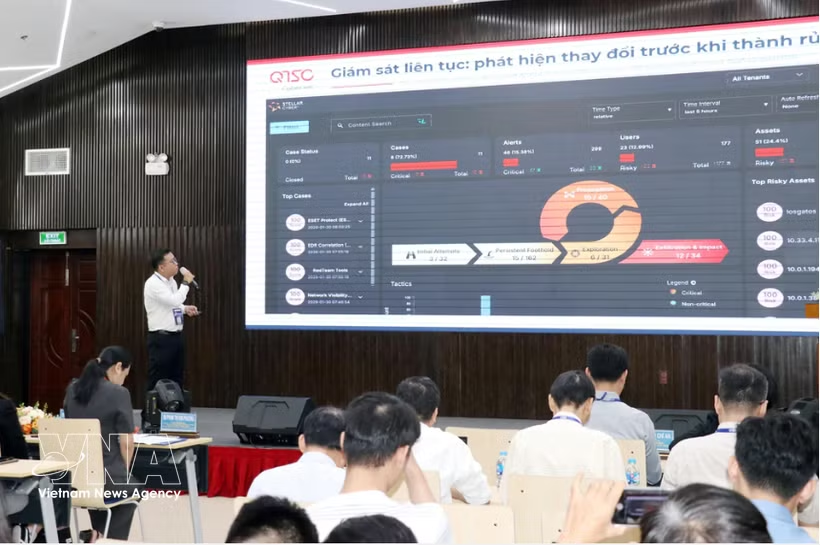
According to Dang Tran Cuong, Director of the Department of Cinema, the department's professional review and monitoring of cinema management has identified several issues concerning the distribution and provision of film content in cyberspace that require attention.
Some film distributors and content providers have not fully complied with the Law on Cinema. Another issue is the need to clarify the mechanisms for pre-inspection and post-inspection of online film distribution. Pre-inspection involves checking whether an organisation meets the conditions for engaging in film distribution.
Once an organisation is deemed eligible to distribute and release films online, it must also make certain commitments, including not violating the Law on Cinema and taking measures to handle or remove violating content within a timeframe appropriate to the nature and severity of the violation.
The department's review shows that these are among the issues requiring attention in online film distribution, particularly in the case of short films and films made using AI technology.
However, Cuong stressed that short films and AI-generated films are not in themselves a concern for regulators. They represent new forms of creativity with significant development potential and, if appropriately managed, can make a positive contribution to the development of the cinema industry.
The authorities' concern is whether films reaching audiences have been properly classified and age-rated, whether their content complies with regulations and whether they meet the conditions for distribution in cyberspace. Recent developments have shown that some film content has reached viewers without being appropriate and could even have negative impacts. This is an issue that the Law on Cinema needs to address to ensure that online film distribution meets common regulatory requirements.
To strengthen management of online film distribution, the department has recently issued a document asking enterprises, public service providers, organisations and individuals engaged in online film distribution to conduct a serious review and fully comply with regulations on cinema.
According to the department, the development of digital technology has made online film distribution increasingly diverse, with many products being introduced as “short films”. Through its management work, the department has found that some organisations and individuals do not fully meet requirements and procedures concerning eligible film distributors, film classification, display of classification results, notification of film lists before distribution and other related obligations.
The department has asked film distributors to ensure that they meet the eligibility requirements stipulated by the 2022 Law on Cinema.
For digital platforms, intermediary platforms and app stores providing films in Vietnam, the Department of Cinema has requested that they promptly review films, “short films” and film-distribution applications, and prevent or cease providing content that fails to meet legal requirements.
The department said it is coordinating with relevant authorities to inspect and verify cases showing signs of violations and will handle them within its jurisdiction or refer them to competent authorities for action in accordance with regulations./.