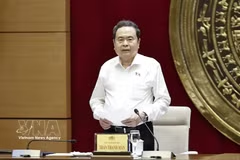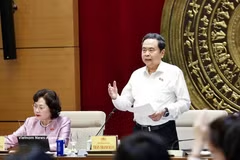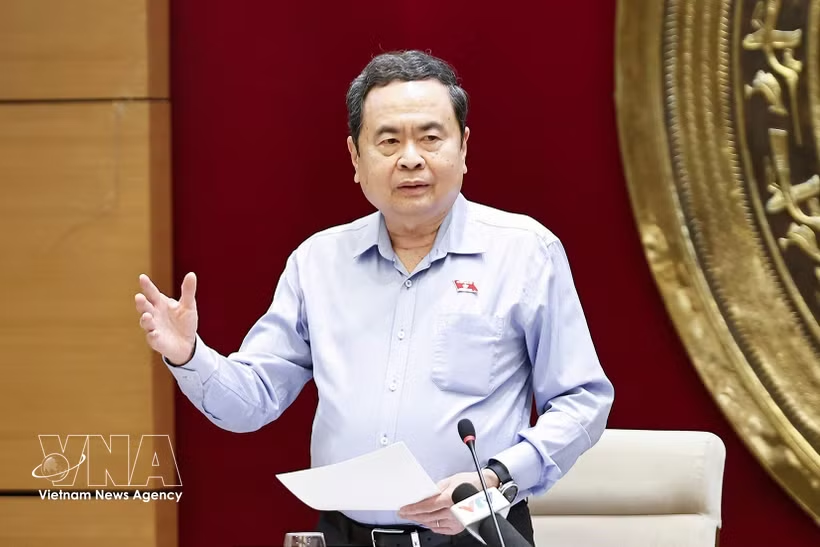
Hanoi (VNA) - National Assembly (NA) Chairman Tran Thanh Man has urged the NA's Council for Ethnic Affairs to adopt a more proactive, comprehensive and grassroots-oriented approach to monitoring developments in ethnic minority and mountainous areas, in order to provide timely, practical policy recommendations and help strengthen national unity and stability.
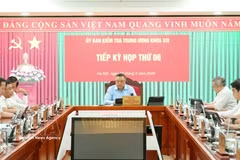
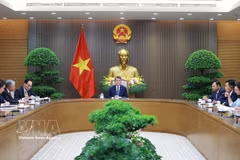
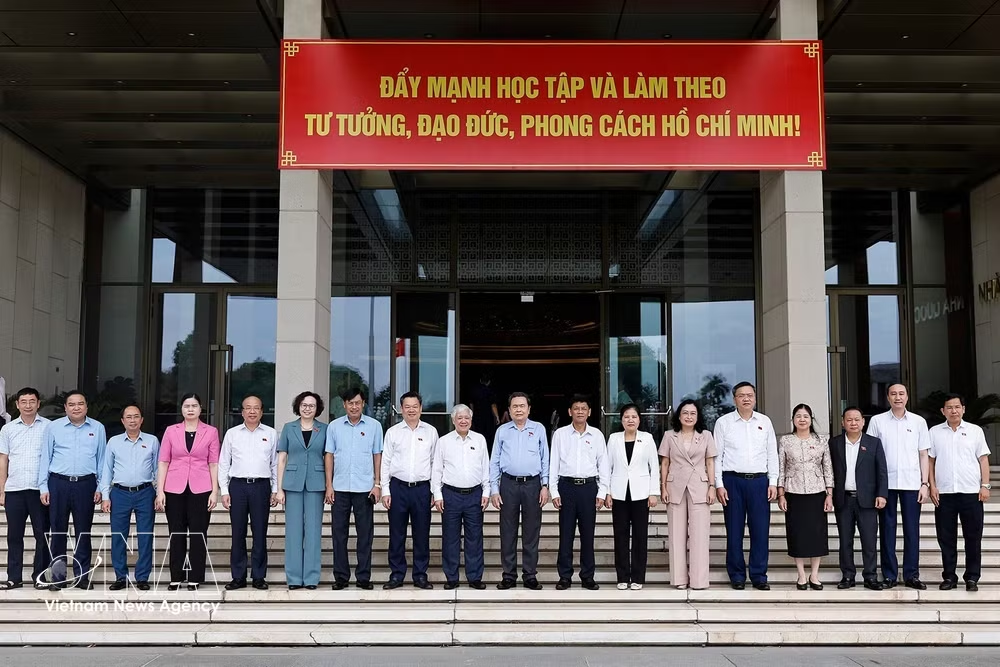
Speaking at a working session with the council’s standing members on May 21 to review key tasks for 2026 and the 2026–2031 term, the NA leader stressed that improving effectiveness begins with a clear grasp of realities on the ground and more responsive policy advice to the Party and State. He underscored that the council’s role and standing must ultimately be measured by the quality and impact of its work.
He urged the body to overhaul its coordination methods, enhance its capacity to anticipate issues, and deliver more timely and relevant policy recommendations on ethnic affairs. Task allocation must be specific and accountable, with strict monitoring of progress, the NA Chairman noted.
The council should adopt a more disciplined, results-oriented working style - faster, more scientific, and clearly defined in terms of deadlines, outputs, and responsibilities, he said.
The NA leader underlined the need to renew law-building mindset and improve the quality of appraisals of draft laws, ordinances, and resolutions, especially those directly affecting ethnic minority communities. He asked for concrete plans to implement the Party's major directives, including the 14th National Party Congress’s Resolution and recent conclusions by the Secretariat and the Politburo on ethnic affairs and legislative orientation for the 16th NA tenure.
He also tasked the council with completing a comprehensive review of the system of legal normative documents within its remit.
Greater emphasis should be placed on supervision and field surveys, and organising workshops and seminars to ensure substance and effectiveness, he said, requesting the council to proactively select appropriate forms of supervision in line with practical conditions, with a focus on conducting oversight activities as early as 2026.
The NA Chairman also highlighted the importance of regularly reviewing legal documents related to ethnic policies, saying that following an overall review, the council should establish monthly and quarterly review mechanisms to promptly identify effective measures to scale up and shortcomings that require immediate adjustments.
Regarding digital transformation, he called for stronger application of information technology and artificial intelligence to streamline administrative processes, reduce workload, and allow officials to focus more on strategic policy mindset.
Officials and staff must take the lead in adopting digital platforms and tools to ensure sustainable progress, the top legislator said, suggesting the development of a dedicated application on ethnic affairs integrated into the NA’s digital platform 2.0.
Reiterating the need for continued reform in working methods, the NA Chairman stressed principles of clarity - clear responsibilities, tasks, timelines, authority, and results - along with strict adherence to working regulations and performance-based evaluation of officials. He also underlined the importance of Party building, particularly in political and ideological work, to maintain genuine unity within the council.
The NA Chairman called for stronger coordination to ensure substantive and effective outcomes, both within the council and the legislature, as well as with the Government - particularly the Ministry of Ethnic and Religious Affairs - along with local authorities and relevant agencies.
The council should also invest in training a professional and specialised workforce, ensure rational task assignment, and avoid inefficiencies such as excessive meetings with limited outputs or unclear accountability.
The NA leader expressed his confidence that the council will continue to uphold unity and creativity, further innovate its methods and approaches, and strive to achieve strong results in 2026, laying a solid foundation for the entire 16th NA tenure./.