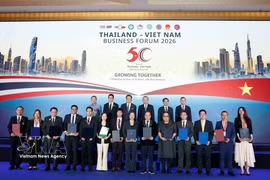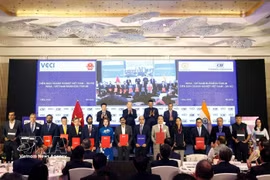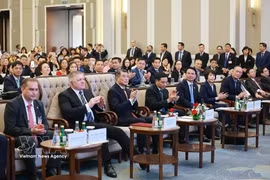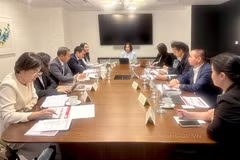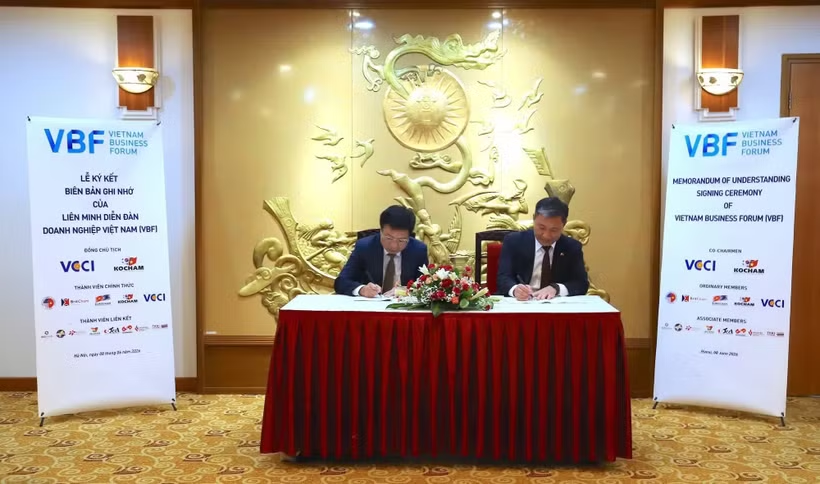
Hanoi (VNA) - The Vietnam Business Forum (VBF) has entered a new phase with the signing of a Memorandum of Understanding (MoU) for 2026–2030, adopting a streamlined alliance model to strengthen policy dialogue and improve its investment climate.
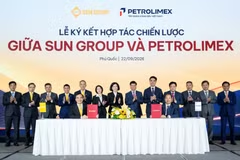
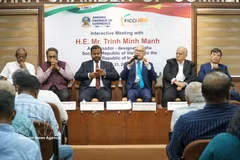
The MoU was signed on June 6 in the presence of the President of the Vietnam Chamber of Commerce and Industry (VCCI) Assoc. Prof. Dr. Ho Sy Hung, who serves as VBF Co-Chair representing the domestic business community, and Ko Tae Yeon, Chairman of the Korea Chamber of Business (KoCham) in Vietnam, VBF Co-Chair representing foreign-invested enterprises. Leaders of major business associations also attended the ceremony, including the American, British, European, and Japanese Chambers of Commerce.
Under the new governance structure, the VBF will operate as the VBF Alliance, with five core members comprising the VCCI, KoCham, AmCham, Britcham, and EuroCham. Seven associate members — the Australian Chamber of Commerce (AusCham), the Council of Taiwanese Chamber of Commerce in Vietnam (CTCVN), the Hong Kong Business Association in Vietnam (HKBAV), the JCCI, the Seoul Business Agency (SBA), the Singapore Chamber of Commerce Vietnam (SingCham) and the Thai Chamber of Commerce (ThaiCham) — will also participate. The new structure is designed to enhance operational efficiency while ensuring broad representation across industries and foreign business communities investing in Vietnam.
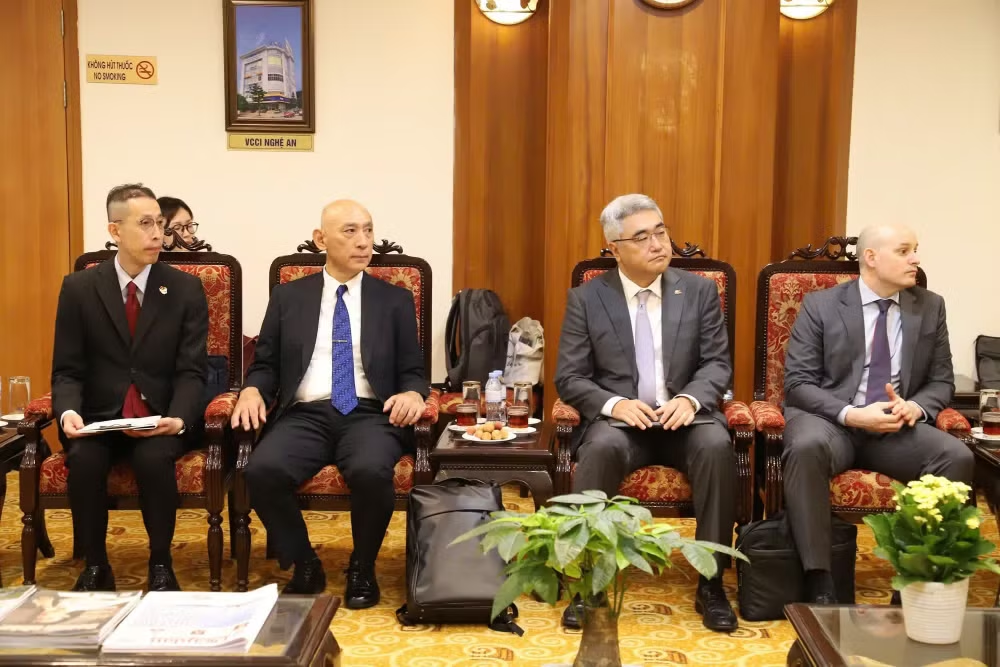
Addressing the event, EuroCham Chairman Gabor Fluit, a VBF Co-Chair, described the MoU as the beginning of a new chapter in cooperation between the foreign business community and the Vietnamese Government. He said the VBF secretariat will play a key role in bringing member associations together to build a stronger and more unified voice.
Established in 1997, the VBF has become Vietnam’s leading public-private dialogue platform, helping remove institutional bottlenecks. It has committed to focusing on key areas, including developing the International Financial Centre, promoting the digital economy, personal data protection, energy transition. The alliance model would strengthen coordination among member associations, enabling them to provide more practical, evidence-based policy recommendations to the Government and the National Assembly.
Joseph Uddo, Chairman of AmCham Vietnam, spoke highly of the close coordination between VCCI and foreign business associations, saying that effective information sharing and legal consultation at all policy levels are key to improving the business environment.
Hung said in the first half of 2026, the VCCI had prioritised institutional reform and investment promotion. Through policy recommendations submitted to the Government and the NA, VCCI contributed to reducing administrative procedures by 30% in April and May, helping ensure that newly issued regulations better reflected business realities.
Looking ahead, Hung said Vietnam's long-term growth strategy is built on comprehensive reforms and deeper international integration. In this process, foreign direct investment (FDI) and the development of domestic enterprises are complementary drivers of economic growth.
He noted that the Government's ongoing administrative restructuring from the central to local levels demonstrates its commitment to reform, while reaffirming the important role of FDI in achieving national development goals. Against this backdrop, he expressed confidence that the VBF will play an increasingly important role in supporting the Government's reform agenda.
Hung also called on VBF members to provide more practical and data-based policy analysis rather than broad recommendations. He cited difficulties in implementing regulations on import inspection as an example where detailed business feedback could help improve policymaking.
Another priority, he said, is integrating more Vietnamese enterprises into global supply chains. Referring to Nestlé's coffee supply chain model in Vietnam, he expressed hope that the VBF will propose practical solutions to enable more domestic firms to participate in multinational value chains. He added that policy recommendations from business associations will also help the Government respond more effectively to international trade investigations and safeguard the interests of both the country and businesses.
Representatives of BritCham, JCCI, HKBAV, SingCham and other foreign business associations reaffirmed their confidence in Vietnam as a promising investment destination despite global uncertainties. EuroCham also pledged continued support for Vietnam's development efforts.
Hung stressed that cooperation between the VCCI and the VBF should deliver practical outcomes through concrete actions that foster the development of Vietnam's business community in line with the Government's agenda./.