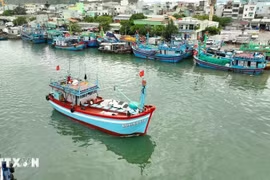
Hanoi (VNA) – Vietnam is ramping up efforts to have the European Commission (EC)’s “yellow card” warning against illegal, unreported and unregulated (IUU) fishing removed, describing the task as a top political priority that can no longer be delayed.
Eight years after the EC imposed the warning in 2017, the country has made significant progress, but challenges remain as it prepares to welcome an EC inspection team for the fifth time, expected in March 2026. The outcome of the visit is seen as decisive, potentially leading either to the removal of the yellow card or an escalation to a “red card”.
According to the Ministry of Agriculture and Environment, a comprehensive report on IUU prevention and control has been prepared, while inspection teams of relevant ministries and sectors have reviewed compliance in 18 coastal localities and will continue checks in the remaining areas.
Notably, 100% of eligible fishing vessels have been updated in the national fisheries database (VN-Fishbase). Authorities have also reviewed and publicly listed more than 19,000 deregistered vessels, while assigning local administrations to directly manage boats that do not meet operating conditions.
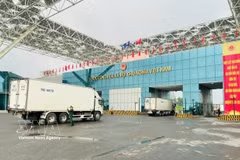
Efforts have been strengthened to monitor vessels through ports and border checkpoints using the electronic catch documentation and traceability system (eCDT), ensuring better control over seafood origin.
Despite these improvements, the Government acknowledged persistent shortcomings, including weak management of ineligible vessels, incomplete handling of violations and continued cases of Vietnamese boats encroaching on foreign waters. These gaps have prevented the country from having the warning lifted after four EC inspections.
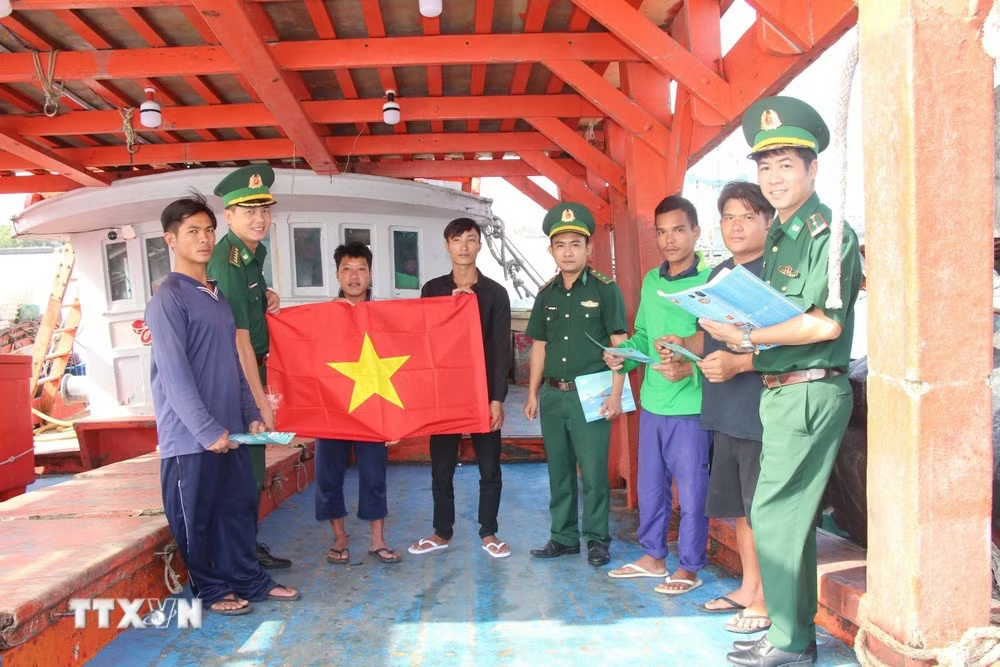
In a recent directive, the Prime Minister called on ministries, sectors and coastal localities to treat the issue as an urgent and critical task, mobilising maximum resources to implement 123 assigned measures across five key areas: legal framework, fleet management, vessel monitoring, catch traceability, and law enforcement.
Local authorities have been urged to take stronger action. During a working session in Ho Chi Minh City, Deputy Minister of Agriculture and Environment Phung Duc Tien stressed the need for strict enforcement, calling for violations to be handled “thoroughly and with heavy penalties” to deter repeat offences.
He noted that while the legal framework is largely complete, the main challenge lies in enforcement and closing existing loopholes.
Leaders of Ho Chi Minh City and other coastal provinces have pledged to tighten vessel management, improve data accuracy and strengthen traceability systems among seafood exporters. Increased patrols and stricter oversight aim to prevent new violations.
Vice Chairman of the Ho Chi Minh City People's Committee Hoang Nguyen Dinh requested departments and localities to continue reviewing all records to ensure accuracy and be ready to provide them to the EC’s inspection team. Processing enterprises must improve their traceability systems and internal control procedures, while task forces must strengthen patrols and manage fishing vessels that do not meet the regulations to prevent new violations, contributing to the efforts to lift the yellow card.
Other provinces, such as Nghe An and Quang Ninh, have also rolled out urgent action plans, emphasising clear responsibilities, timelines, and accountability in implementation.
Officials stressed that lifting the yellow card is not only a sectoral task but a shared responsibility of the entire political system, crucial to safeguarding Vietnam’s reputation and ensuring sustainable development of its fisheries sector./.