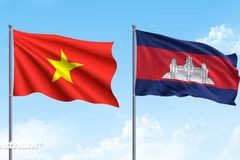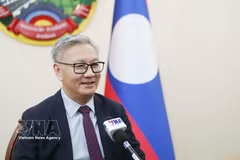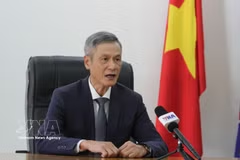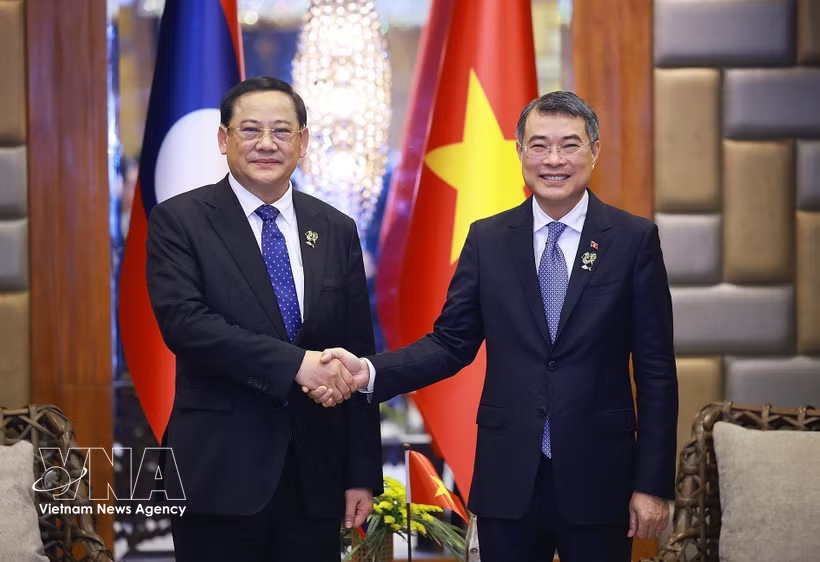
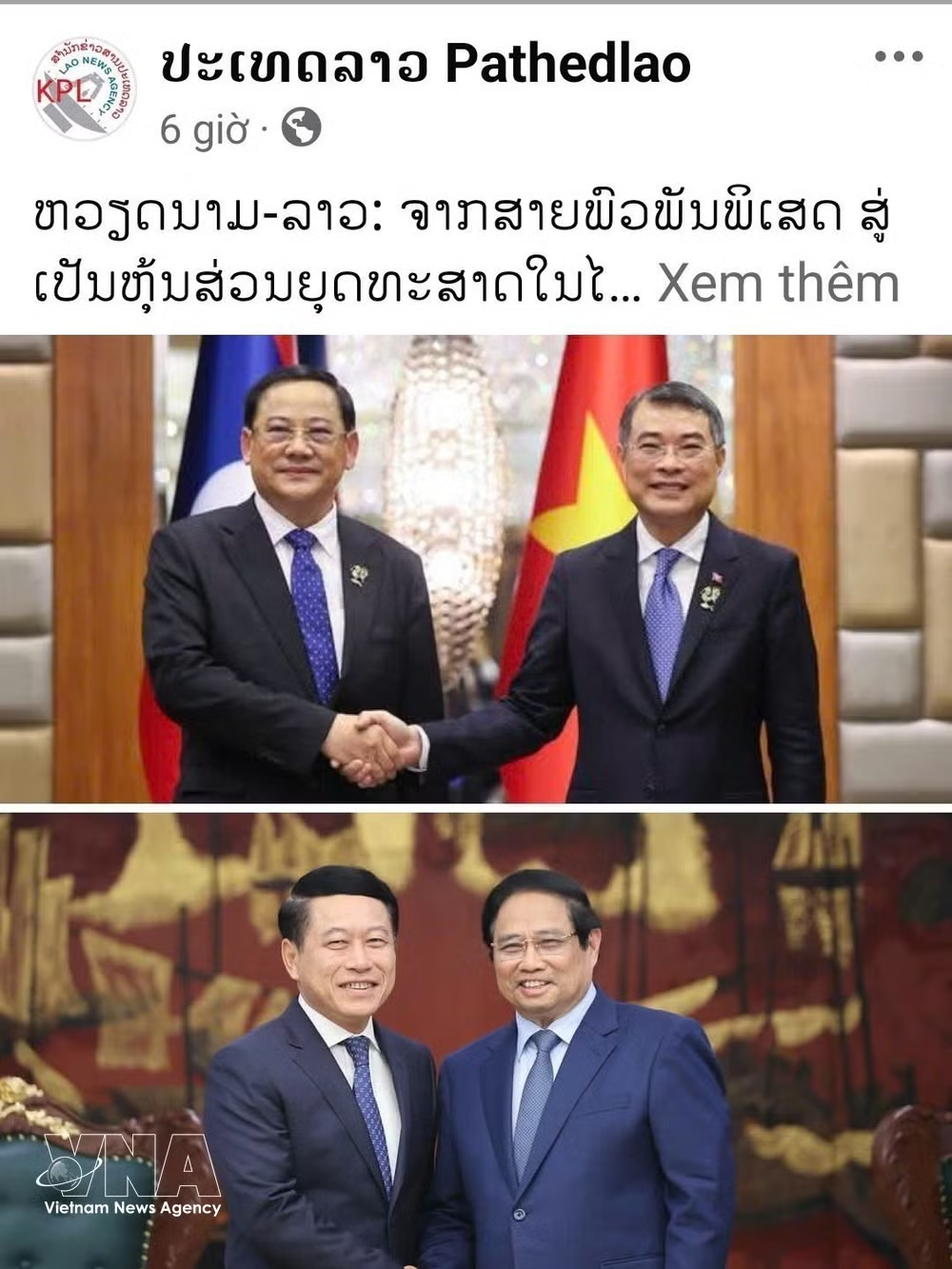
Vientiane (VNA) – Ahead of Vietnamese Prime Minister Le Minh Hung’s official visit to Laos on October 8-9, the Lao National News Agency (KPL) on October 7 published a front-page editorial highlighting the significance and importance of the special Vietnam–Laos relationship in the new era.
The editorial stressed that Laos and Vietnam are close neighbours with a special bond built, tested and strengthened through different periods of history. From standing side by side in the struggle for national independence to working together to build, safeguard and develop their countries today, the relationship has been continuously nurtured and has become a rare and special one in international relations.
As the two countries enter a new development period, their relationship has been elevated to a new level under the framework of “great friendship, special solidarity, comprehensive cooperation and strategic cohesion.” The addition of “strategic cohesion” reflects not only the long-standing foundation of bilateral ties but also a shared vision, closely linked interests and a common path for the two nations to advance together over the long term.
Vietnam–Laos relations are rooted in geographical proximity, historical and cultural similarities, and the shared struggle for independence and freedom. Under the leadership of President Ho Chi Minh, President Kaysone Phomvihane, President Souphanouvong and successive generations of revolutionary leaders, the solidarity between the two neighbouring countries was forged through years of hardship, when their people fought side by side, made sacrifices and supported each other for their common revolutionary cause.
On July 18, 1977, Laos and Vietnam signed the Treaty of Amity and Cooperation, laying an important political and legal foundation for the comprehensive development of bilateral relations in subsequent periods.
On that basis, political ties and mutual trust between the two Parties and States have continued to play a central role in guiding overall cooperation. High-level visits and meetings, exchanges of experience and bilateral cooperation mechanisms have been maintained regularly, while ties between their ministries, sectors and localities, particularly border provinces, have continued to expand and deepen.
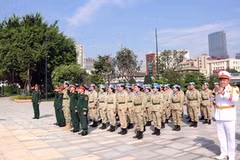
Defence and security cooperation remains an important pillar. The two sides have worked closely in border management and protection and in combating transnational crime, drug trafficking, human trafficking, smuggling, illegal entry and exit, and other non-traditional security challenges. Such cooperation has made an important contribution to building a Vietnam–Laos border of peace, stability, friendship, cooperation and development.
According to the editorial, a major milestone came in late 2025, when the two countries’ leaders agreed to elevate bilateral ties to “great friendship, special solidarity, comprehensive cooperation and strategic cohesion.”
“Strategic cohesion” is more than an addition to the name of the bilateral relationship. It reflects the need to deepen the connection between the two countries in terms of long-term development visions, strategic interests, security, economy and development space. The stability, security and development of one country will thus become increasingly linked to those of the other.
The two sides are expected not only to coordinate in addressing immediate issues but also to step up consultation and coordination in shaping and implementing long-term development policies, particularly particularly in areas with strategic interdependence.
The editorial said that in 2026, the two countries’ leaders have attached particular importance to concretise the content of “strategic cohesion” through the implementation of high-level agreements and the 2026-2030 Cooperation Plan, stronger strategic coordination between the two Parties and States, and closer links between the two economies and their development spaces.
In this context, transport and logistics connectivity is particularly important. Upgrading and building routes linking Laos with Vietnam and its seaports will facilitate bilateral trade while providing Laos with more routes to the sea, supporting its goal of moving from a landlocked country to a land-linked regional economy.
For Vietnam, such connectivity will expand economic space westward and strengthen links with Laos, Thailand and economic corridors across the Indochinese peninsula.
Therefore, “strategic cohesion” needs to be translated into concrete projects and practical benefits in transport, logistics, energy, trade and investment, as well as digital transformation, human resource development and cooperation in addressing cross-border security issues. The effectiveness of Vietnam–Laos relations in the new period will depend on how well high-level political agreements are turned into tangible results for the two countries' economies and people.
Alongside political, defence and security ties, economic cooperation is being promoted as an important driver for realising “strategic cohesion.” Cooperation now covers trade, investment, transport, energy, agriculture, tourism, finance and banking, and logistics.
Many Vietnamese businesses have invested, produced and operated in Laos, helping create jobs, raise incomes and support local socio-economic development. In the new period, the focus should not only be on increasing the number of projects or trade value, but also on improving quality, efficiency and complementarity between the two economies.
The editorial noted that if political ties provide strategic direction and economic cooperation serves as a driver of development, people-to-people exchanges form the social foundation for the sustainable vitality of Vietnam–Laos relations.
It concluded that rapid changes in the regional and global situation are creating both new opportunities and challenges for Laos and Vietnam. Global economic shifts, strategic competition, digital transformation, climate change, energy and water security, and transnational crime are having an increasing impact on the development environment of both countries.
This makes “strategic cohesion” even more important. Vietnam and Laos need not only to preserve their historic solidarity but also to strengthen their connection in shaping the future, on the basis of respect for each country’s independence, self-reliance and interests, as well as the shared interests of the two peoples./.