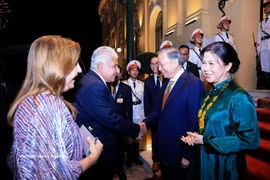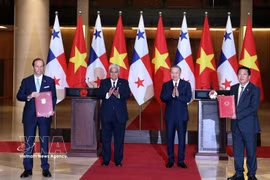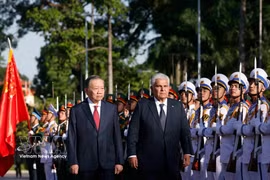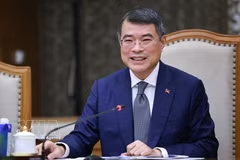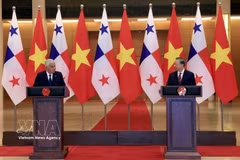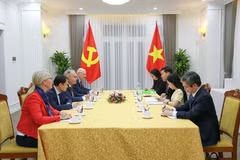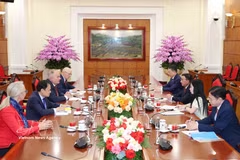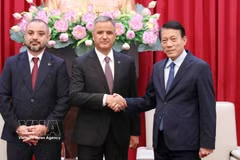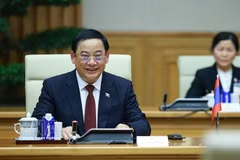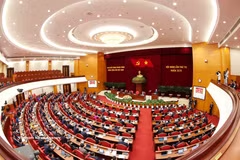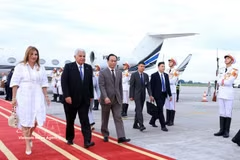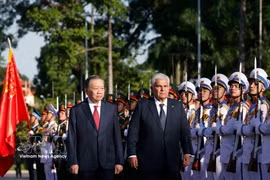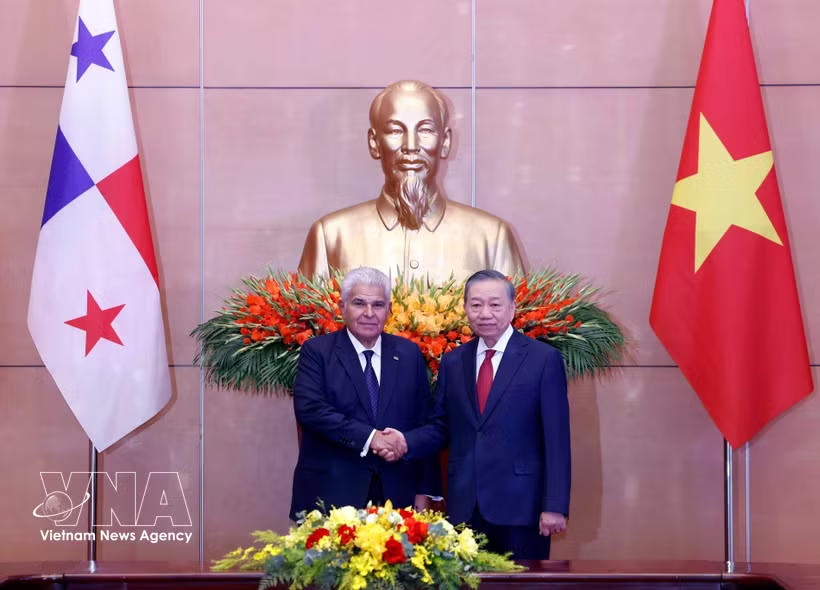
Hanoi (VNA) - General Secretary of the Communist Party of Vietnam Central Committee and President To Lam held talks with President of Panama José Raúl Mulino right after the welcome ceremony for the Panamanian leader in Hanoi on October 6.
General Secretary and President Lam underscored the significance of the visit, the first by a head of state between the two countries in 14 years, which comes after the 50th founding anniversary of bilateral diplomatic ties in 2025.
He briefed President Mulino on Vietnam's recent economic and diplomatic achievements and its development priorities, and said Vietnam always attaches importance to its traditional friendship with Panama as well as the country's strategic role and standing in the region and the world.
With its dynamic economy, Panama Canal and regional-scale maritime, aviation, logistics and financial hubs, Panama can join Vietnam in acting as gateways for trade and logistics between Southeast Asia and Latin America, the top Vietnamese leader said.
General Secretary and President Lam believed that the two countries will continue tapping their potential for cooperation in trade, agriculture, maritime affairs, aviation, logistics and digital transformation, thus making bilateral ties more substantive, effective and sustainable for the benefit of their people and contributing to peace, cooperation and development in both regions.
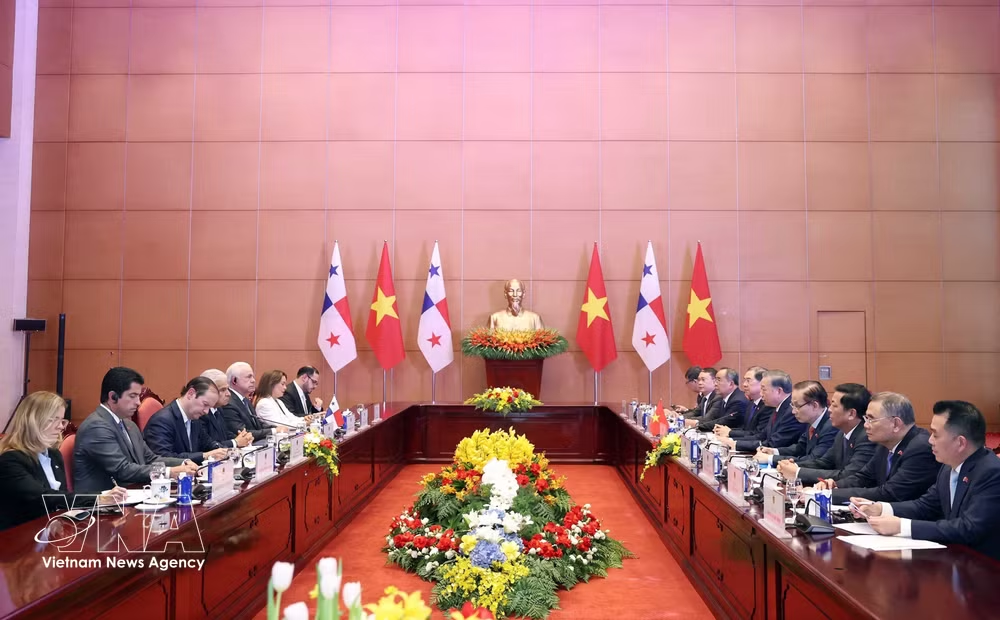
President Mulino, for his part, thanked Vietnam for being the first country to sign the Protocol to the Treaty Concerning the Permanent Neutrality and Operation of the Panama Canal in 1979. He congratulated Vietnam on its achievements of more than 40 years of Doi Moi (Renewal), and said Panama regards Vietnam as a top priority partner in the Asia-Pacific and stands ready to serve as a gateway connecting Vietnam with Latin American economies.
Both leaders welcomed the progress in the bilateral relationship in recent years and stressed that there is still broad room for cooperation and complementarity, particularly in the fields of economy, trade and investment. They held extensive discussions on strategic directions to make the ties deeper and more effective in practice.
They agreed to step up the exchange of delegations at all levels through Party, State, parliamentary and people-to-people channels, strengthen diplomatic and consular presence in each country, and make regular and effective use of existing dialogue and cooperation mechanisms, including political consultations and the Joint Commission for Economic, Trade and Investment Cooperation. They also expressed their readiness to back each other in building ties with organisations of which they are members, particularly the Association of Southeast Asian Nations (ASEAN) and the Community of Latin American and Caribbean States (CELAC).
The two sides agreed to expand cooperation in agriculture, telecommunications, infrastructure, transport, port logistics, banking, tourism, culture, education and people-to-people exchanges. They concurred to enhance experience sharing and cooperation in sustainable agricultural development, including opening their respective markets to agricultural products from the two countries.
They consented to promote cooperation and connectivity between localities of the two countries, including Ho Chi Minh City and Panama City, to share experience and support each other in developing financial centres linked with seaports, logistics and bonded warehouses.
The two leaders also shared the need to strengthen cooperation in security and law enforcement and the prevention and combat of transnational crime, thereby creating a solid foundation for expanding bilateral cooperation and exchanges across various fields.
Regarding multilateral cooperation, the two sides agreed to continue coordinating and supporting each other at international organisations and multilateral forums, and to exchange views on regional and international issues of shared concern. They underscored the importance of the principles of international law and the United Nations Charter, and expressed support for maintaining freedom and safety of navigation and overflight and for settling disputes by peaceful means in accordance with international law, particularly the UN Charter and the 1982 United Nations Convention on the Law of the Sea (UNCLOS).
President Mulino took this occasion to extend an invitation to General Secretary and President Lam to pay a state visit to Panama, creating a new historic milestone in the bilateral relations. The Vietnamese leader thanked the Panamanian President for the invitation, expressed his wish to visit Panama, and asked the Ministries of Foreign Affairs of the two countries to arrange the visit at a suitable time.
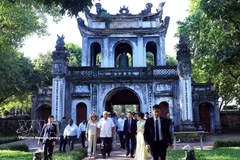
Earlier the same day, the high-level delegation of the Panamanian Government, led by President Mulino and his spouse, laid wreaths at the Monument to Heroes and Martyrs and the Ho Chi Minh Mausoleum, and met with leaders of Vietnamese enterprises operating in the maritime transport sector./.