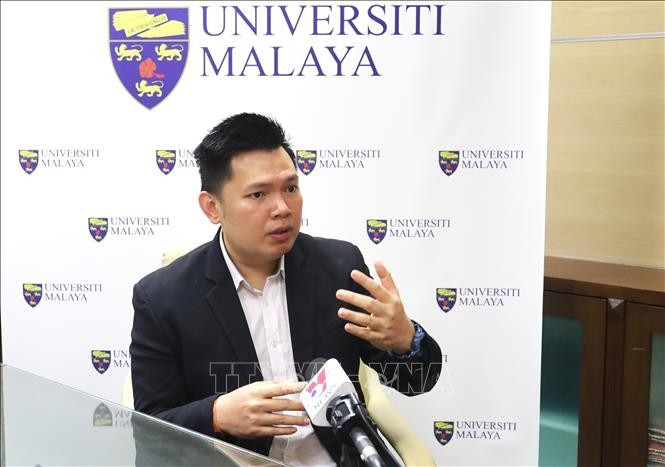
Kuala Lumpur (VNA) - The signing of the comprehensive strategic partnership in November 2024 has opened up significant opportunities for Vietnam and Malaysia to enhance cooperation across emerging sectors such as green transition, security, and the digital economy, stated Collins Chong Yew Keat, a foreign policy and security expert at the University of Malaya.
In an interview with the Vietnam News Agency’s correspondent in Kuala Lumpur, Collins said that Prime Minister Pham Minh Chinh’s recent visit to Malaysia had further consolidated the two countries’ growing cooperation.
According to Collins, bilateral trade has seen substantial growth, rising from 8 billion USD in 2015 to 14.2 billion USD in 2024, with key exports including electronics, petroleum, and rubber. However, he noted that both nations should better leverage their participation in the Regional Comprehensive Economic Partnership (RCEP) and the Comprehensive and Progressive Agreement for Trans-Pacific Partnership (CPTPP). He proposed that Vietnam and Malaysia consider establishing mutual recognition of industrial standards, cutting down trade barriers and customs procedures to reduce costs and boost collaboration among export businesses.
In the semiconductor sector, Collins observed that the two countries can be highly complementary. Malaysia, a long-standing regional hub for semiconductor production, is the world’s sixth-largest exporter of semiconductors and accounts for 13% of the global market in chip testing and packaging. Meanwhile, Vietnam is emerging as an attractive destination for investors thanks to its abundant and high-quality workforce.
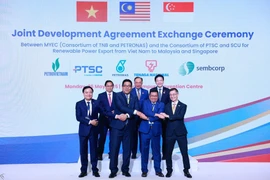
He noted that Malaysia is eager to cooperate with Vietnam in this area, given the unique strengths of each country. Beyond bilateral ties, he also suggested that Malaysia and Vietnam deepen collaboration with other ASEAN members in a spirit of solidarity and joint development to fully harness the region’s potential. With both countries committed to reducing greenhouse gas emissions, Collins identified energy cooperation and green transition as a strategic priority, particularly in the areas of energy security and renewable energy development. As ASEAN Chair, Malaysia has launched an agenda promoting a Just Energy Transition (JET), aimed at shifting from fossil fuels to clean, low-carbon energy sources while ensuring an inclusive transition that leaves no one behind. Vietnam, with its growing role in ASEAN, is poised to become a key partner for Malaysia in this field, he held.
On defence, Vietnam and Malaysia renewed a Memorandum of Understanding in 2023 aimed at enhancing communication and joint activities. Despite maintaining neutrality and non-alignment, both countries are encouraged to increase cooperation in addressing traditional and non-traditional security threats.
Agriculture and Halal products also offer promising avenues. Vietnam is seeking Halal certification for its exports from Malaysia’s JAKIM to access the 3-trillion-USD global Halal market. Malaysia, in turn, relies heavily on imported rice and views Vietnam—a top rice exporter—as a key partner for food security. Commitments in long-term rice supply and Halal support could further boost bilateral trade.
In labour and education, Collins called for mutual recognition of Technical and Vocational Education and Training (TVET) qualifications to facilitate workforce development and technology adoption. He also urged closer collaboration between universities and research institutes to strengthen education, science, and innovation ties.
Tourism, a major contributor to both economies, also holds untapped potential. Collins recommended expanding sister city partnerships, promoting tourism campaigns, and leveraging digital marketing to increase visitor flows.
Vietnam and Malaysia are among the region’s fastest-growing e-commerce markets, but gaps remain in data governance standards. The expert advocated greater dialogue between regulators and businesses to share best practices, enhance technology transfer, and align digital strategies.
Multilateral cooperation and stable supply chains are key to deeper integration into Indo-Pacific production networks. Collins suggested tapping funding from Malaysia’s Khazanah Nasional and Vietnam’s State Capital Investment Corporation (SCIC) to support startups in sectors like green transition and digital innovation, he said.
He concluded that by translating their Comprehensive Strategic Partnership, established last year, into concrete initiatives - from semiconductors and clean energy to Halal trade and digital connectivity - Vietnam and Malaysia could drive regional growth, reinforce ASEAN centrality, and advance shared peace and prosperity./.
VNA