30 years of Vietnam-Ireland ties: Young people leave lasting mark

Today marks the 30th anniversary of diplomatic relations between Vietnam and Ireland (April 5, 1996-2026), opening a new chapter of meaningful cooperation and development between the two countries.

Hanoi (VNA) - Today marks the 30th anniversary of diplomatic relations between Vietnam and Ireland (April 5, 1996-2026), opening a new chapter of meaningful cooperation and development between the two countries.

Since establishing diplomatic ties in 1996, the two countries have steadily deepened their partnership. Milestones such as Ireland's opening of its embassy in Hanoi in 2005, Party General Secretary To Lam's visit to Ireland in 2024, and the inauguration of Vietnam's Embassy in Dublin on March 26, 2026, have strengthened political relations while expanding cooperation in many fields.

Vietnamese students in Ireland have bridged geographical distance through education, cultural exchange and personal experience, becoming an important link between the two nations.

Education has long been a cornerstone of the Vietnam-Ireland cooperation. As both countries place innovation, science and technology at the heart of development, investing in high-quality human resources has become a long-term strategic priority.

Within this framework, Vietnamese students in Ireland have emerged as important contributors, not through numbers alone but through the knowledge they acquire and the impact they create.
screenshot-2026-04-05-103323png-2.jpg
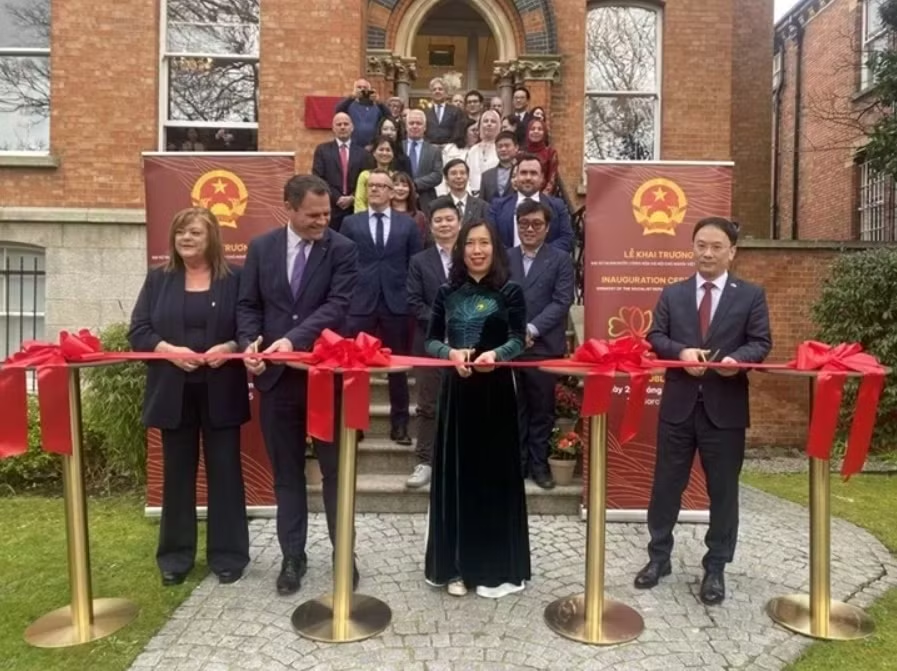
Deputy Minister of Foreign Affairs Le Thi Thu Hang, Neale Richmond (far left), Ireland's Minister of State for International Development and Diaspora at the Department of Foreign Affairs and Trade, and Vietnamese Ambassador to Ireland Pham Toan Thang cut the ribbon at the inauguration of the Embassy of Vietnam in Ireland. (Photo: VietnamPlus)

Supported by Irish Government scholarships and opportunities at leading universities, Vietnamese students are studying in fields ranging from information technology and sustainable development to healthcare and life sciences. Many have participated in internationally recognised research projects and practical innovations with global applications.

Between 2020 and 2024, Vietnamese applicants consistently secured 10 of the 60 annual Government of Ireland International Education Scholarships worldwide. In 2025, that number rose to 17. Each year, another 10-15 Vietnamese students receive awards under the Irish Fellowship Programme, while many others earn scholarships from Irish universities.

Beyond their academic achievements, many graduates have gone on to work for multinational technology companies such as Meta and Google, contributing to the global innovation ecosystem. Others have returned to Vietnam, bringing international expertise to business, academia and public policy.
vnp-ireland2jpgavif.jpg
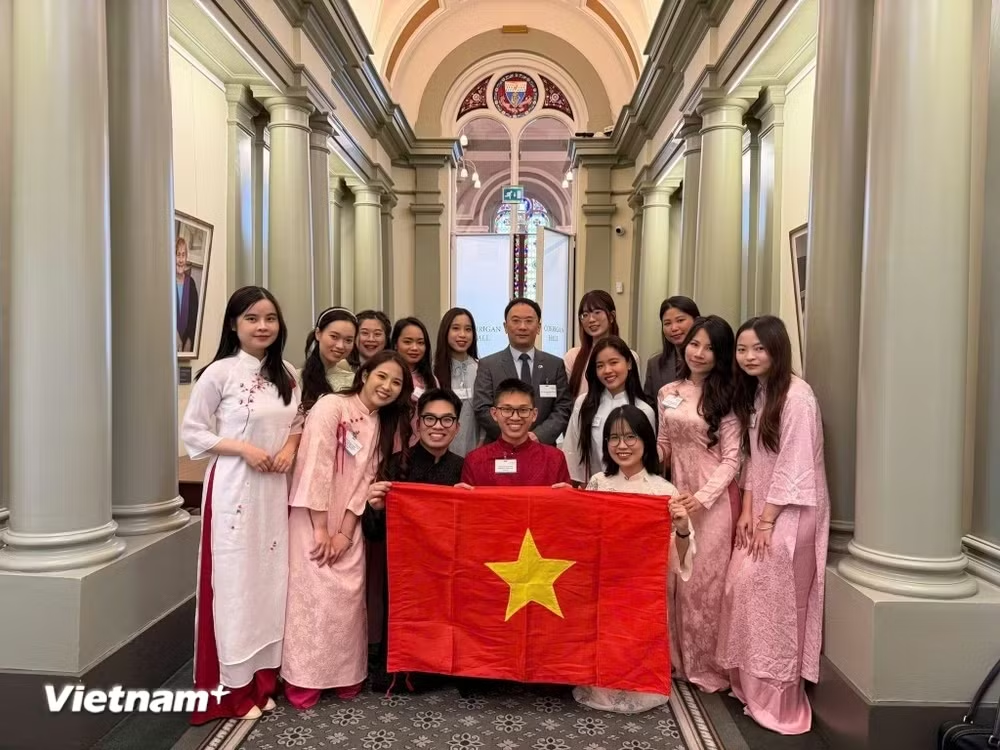
Recipients of the Government of Ireland Scholarship and Vietnamese Ambassador to Ireland Pham Toan Thang. (Photo: VietnamPlus)

In both directions, they are creating enduring channels for knowledge exchange between Vietnam and Ireland.

According to Irish Ambassador to Vietnam Deirdre Ní Fhallúin, Ireland has awarded more than 360 fully funded scholarships to Vietnamese students since 2007. Many alumni have returned to make significant contributions in business, healthcare and government. She said she believes people-to-people exchanges will remain key to advancing bilateral ties, as young people from both countries become increasingly interested in each other's cultures through education, tourism and business.

A new generation is therefore emerging as an important force in people-to-people diplomacy. They are helping create new opportunities for cooperation in education, culture and the economy while raising Vietnam's profile in Ireland.

Their contributions also reflect the spirit of the Politburo's Resolution No. 59-NQ/TW on international integration in the new context, which calls for stronger coordination across Party diplomacy, state diplomacy and people-to-people exchanges. Through their academic achievements, Vietnamese students are helping strengthen Vietnam's international standing and support national development.

In recent years, Vietnamese students have become increasingly active in cultural events across Ireland, serving as informal ambassadors for their country.
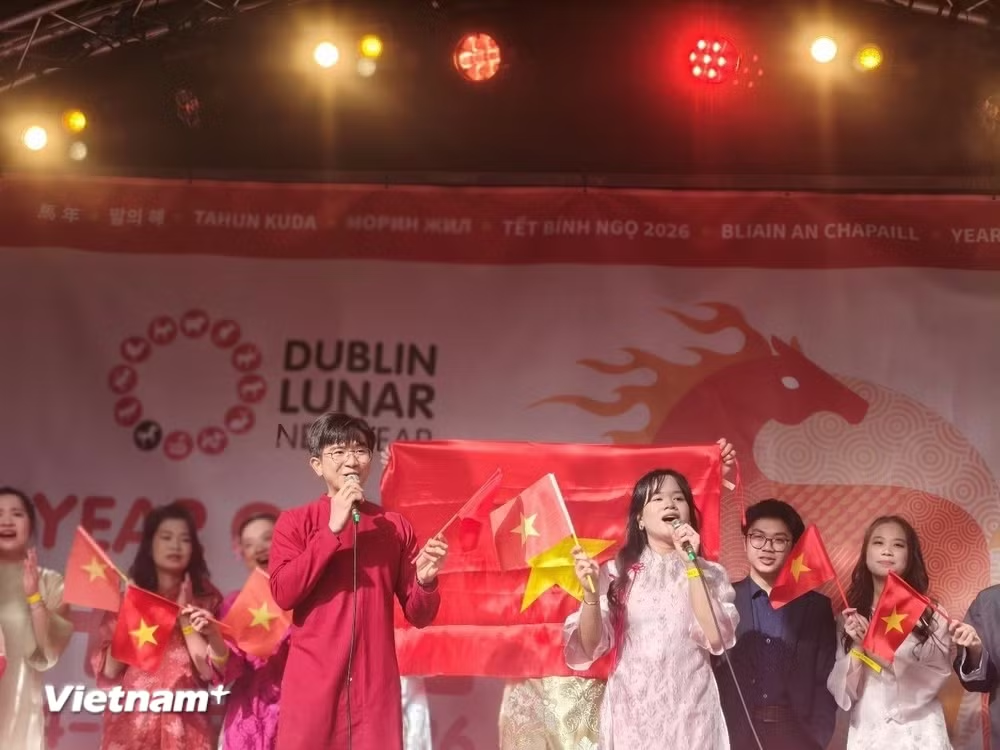
vnp-irelandjpgavif.jpg
A cultural performance by the Vietnamese Students' Association at the Dublin Lunar New Year 2026 celebration. (Photo: Collaborator/Vietnam+)

They have taken part in Dublin's Lunar New Year celebrations organised by the city council and helped stage the first "Homeland Spring" programme in Ireland, introducing international audiences to Vietnamese traditional dress, music and cuisine.

Vietnamese students have also participated in major diplomatic events, including welcoming Party General Secretary To Lam during his visit to Ireland in October 2024 and attending the inauguration of Vietnam's Embassy in Dublin in March 2026.

Representatives of the Vietnamese Students' Association in Ireland have also expressed their commitment to strengthening support for the Vietnamese community while building closer links with student organisations in Vietnam.
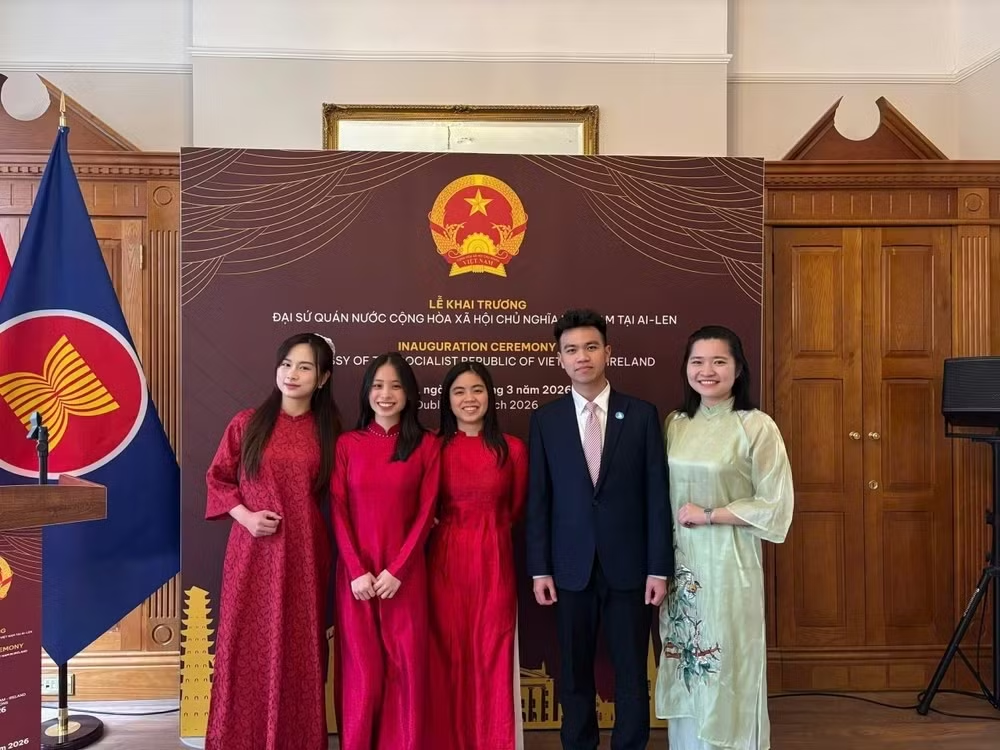
z7691077355528-e76a0059739df4cdd.jpg
The Executive Committee of the Vietnamese Students' Association in Ireland attends the inauguration of the Embassy of Vietnam in Ireland. (Photo: Collaborator/VietnamPlus)

As students, organisers and connectors, young Vietnamese in Ireland are helping shape the next chapter of bilateral relations.

Armed with knowledge, global perspectives and a strong sense of cultural identity, they are becoming effective ambassadors for Vietnam, promoting the country's heritage while strengthening mutual understanding and friendship between the two nations./.
See more

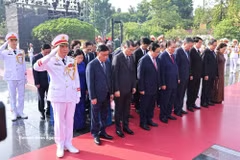
Incumbent and former leaders of the Party and the State pay tribute to fallen soldiers at the Monument to Heroic Martyrs on Bac Son street in Hanoi. (Photo: VNA)

Party and State leaders pay tribute to heroic martyrs, President Ho Chi Minh

Over the past 79 years, the Party, the State, and the people of Vietnam have always paid attention to and cared for those who have contributed to the revolution and the families of martyrs, thereby spreading the traditional values ​​and good morals of the nation, expressing the gratitude of the entire political system with all their hearts and the highest responsibility, contributing to improving the material and spiritual lives of policy beneficiaries, and creating great spiritual motivation for the cause of national construction and protection.

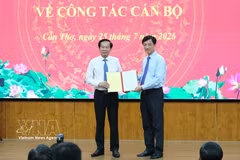
Head of the Party Central Committee's Organisation Commission Nguyen Duy Ngoc presents the Politburo's decision to Do Thanh Binh (left) (Photo: VNA)

Do Thanh Binh named Secretary of Can Tho municipal Party Committee

Under the decision, the Politburo relieved Binh, member of the Party Central Committee, of his roles as deputy head of the Party Central Committee's Organisation Commission, member of the Government Party Committee’s standing board, and relevant positions. He was appointed to the standing board of the Can Tho Party Committee.

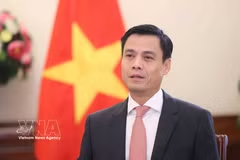
Deputy Minister of Foreign Affairs Dang Hoang Giang (Photo: VNA)

Vietnam leaves lasting imprint at AMM-59: Deputy FM

The Vietnamese delegation led by Foreign Minister Le Hoai Trung embodied the foreign policy line of the 14th National Party Congress by acting proactively, responsibly and with leadership inside ASEAN.

Illustrative photo (Source: baochinhphu.vn)

Guidelines issued for Apostille certification of Vietnamese public documents

Decree No. 293/2026/ND-CP dated July 23, 2026 stipulates the authority, procedures, and processes for issuing Apostille certifications to Vietnamese public documents; the receipt and use in Vietnam of public documents certified by Apostille member states; the verification of such certifications and state management of the implementation of the convention.

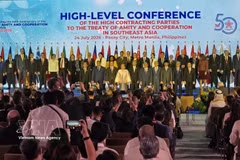
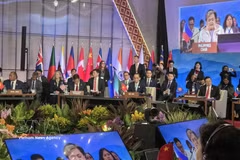
Officials pose for a group photo at the high-level conference of the TAC High Contracting Parties in Manila, the Philippines, on July 24, 2026. (Photo: VNA)

Vietnam attends celebration of TAC’s 50th anniversary in Philippines

In a discussion on enhancing maritime security and cooperation, the Vietnamese delegation underscored that the TAC's principles serve as a "foundational code of conduct" guiding relations among countries amid profound global changes, rising geopolitical tensions, mounting challenges to international law and the erosion of multilateralism.

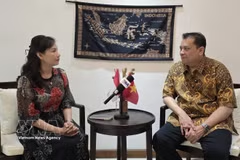
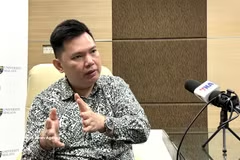
Collins Chong Yew Keat, a foreign affairs, security and strategy analyst at the University of Malaya, in an interview granted to the Vietnam News Agency (VNA)'s correspondents in Malaysia. (Photo: VNA)

Vietnam emerges as key force shaping ASEAN’s future: Malaysian expert

Amid growing geopolitical shifts that pose increasing challenges to intra-ASEAN consensus, Vietnam’s capacity to build workable common platforms has become more important than ever, particularly as Vietnam serves as a bridge among members at different levels of development and countries with differing strategic relationships with major powers, said Collins Chong Yew Keat, a foreign affairs, security and strategy analyst at the University of Malaya.

Minister of Foreign Affairs Le Hoai Trung attends the 33rd ASEAN Regional Forum (ARF-33). (Illustrative photo: VNA)

Vietnam, ASEAN continue to strengthen foundations of regional peace

ASEAN Secretary-General Kao Kim Hourn has described Vietnam as an important and constructive member of ASEAN over the past three decades, highlighting its significant contributions to the political-security, economic and socio-cultural pillars. He expressed confidence that Vietnam will continue playing an active role in advancing the ASEAN Community Vision 2045.

Local residents conduct procedures at the Public Administrative Service Centre of Vinh Yen ward, Phu Tho province. (Photo: VNA)

📝 OP-ED: Indicators of success in streamlining State apparatus

More than a year after Vietnam embarked on its sweeping administrative restructuring, the country's governance system has undergone significant changes. The administrative apparatus at all levels has been streamlined, intermediate layers reduced, and the functions, responsibilities and authority of state agencies gradually clarified. Greater decentralisation has also strengthened the role of grassroots authorities.