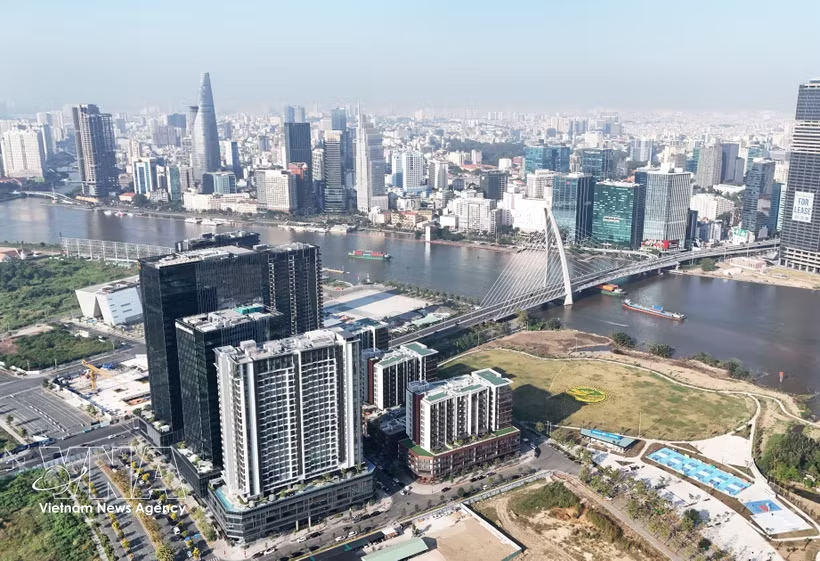
Hanoi (VNA) - As Vietnam’s largest credit market, Ho Chi Minh City is looking to the banking sector to continue playing a pivotal role in channeling capital into production, infrastructure, technology and green growth, helping the southern economic hub achieve its long-term development goals.
A credit growth target of around 15% in 2026 is regarded as one of the key drivers enabling the city to pursue double-digit economic expansion in the years ahead.
At a recent seminar, Vo Minh Tuan, Director of the State Bank of Vietnam’s Region 2 Branch, said the banking sector had been tasked with expanding credit by approximately 15% this year, equivalent to an additional 781 trillion VND (nearly 30 billion USD) injected into the economy.
According to Tuan, the target represents a major challenge as the city accelerates efforts to achieve ambitious growth objectives, but it also reflects the banking sector’s responsibility in supporting local socio-economic development.
Chairman of the municipal People’s Committee Nguyen Van Duoc said Ho Chi Minh City is mobilising resources for breakthrough sectors capable of generating sustained growth momentum. These include transport infrastructure, seaports, logistics, free trade zones, high-tech industries, green growth, semiconductor manufacturing and the development of an international financial centre.
The city is also stepping up efforts to resolve long-delayed and stalled projects, aiming to clear all outstanding cases in 2026 in order to unlock investment flows and create additional room for economic expansion.
Governor of the State Bank of Vietnam Pham Duc An described double-digit growth during the 2026–2030 period as both a development objective and an aspiration for Ho Chi Minh City. Achieving that goal will require the mobilisation of multiple resources, with bank credit remaining one of the most important, he said.
The governor urged commercial banks to maintain prudent funding structures and avoid unhealthy competition in deposit interest rates. At the same time, he said banks should act as an effective filter for the economy by directing capital towards viable projects and prioritising green growth, digital economy, innovation and high-value-added industries.
Beyond ensuring adequate capital supply, credit institutions are also proposing measures to improve the efficiency of capital allocation and help build a modern financial ecosystem to support the city’s development.
Phung Thi Binh, Deputy General Director of the Vietnam Bank for Agriculture and Rural Development (Agribank), said that following restructuring efforts, Agribank’s total capital mobilisation and outstanding loans in Ho Chi Minh City have reached nearly 500 trillion VND.
Notably, the bank still has around 100 trillion VND available for participation in the city’s socio-economic development programmes.
Tu Tien Phat, General Director of the Asia Commercial Joint Stock Bank (ACB), stressed the need to move beyond the traditional role of simply providing credit and focus on improving resource allocation through modern financial models.
Alongside conventional lending, he said, greater emphasis should be placed on supply chain financing, trade finance and the use of digital data in credit assessment. Technology and data-driven solutions can help businesses, particularly small and medium-sized enterprises, gain easier access to capital while improving productivity and the overall efficiency of the economy.
According to experts, Ho Chi Minh City should continue developing its capital market, specialised financial institutions and advanced financial products to complement bank lending and reduce dependence on traditional credit sources.
As the city advances plans to boost the development of the Vietnam International Financial Centre and a free trade zone, the banking sector is expected to remain at the forefront of digital transformation, promoting cashless payments, digital banking and other modern financial services that will support sustainable economic growth./.