Decoding Vietnam’s Internet speed surge

Vietnam’s 10th-place ranking therefore means more than just a high position at the global table. It represents an essential prerequisite for the development of digital services that the country is targeting in its next phase of growth.

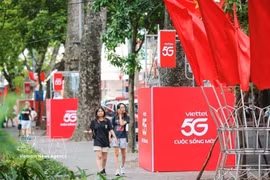
Illustrative image (Source: VietnamPlus)

Hanoi (VNA) – In less than two years, Vietnam’s mobile Internet speed has risen from around 87 Mbps to more than 205 Mbps, placing the country among the world’s 10 fastest for the first time in both mobile and fixed broadband categories. The biggest driver behind this achievement has been the nationwide rollout of 5G networks.

Strong growth

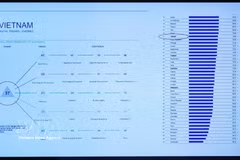
The latest rankings put Vietnam ahead of several leading technology economies. In the mobile broadband rankings, Vietnam, at 10th place, is ahead of the US (12th) and China (13th). In fixed broadband, Vietnam’s speed of 307.11 Mbps is 2.4 times the global median, placing it second only to Singapore, the world’s fastest, at 451.14 Mbps. Vietnam has come a long way to reach this position.

At the end of 2015, when 2G networks were still widely used and 3G was only beginning to be rolled out, Vietnam’s average Internet speed, as recorded by Akamai Technologies, stood at just 3.8 Mbps. The country ranked 95th among more than 100 markets measured, near the bottom of the global rankings. For many years thereafter, during the 3G and 4G eras, Vietnam’s mobile download speeds hovered around 35-50 Mbps, placing it between 50th and 58th worldwide, with little progress.

The turning point came with the commercial launch of 5G in late 2024, when Vietnam rose to 37th place globally for the first time. The upward momentum continued. By March 2025, the country had entered the world’s 20 fastest markets for the first time.

Just over a year later, according to Ookla’s Speedtest Global Index for July 2026, Vietnam climbed another 10 places to rank 10th worldwide for mobile Internet, with a median download speed of 205.58 Mbps, nearly double the global median of 109.73 Mbps. Fixed broadband followed a similar trajectory, rising one place to seventh globally, with speeds almost doubling in just 18 months.

In other words, Vietnam’s journey from near the bottom of the rankings in the 2G and 3G era to the global top 10 has spanned three generations of network technology over roughly a decade.

By March, 4G infrastructure covered 99.48% of the population, providing the foundation for the entire upgrade process. The country had 22.41 million 5G subscriptions, indicating that the technology had moved beyond the trial stage and into widespread adoption.

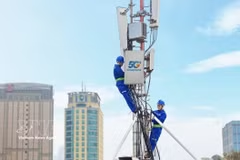
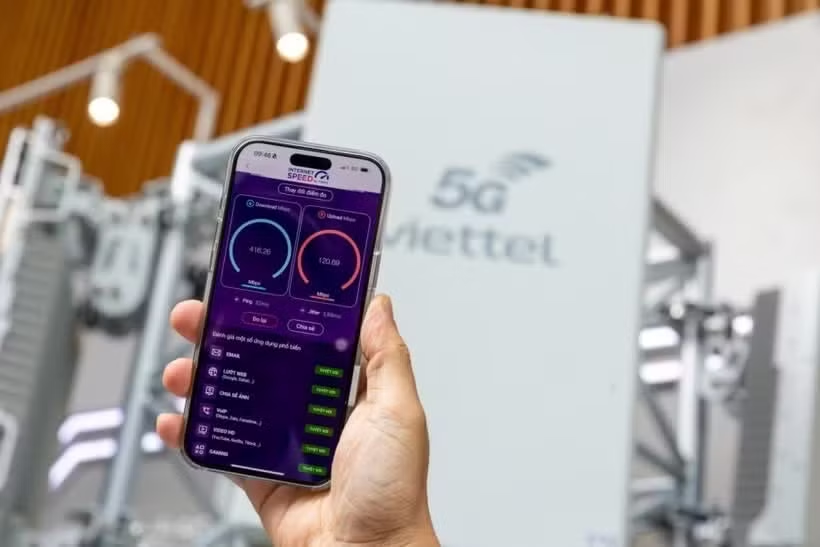
Against this backdrop, Viettel has played the leading role in the rollout. On October 15, 2024, the group launched Vietnam’s first commercial 5G network, with 6,500 base stations. In 2025 alone, it installed an additional 23,500 stations, bringing the total in operation to 30,000. This delivered outdoor coverage of 90% and indoor coverage of 70% nationwide, placing Viettel among the world’s 15 largest operators by number of 5G base stations in 2025.

The momentum continues

On September 15, 2026, Vietnamese telecom operators officially switched off 2G networks nationwide. The spectrum previously used for 2G is now being repurposed for 4G and 5G technologies, providing a further boost to Internet speeds in Vietnam in the coming period.

The benefits of this change can be anticipated from the physical properties of low-band 900 MHz radio waves, which travel long distances and penetrate obstacles. In rural areas, a single 900 MHz base station can provide coverage within a radius of 5-10 km, many times wider than that offered by higher-frequency bands. In densely populated urban areas, 900 MHz signals can penetrate basements, lifts and rooms deep inside high-rise buildings.

With the newly available spectrum, Viettel now has access to all three frequency layers: the low bands of 700 MHz and 900 MHz for broad coverage, and mid- and high-frequency bands for capacity in areas with heavy user demand. This allows the operator to deploy the most suitable frequencies for different types of terrain.

Viettel has set a target of around 50,000 5G base station sites in 2026, with coverage reaching 97% of the population.

This target is part of the telecommunications sector’s broader development roadmap. According to the Telecommunications Authority, mobile Internet speeds are expected to reach 170 Mbps and fixed broadband speeds 300 Mbps in 2026, with 5G coverage extending to 99% of the population and 40% of people having access to 1 Gbps broadband. Looking further ahead, Politburo Resolution 57 sets the goal of nationwide 5G coverage by 2030, built on ultra-broadband infrastructure.

Internet speed is now seen as an indicator of the digital competitiveness of the entire economy and a foundational infrastructure for smart factories, telemedicine, artificial intelligence and the Internet of Things. Vietnam’s 10th-place ranking therefore means more than just a high position at the global table. It represents an essential prerequisite for the development of digital services that the country is targeting in its next phase of growth.

Most importantly, Vietnam’s Internet speed surge is far from over./.

VNA

See more

Deputy Prime Minister Ho Quoc Dung, together with Government leaders, representatives of the Ministry of Science and Technology and CMC Technology Group, performs the official launch ceremony of the Clex legal AI platform. (Photo courtesy of the company)

Vietnamese-made legal AI platform Clex launched

Clex was researched and developed by CMC based on a large language model specialising in Vietnamese law, which was trained and fine-tuned on a knowledge base comprising more than two million legal documents.

The VGC v1.0 security chip, designed and developed by Vietnam (Photo: VNA)

Vietnam builds initial semiconductor foundation

Experts said the first step is not another broad strategy but a hard-headed audit of what Vietnam can actually do and a clear-eyed map of its advantages, technology gaps and opportunities in the global value chain.

The inauguration ceremony of the ASEAN-China Health Exchange and Cooperation Centre in Chongqing. (Photo: VNA)

Vietnam proposes stronger ASEAN-China cooperation in AI

For Vietnam, AI-driven transformation is both a strategic opportunity and an inevitable requirement for development. Science, technology and innovation are becoming key drivers of growth, productivity and competitiveness, said Deputy Minister of Foreign Affairs Nguyen Manh Cuong.

Assembling electronic components on the production line of Bao Sen Co., Ltd in Bac Ninh City. (Photo: VNA)

Vietnam builds technological capacity in digital era

As science, technology and digital transformation become increasingly integrated into production, governance and daily life, they can help create new drivers of growth and advance the development goals set out in the resolution.

The beauty of Dong Van Karst Plateau (Photo: VNA)

Vietnam tourism’s competitive future runs on digitalisation

The Vietnam National Authority of Tourism (VNAT) reported that Vietnam drew about 19.5 million foreign arrivals in the first 10 months of 2026, up 13.8% from a year earlier. That growth, along with changing consumer behavior, is forcing travel companies to rethink sales, service quality and how they mine customer data.

Visitors at the exhibtion held within the framework of the 16th Business of IP Asia Forum. (Photo: VNA)

Vietnam promotes innovation links at Hong Kong Entrepreneur Day 2026

Van expressed her hope that the NIC would serve as a bridge to encourage businesses and major corporations from the GBA to invest in Vietnam and transfer innovative technologies, particularly in artificial intelligence (AI), green transition and financial technology (FinTech).

Karnataka Chief Minister D.K. Shivakumar speaks positively about cooperation prospects and expresses hope that more Vietnamese businesses will invest in the Indian state. (Photo: VNA)

Vietnam, India's Karnataka boost science, technology cooperation

The ambassador highlighted the complementary strengths of Vietnam and the Indian state, home to the country's Silicon Valley, and significant potential for cooperation in artificial intelligence (AI), semiconductors, digital technology, and research and development.

Delegates pose for a group photo at the Bengaluru Tech Summit 2026 in Karnataka, India (Photo: VNA)

Vietnam attends annual int’l tech summit in India

Vietnam's growing focus on science and technology, digital transformation and innovation as new drivers of development made India a natural partner in achieving its development and digital transformation goals. Cooperation potential between the two countries remains substantial, spanning both hardware and software.

Vietnamese Deputy Minister of Science and Technology Tran Trung Tinh speaks at the event. (Photo: Published by VNA)

Vietnam, RoK seek to expand cooperation in AI and semiconductor sectors

Vietnamese Deputy Minister of Science and Technology Tran Trung Tinh stressed that the Politburo's Resolution No. 57-NQ/TW identifies science and technology, innovation and digital transformation as leading breakthroughs and key drivers of rapid and sustainable development. Semiconductors and artificial intelligence (AI) are among the strategic technologies prioritised for development.

Representatives of Cambodia’s Ministry of Education, Youth and Sport (MoEYS), the Agence Universitaire de la Francophonie (AUF) and Viettel Cambodia (Metfone) sign a tripartite agreement to strengthen cooperation and accelerate digital transformation in Cambodia’s higher education sector. (Photo: khmertimeskh.com)

Vietnamese company joins Cambodia’s digital transformation efforts

The agreement establishes a cooperation framework to modernise higher education through digital governance, digital learning, artificial intelligence (AI) applications, and capacity building through training and knowledge sharing. It also aims to expand internship, employment and scholarship opportunities for students.

USTH students access modern equipment (Photo: VNA)

Vietnam’s AI ambition runs into talent wall

AI is becoming a foundational technology, cutting across industrial production, healthcare, education, finance, governance and public service delivery. But turning technological potential into practical value requires a workforce able to study, master and apply AI to Vietnam’s real-world problems.

Trainees practise programming and operating robots at the Ho Chi Minh City High-Tech Park Training Centre. (Photo: VNA)

Vietnam, Malaysia hold potential for cooperation in robotics industry

Businesses from both countries should lead joint research and field-testing projects in areas such as electronic component inspection, warehouse transport, agricultural monitoring and medical logistics, said Samirul Ariff Othman, a policy, economic and business analyst at Global Asia Consulting and visiting lecturer at Universiti Teknologi PETRONAS.