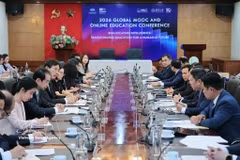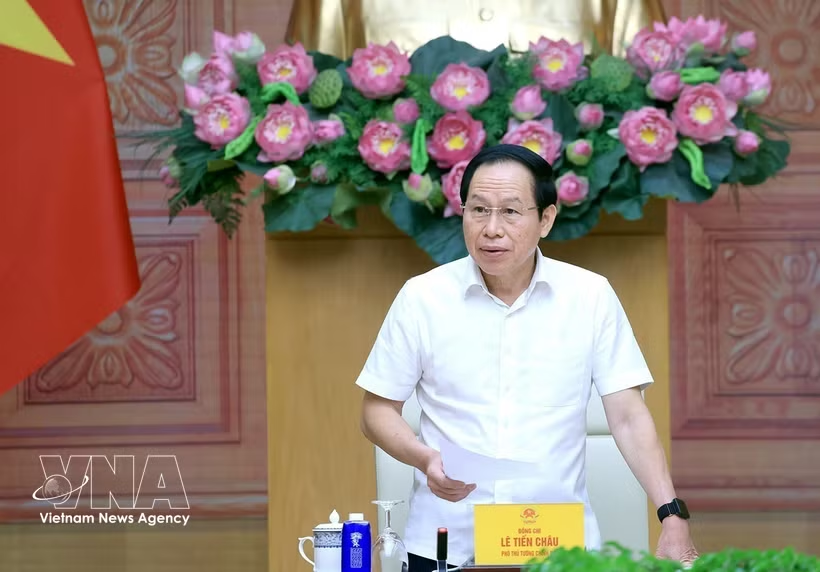
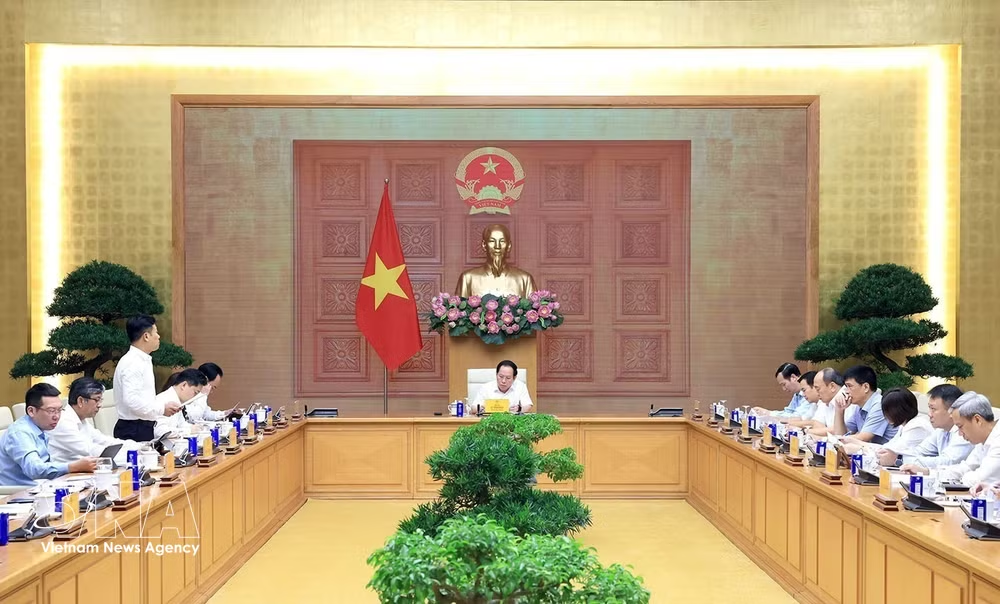
Hanoi (VNA) – Deputy Prime Minister Le Tien Chau presided over a meeting on November 5 to review human resources and talent development plans and the human resources development strategy for 2026–2030, with a vision toward 2050.
The Ministry of Education and Training (MOET) reported that tasks outlined across existing strategies, programmes, and schemes fall into four main categories: overall strategy and master plans, development of higher education institutions and research centres, sector-specific workforce training, and scholarship policies alongside expert attraction.
Following a comprehensive review, MOET recommended refining and submitting two key documents to higher-level authorities for consideration, namely the national programme on basic science talent for 2026–2035 and the human resources development strategy to 2030, with a vision toward 2050.
It emphasised the need to clearly define their scope, targets, implementation resources, and alignment with existing policies to avoid overlap.
During the session, participants discussed interdisciplinary issues, performance evaluation mechanisms, vocational training aligned with labour market demand, postgraduate education, and resource allocation.
Chau largely endorsed MOET's report and proposals, as well as the feedback from participating ministries and agencies. He agreed on the principle of consolidating tasks with similar objectives, particularly those regarding higher education development, centres of excellence, workforce training, and talent attraction, to optimise resources and prevent duplicated targets, deliverables, and budgets.
MOET was tasked with conducting a detailed review to identify and resolve any overlaps in scope, target groups, resources, and implementation conditions prior to submitting the final dossiers.
The Deputy PM reaffirmed the necessity of the human resources development strategy to establish an overarching framework for national workforce development and support the country's economic growth model.
This strategy will serve as a foundation for ministries, sectors, and localities to implement workforce plans aligned with their specific goals, he said, asking MOET to incorporate meeting feedback and finalise the draft strategy.
He stressed that the strategy must serve as a crucial policy instrument directly serving the national development model reform, in line with the Resolution of the 14th National Party Congress, Resolution No. 19-NQ/TW on development model reform, and other strategic resolutions.
Chau asked for a thorough review of the draft's appendixes to ensure clear assignments, deadlines, leading and coordinating agencies, and concrete deliverables. Only tasks with defined outcomes should be listed. He also told relevant ministries to ensure uniformity in data management, and collaborate in building and operating a human resource forecasting system.
Regarding the draft national programme on basic science talent, he asked MOET to finalise the dossier based on the meeting's recommendations.
On talent identification and training, he instructed MOET to reform specialised schools and those for gifted students into hubs for identifying, incubating, and developing talent, moving away from a sole focus on national student excellence competitions.
Chau noted that talent identification should expand into science, technology, engineering, arts, and innovation. Furthermore, schools should strengthen partnerships with universities, research institutes, laboratories, and enterprises to provide gifted students with early access to advanced research, industry experts, and real-world challenges.
Regarding the timeline, the Deputy PM directed MOET to urgently finalise the submission dossiers for both the human resources development strategy and the national programme on basic science talent, and report to the PM before November 30./.