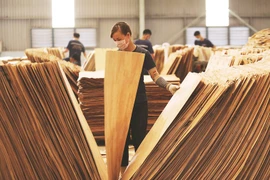
Hanoi (VNA) - The Department of Forestry and Forest Protection under the Ministry of Agriculture and Environment has launched WoodID, a mobile AI application that identifies wood species, which can recognise over 260 types of wood so far.
The tool is being used by customs officers, forest rangers, businesses, and researchers to quickly and accurately identify wood species, contributing to enhancing transparency and efficiency in wood supply chain management.
WoodID is among several applications supporting traceability, promoting transparency, and strengthening the reputation of Vietnam’s agro-forestry-aquaculture products in global markets.
Nguyen Huu Thien, Deputy Director of the Department of Forestry and Forest Protection, said the app marks a major step in applying technology to forestry management, enhancing monitoring and wood origin verification while underscoring Vietnam’s commitment to international obligations and its pursuit of a transparent, sustainable, and responsible forestry sector.
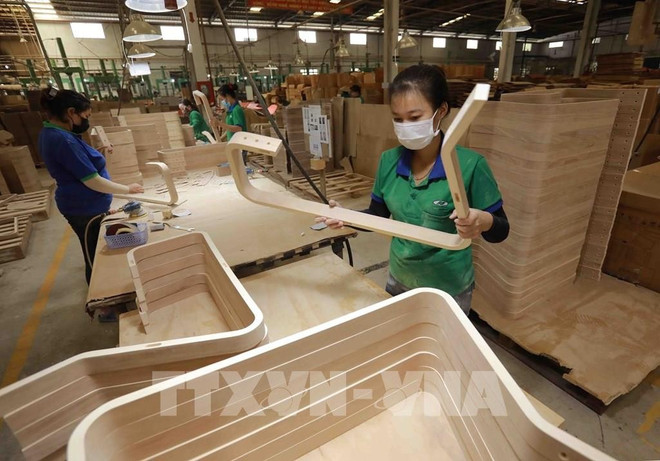
Ensuring wood traceability is also a key requirement for Vietnam to obtain FLEGT licenses – the legal timber certifications under the Voluntary Partnership Agreement on Forest Law Enforcement, Governance and Trade (VPA/FLEGT) signed with the EU. In addition, compliance with the EU Deforestation Regulation (EUDR) has become mandatory for Vietnam to maintain its share in the European timber market, one of the world’s largest and most demanding.
Prime Minister Pham Minh Chinh has signed an official dispatch on strengthening traceability to ensure the quality and reputation of agro-forestry-aquaculture exports, which underscores the urgent need to reinforce the traceability system after several Vietnamese shipments were flagged by European authorities for food safety violations. This move signals the Government’s strong determination to safeguard the national brand and position Vietnamese agricultural products in the global market.
Insiders said that the key task is to complete an integrated database system to meet EUDR requirements. This system will serve not only as a traceability tool but also as a national information platform, covering forest and plantation data, and product traceability.
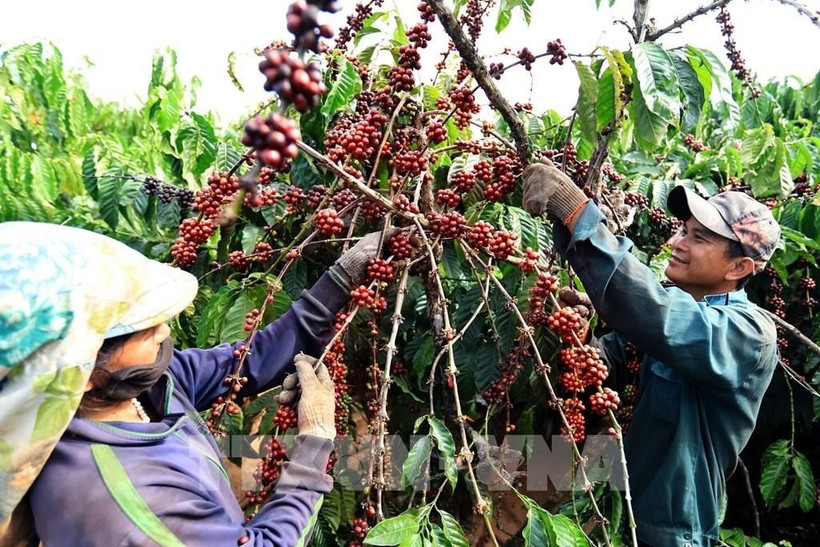
The Sustainable Trade Initiative (IDH) organisation of the Netherlands is funding a pilot of this system on 137,000 ha of coffee, with plans to expand to 462,000 ha, equivalent to 80% of the country’s key coffee-growing area.
Deputy Minister of Agriculture and Environment Hoang Trung instructed specialised units to quickly finalise the software system and update data on cultivated areas, mapping coordinates, growers, traders, and production volumes to enable full traceability.
He said that local authorities, especially in key coffee and rubber regions, must conduct training and communication programmes tailored to local management conditions. Exports of the three main product groups, namely coffee, rubber, and timber, to the EU must proceed smoothly, without disruption, and fully meet requirements on data, documentation, and traceability standards.
For other agricultural products, the establishment and issuance of plantation and packing facility codes have also seen positive results. To date, Vietnam has over 8,000 plantation codes and around 1,600 packing facility codes approved by importing countries, ready to support exports.
To improve management efficiency, the Ministry of Agriculture and Environment is drafting a circular on managing plantation and packing facility codes. Huynh Tan Dat, Director of the Department of Plant Protection and Cultivation, said that completing the legal framework will strengthen state management, ensure process transparency, and facilitate production, processing, and export activities of businesses and farmers.
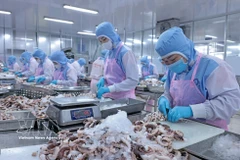
In the fisheries sector, the electronic catch documentation and traceability system (eCDT) is being widely implemented, helping fishermen and businesses ensure transparency in the origin of seafood.
According to Vu Duyen Hai, Deputy Director of the Fisheries and Fisheries Surveillance Department, the software enables state agencies to monitor fleet operations and fishing volumes, while raising compliance among fishermen and businesses in combating illegal, unreported, and unregulated (IUU) fishing.
The Department of Quality, Processing and Market Development will also develop and operate a national traceability system, integrating supply chain databases for ago-forestry-aquaculture products, especially for high-risk product groups. The system will be launched in sync with the revised Law on Product and Goods Quality once it takes effect.
Trung stressed that local authorities must step up inspections and supervision at farming areas, processing facilities, and imported materials; and strictly handle food safety and traceability violations, including publicising information related to violators and temporarily suspending export licenses to the EU, if necessary./.